What happened to bird flu? Experts warn the dire risks aren’t over
Source: AAP
While the number of bird flu events across Australia has plummeted, conservationists fear vulnerable species are at risk of extinction with the true scale of the outbreak hidden.
The H5N1 strain was first confirmed on home soil on June 19 after a migrating brown skua washed up on a remote beach near Esperance in Western Australia.
As of November 5, some 734 flu events had been reported in birds and mammals.
Cases peaked in August and September. But only 45 events were reported nationally in October, according to federal agriculture department data.
Even if infections recede over summer, authorities warn it is only a matter of time before the virus bypasses biosecurity measures and breaches commercial poultry farms.
South Australia’s chief vet Skye Fruean said no country with a poultry sector had escaped the impact of H5N1.
“Unfortunately, we are expecting it is a matter of when, not if, it gets into poultry,” she said.
“It could happen even in a situation now where we’re getting a small number of cases.
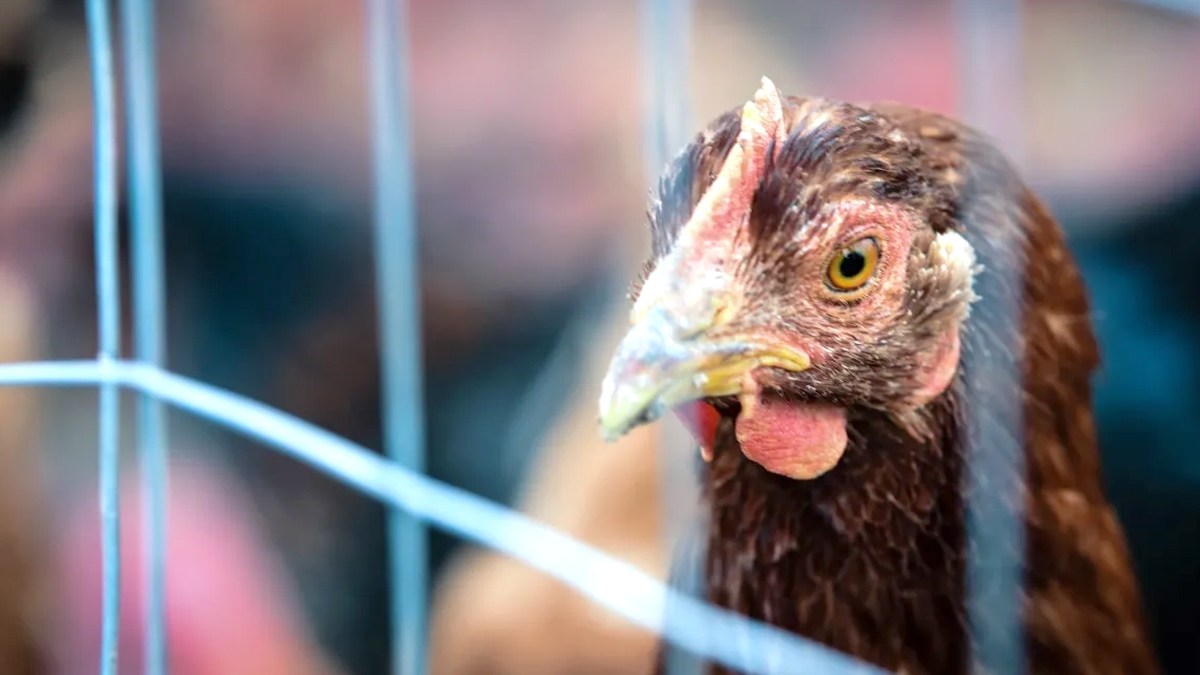
“Unfortunately, you only need one sick wild bird to spread it to one poultry farm for it to kick off … chickens are very, very susceptible.”
Commercial poultry farms have strict biosecurity and hygiene measures to protect the $1.37 billion industry, which produces 17 million eggs a day.
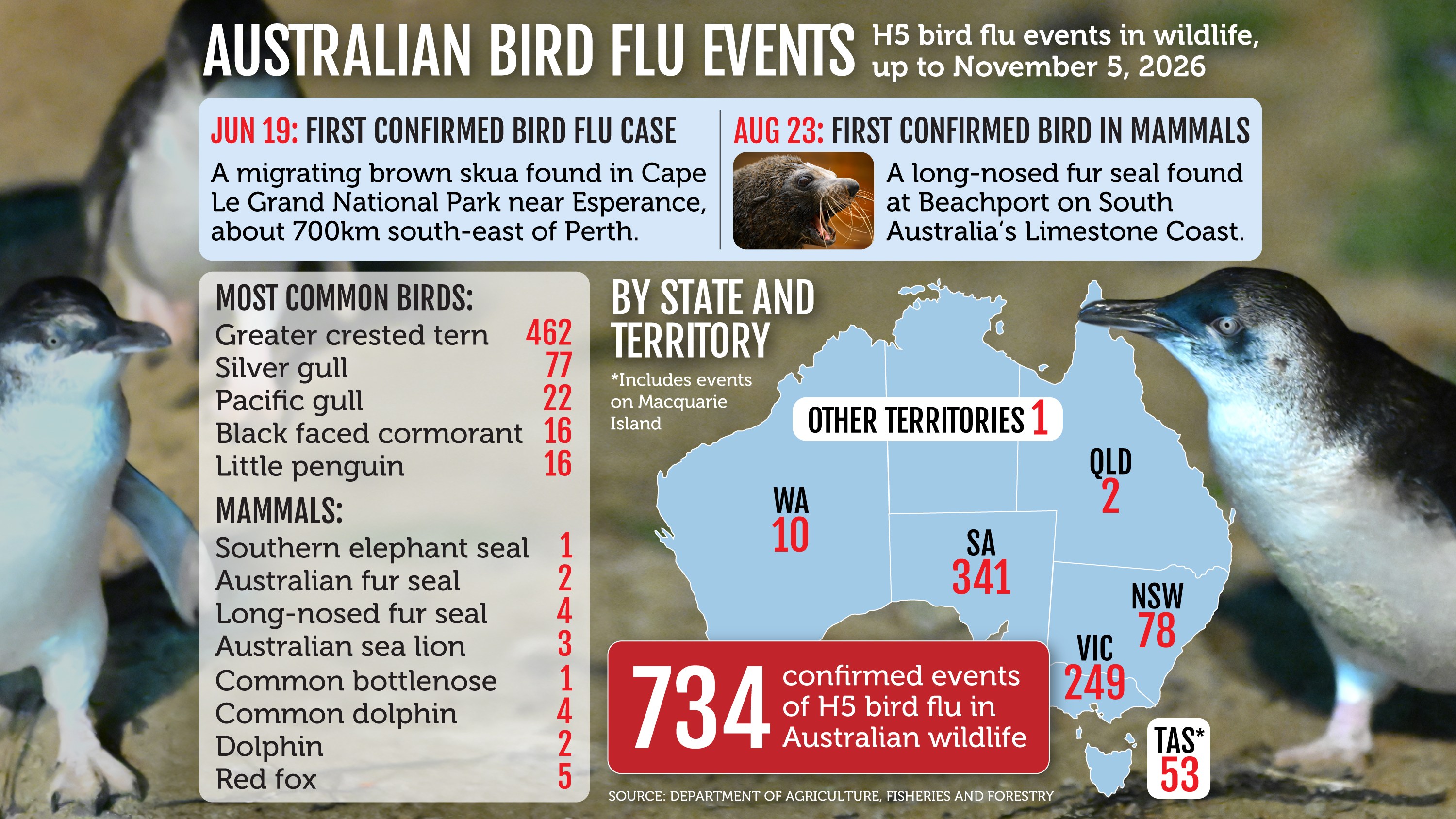
Photo: AAP
On August 12, Australia began tracking bird flu by geographic spread, affected species and patterns rather than counting individual cases.
As a biosecurity system for protecting poultry, Invasive Species Council chief executive Jack Gough said the regime was working exactly as intended.
“But it’s not a system set up to track the impact on wildlife, to then be able to work out the interventions needed,” he said.
“There’s a huge blind spot from governments and bureaucracies about this – the agriculture department has said very clearly our responsibility is to agriculture and to chicken farms.”
As a consequence, Australian species “that go to the heart of who we are … are going to go backwards”, he said.
“Some may be facing extinction-level events because of this.”
The virus’ further spread was inevitable, Charles Darwin University conservation biologist John Woinarski said, particularly as waterbirds begin breeding in the Murray-Darling basin.
“There’s an inevitability it will become far more pervasive and affect far more species and large populations in the near future,” Emeritus Professor Woinarski said.
“Recording on events means we can’t really get a handle on how many individuals have been killed … which breeding colonies have been most affected or whether there’s any sign of recovery.”
Fruean conceded the data could be better presented.
“But I don’t think the government, from an SA point of view or nationally, is trying to hide anything,” she said.
“The dashboards are really representing our surveillance effort at tracking where this virus is and isn’t, helping us monitor spread rather than incidents.
“We’re now working with key stakeholders in the conservation space on how we can better do that monitoring but also represent it in a public-facing way.”
Authorities have been on alert for mass mortality events. Photo: AAP
Authorities have been on alert for mass mortality events since aerial surveillance revealed more than 1000 greater crested terns had died on remote islands off SA in August.
“We’ve seen really significant impacts in that species,” Fruean said.
“Most of our bird species are still naive but no doubt really susceptible, so if they were to come across the virus, they would likely get sick and die.”
In August, 51 little penguins were found dead on King Island in Bass Strait.
Only two were in suitable condition to test. One returned a positive result, the other was inconclusive.
Poultry producer Inghams has locked down its WA farms amid the bird flu fears.
Vaccination programs are being rolled out across the country to protect little penguins and vulnerable native birds.
More than 200 native birds at Adelaide’s Cleland Wildlife Park, including critically endangered orange-bellied parrots and regent honeyeaters, have been fully vaccinated.
About 60 birds across 20 species have received their first of two doses at Adelaide Zoo and Monarto Safari Park.
Almost 2000 little penguins have been vaccinated at Phillip Island while plans are afoot in SA to vaccinate little penguin colonies at Victor Harbor and Kangaroo Island.
Three-quarters of Australia’s endangered sea lion population is in SA. So far five have died from bird flu, prompting authorities to consider using an experimental dairy-cattle vaccine from the US.
“While it’s a really significant logistical exercise to get vaccine into sea lions, it is actually potentially feasible,” Fruean said.
“We’re looking at whether we can get access to that vaccine and rolling it out [on Kangaroo Island].”
CSIRO veterinary scientist Vidya Bhardwaj, from the Australian Centre for Disease Preparedness, said authorities spent more than 18 months preparing for bird flu to reach our shores.
“When we got our first sample, we knew exactly what we wanted to check so we could provide answers immediately,” she said.
“Is it going to affect humans? Is it going to spread amongst humans? Has it mutated? Is it going to become a problem for antiviral drugs?
“Fortunately, the answer was ‘no’ to all the key questions.
“Mammals can get it, like we’re seeing in the sea lions and seals, but it’s not contagious and doesn’t readily move from one sea lion to the next.”
Bhardwaj said cases were starting to “die down” as the season changed.
“We don’t know exactly why or when it will pick up again … there’s so many questions we don’t know answers to,” she said.
Fruean said authorities needed more longitudinal data to understand “if this is going to become, for example, a seasonal thing where we get waves”.
Gough said the federal government had ignored calls for a $200 million wildlife resilience package, committing just $20 million instead.
“That’s less than the funding for bird flu resilience for wildlife in the two years before it turned up,” he said.
Federal Environment Minister Murray Watt and Agriculture Minister Julie Collins had been clear about what was required “but they don’t control the purse strings”, Gough said.
“The questions really need to go to the Prime Minister and the Treasurer as to why they decided to invest 10 per cent of the minimum required to be a serious continental-scale response to the wildlife threat,” he said.
“We’re going to see waves of devastation because of it: It may be in a week, a month – it may be in a year’s time that we see one of these really big, mass mortality events.
“Governments will then be forced to wake up to the reality of what this means for our wildlife.”
-AAP

Why this whale season has scientists puzzled