‘Living dinosaur’ relics found in ancient desert caves
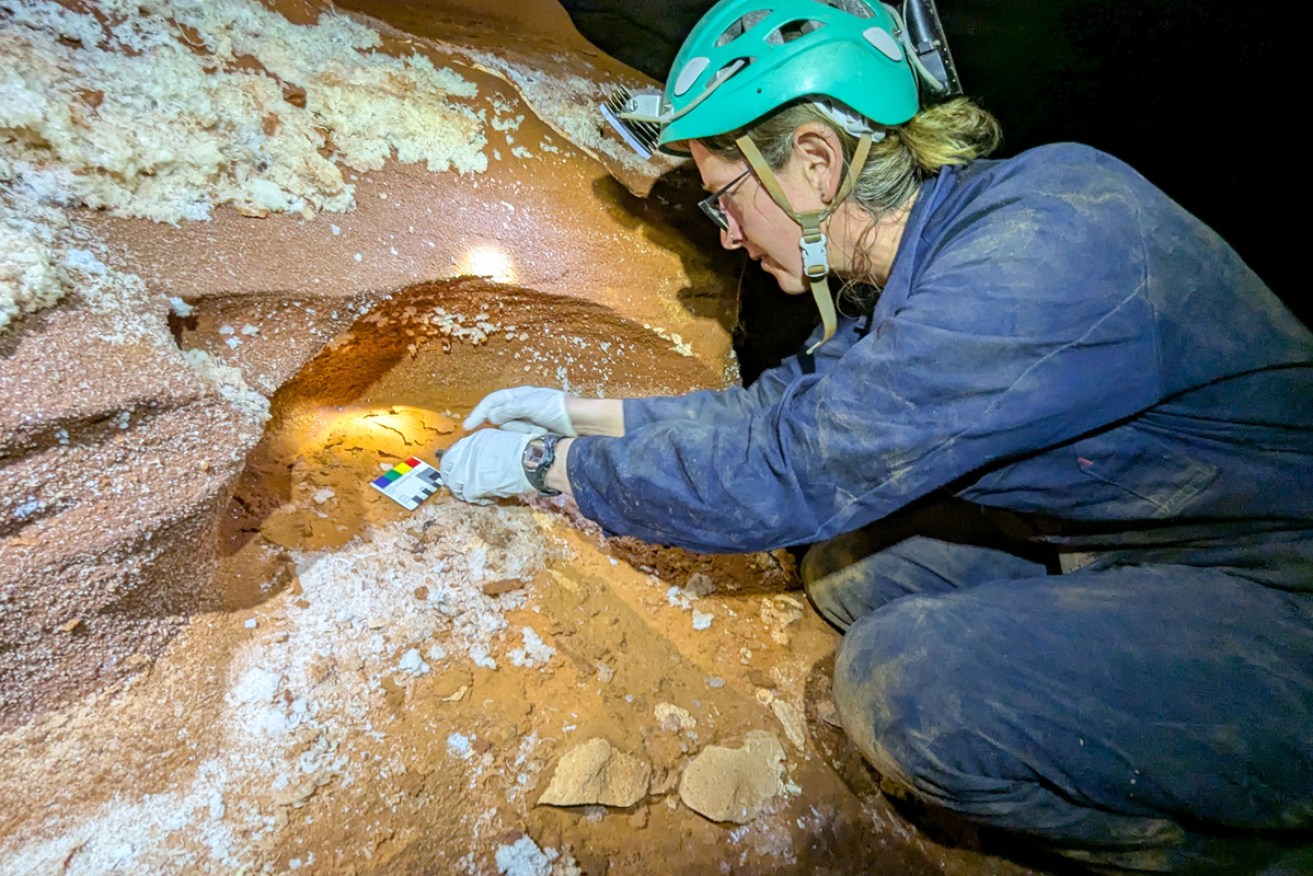
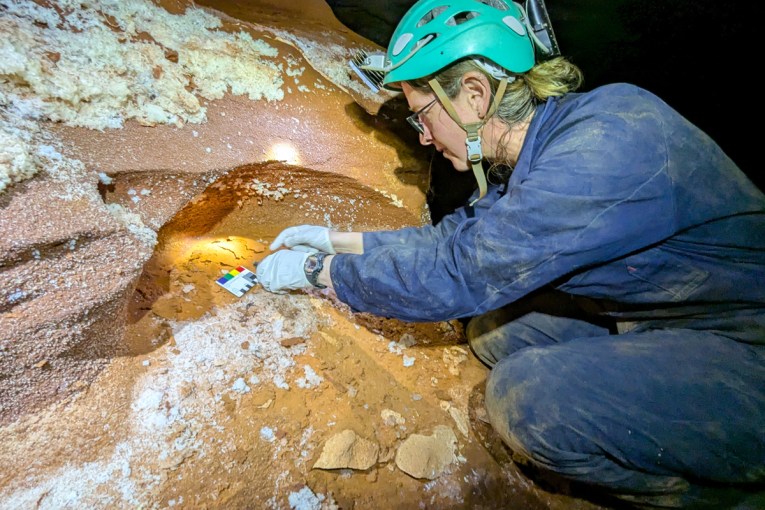
Adelaide University entomologist and arachnologist, Dr Jess Marsh in one of the Nullarbor caves. Photo: AAP
It’s string-thin, pale and spans little more than a centimetre. But this unknown species of spider could hold the keys to Australia’s climate history.
It’s one of roughly 70 new species discovered by a team of scientists during expeditions into complex cave systems in Australia’s arid south coast, funded through the Australian Research Council.
Adelaide University research fellow Jess Marsh has spent up to 190 hours in 67 underground caves along the Nullarbor since the field trips began in 2025.
It’s a fraction of the more than 10,000 caving cast features across the region, as new mapping techniques reveal the systems are much larger than previously thought.
“I’m confident that what we don’t know far outweighs what we currently know, and that’s a really exciting place to be in as a scientist,” Marsh said.
Among the new species Marsh and her students are analysing is a white blind spider whose closest relatives are tropical.
“What it appears to be is that this species might be a relic from a time when the Nullarbor was rainforested,” she said.
“With the aridification of Australia, as everything dried up, they slowly get pushed underground because that’s the only place they can survive, where the caves have a stable temperature … around 75 per cent humidity and about 18 degrees.”
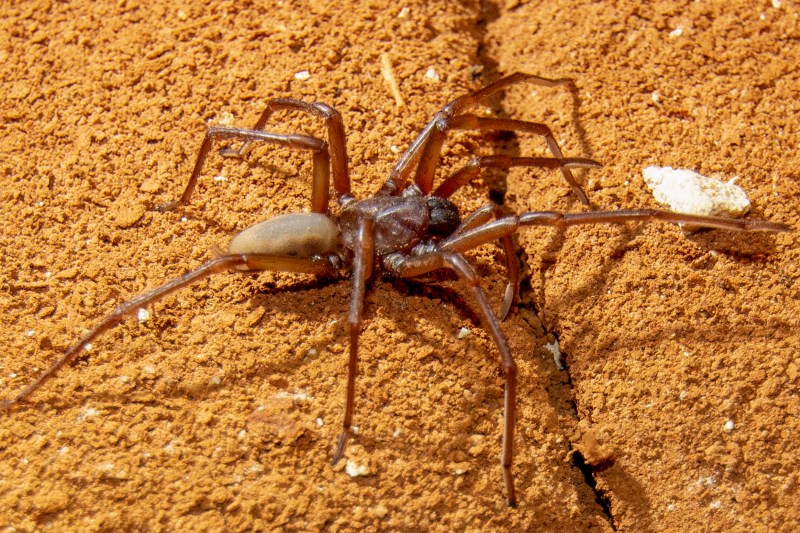
The newly discovered spider is a relic of a time when the Nullarbor was covered in rainforest. Photo: AAP
Millions of years of evolution have led many specimens to develop “cave-adapted body forms” including no eyes, elongated limbs and pale figures.
“It’s like a living dinosaur,” Marsh said.
“It’s also equally important for what it can tell us about Australia’s climate history, about … the way the geography and climate impacts species distribution on the Nullarbor, and the different pressures that act on species to push them underground.”
The discoveries include mummified insects such as wasps, centipedes and weevils, frozen in time and immaculately preserved.
Carbon dating has shown some to be up to 10,000 years old.
“The most amazing thing about those specimens is that when we saw them in the cave, they looked like they could have died yesterday,” Marsh said.
“There’s cockroaches walking up the wall of the cave. They have literally died mid-motion.”
The expeditions have been funded by a $516,000 Australian Research Council grant to develop innovative ways to document and protect biodiversity in the caves.
Their ranks included Steve Milner, who has led tourists, scientists and explorers into the systems for the past 10 years. He said the region faced threats from invasive species and a looming large-scale wind and solar project by Green Energy Hub.
The proposal, which is awaiting approval under the Environment Protection and Biodiversity Conservation Act, could mean the development of 2,269,015 hectares on the western side of the Nullarbor Plains.
“What the proponents don’t realise is that any activities on the surface will affect the water, which flows into the ground,” Milner said.
“All their activities would affect the underground life.
“There are thousands of caves which are tiny – just tens of metres long – and they’re really important for insect life because when it rains, it brings in nutrients and provides a support for the insects.”
It was a knowledge gap companies were completely unaware of, Milner said, and one of the driving forces for better understanding the mysteries beneath the surface.
“We’re trying to understand the diversity of what life is underground so that we can describe it,” he said.
-AAP

‘Super pest’ detected in Sydney warehouse
Magnitude 4.8 quake shakes Victoria