‘Toad-busting’: Volunteers help control Australia’s toxic invader

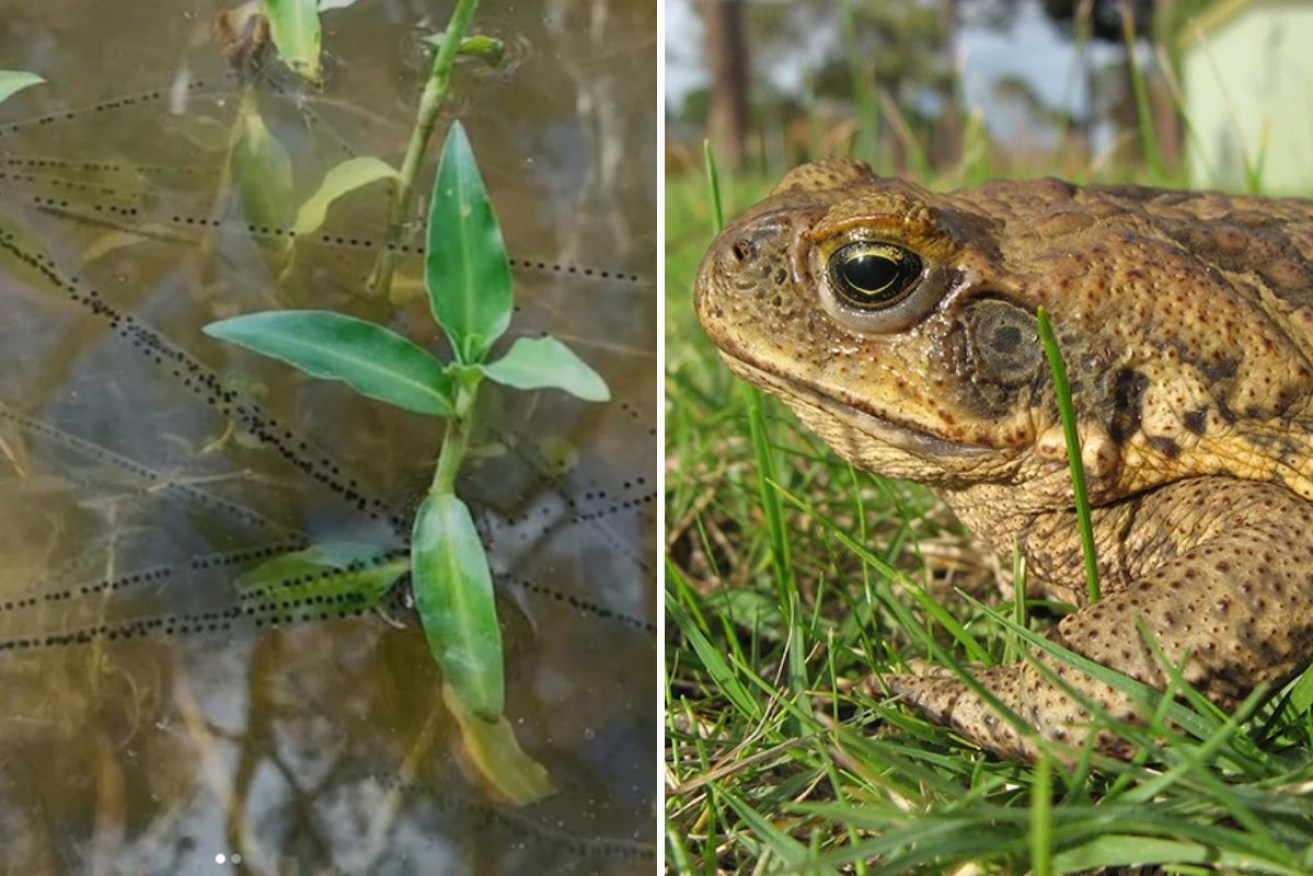
Cane toad eggs can hatch in two to three days. Photos: Watergum / Getty
With an estimated population of more than 200 million and concerns about their rapid march across the country, cane toads are considered one of Australia’s worst invaders.
The toxic pests – which weigh up to 2.5 kilograms and are known for their rough, warty skin – poison native wildlife and pose a threat to pets and agriculture.
They also breed twice a year and can produce up to 35,000 eggs at a time – vastly more than Australian native frogs, which lay around 1000 to 2000 eggs a year.
Now, as cane toad breeding season kicks into gear, Queensland-based non-profit environmental organisation Watergum is encouraging the public to help with efforts to control the invasive species.
“With rain and warmer weather creating the perfect conditions, now is the time to start checking your local waterways for cane toad eggs,” it said in a call to action earlier this month on social media.
Described as being laid in “long, jelly-like strings that usually sink just below the water’s surface”, the eggs can hatch in as little as two to three days. That makes removing them early key to stopping the spread of the pest, the organisation says.
Volunteers are asked to log their cane toad removals to help with understanding of population trends and guide efforts to protect native species.
A Watergum team removed more than 8600 cane toad eggs from a body of water in the Gold Coast town of Mudgeeraba earlier this month, according to data on its website. A community group removed almost 10,000 eggs in the semi-rural Brisbane suburb of Brookfield last week.
“With gloves and a bucket, the eggs can be manually removed quite easily,” Watergum’s invasive species project officer Gemma Newton recently told Yahoo News Australia.
“As the weather warms up, cane toads become more active after their period of brumation (a dormant state during cooler weather) and begin seeking out suitable waterways to breed.”
Newton added that removing eggs was a way to stop the pests before they hatched into tadpoles, when other control methods – including tadpole traps – might be needed.
Although cane toad eggs look quite different to those of native frogs – which are laid in foamy or jelly clumps – Watergum offers assistance for people wanting help in identifying the animals at different life stages.
Adult cane toads and the tadpoles can be easily confused with native frogs, so experts advise checking if you are in any doubt.
During Watergum’s 2025 “toad-busting” challenge, an annual event in which individuals and community groups help with efforts to control the invasive species, almost 200,000 adult cane toads and tadpoles were removed.
Its initiatives are part of broader efforts by government departments and environmental organisations to try to control cane toads, which were introduced in the 1930s in an unsuccessful bid to control cane beetles that were destroying Queensland sugercane crops.
Since then, the population has exploded and expanded across much of the northern part of the country, while also moving westward at around 40 to 60 kilometres each year.
Today, cane toads have conquered more than 1.3 million square kilometres of Australia, according to the Invasive Species Council, spreading through Queensland, the Northern Territory, NSW and Western Australia.
They’ve turned up as “stowaways” in places such as Sydney and Canberra, and Agriculture Victoria reports an average of “three to eight” cane toads are detected in that state each year.
This month, the South Australian government urged travellers to check under their vehicles for “unwanted hitchhikers” after one was found on a road in the Eyre Peninsula town of Whyalla.
It said the small number of cane toads found in SA each year “have typically arrived by accident in cars, caravans, freight and luggage from the Northern Territory and Queensland, and occasionally from Bali and Fiji”.

‘Super pest’ detected in Sydney warehouse