Sydney confirms its first case of dangerous bird flu
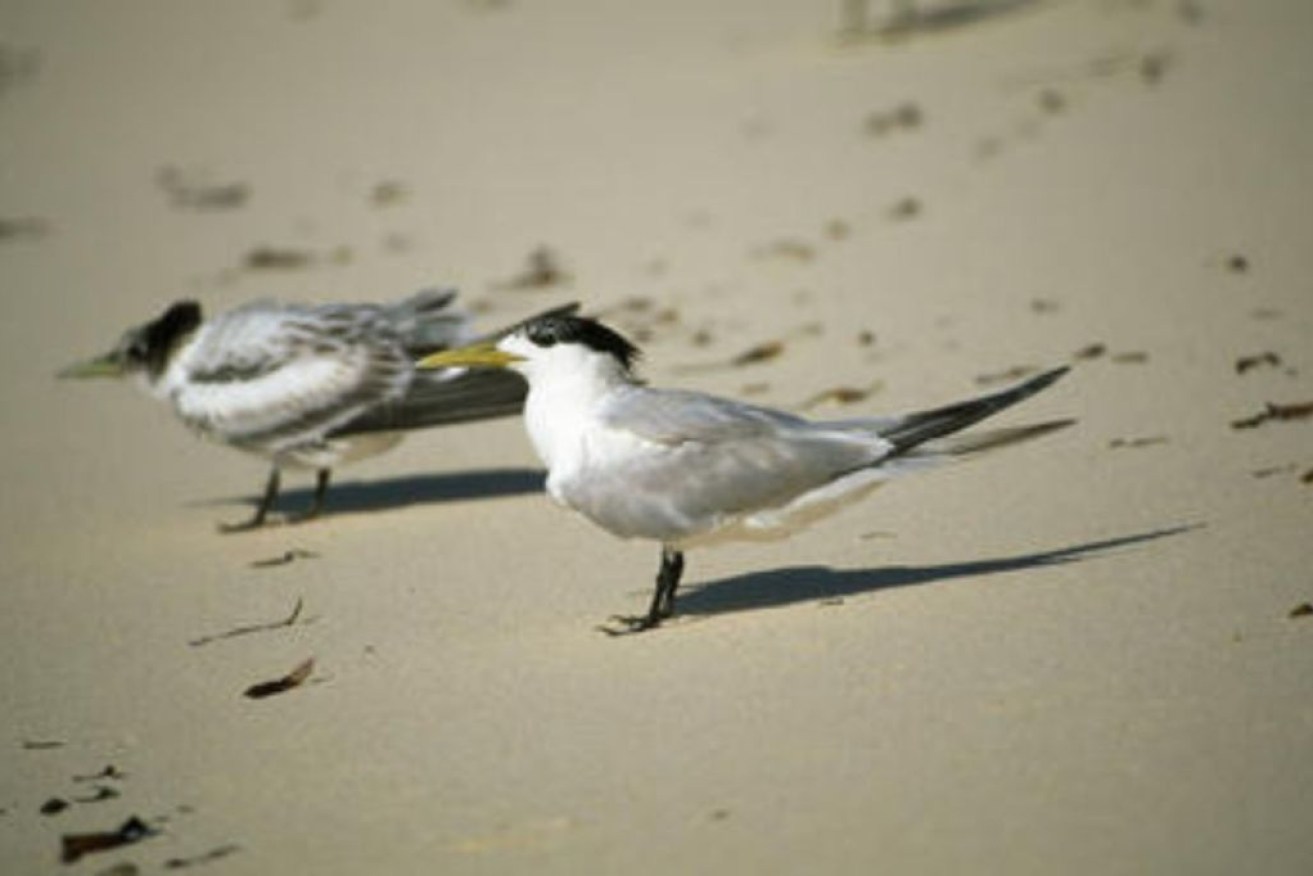
A greater crested tern found at a northern Sydney beach has tested positive for H5 bird flu. Photo: AAP
Bird flu has made its way to the shores of Australia’s biggest city, with the first case of the deadly strain confirmed.
Testing of a greater crested tern found at Warriewood on Sydney’s Northern Beaches has returned a positive result for H5 bird flu.
It is the first confirmed case in Sydney among three new H5 bird flu events in NSW, following samples from another greater crested tern at Port Kembla and a Hutton’s shearwater at Corindi in Coffs Harbour.
The strain has previously been detected in widespread parts of Adelaide, Melbourne suburbs of Black Rock, Beaumaris, Sandringham and Oak Park, and at Acton Park in Hobart.
There have also been events at at Moreton Island off the coast of Brisbane and at Mullaloo, a northern coastal suburb of Perth.
As of Wednesday, 468 events of H5 bird flu had been detected across Australia, including 20 in NSW.
“We are deeply concerned about the impact that H5 bird flu could have on our native wildlife,” NSW Environment Minister Penny Sharpe said on Friday.
“No government policy can stop this virus from spreading through our wild bird populations … what we can do to support our wildlife is vaccinate insurance populations, protect their habitat and eliminate invasive species.”
Bird flu reporting is now based on events, rather than individual animal detections, and may involve one or more animals.
But Agriculture Minister Tara Moriarty said there had been no mass mortality events or deaths involving poultry birds in NSW.
A NSW chief veterinary officer recommendation for the poultry industry to house birds remains voluntary at this stage.
“Now is the time for everyone who has backyard chickens or pet birds in aviaries to take precautionary steps to ensure there are no interactions between their chooks and pets with wild birds,” Moriarty said.
“The government also recommends people be careful with their dogs when walking on beaches or parks and ensure they don’t eat carcasses or chase wild birds.
Infected birds can transmit the virus through body fluids, droppings and feathers.
Authorities maintain the risk to human health remains low but the public are advised not to touch sick or dead birds or other animals and instead call the Emergency Animal Disease Hotline on 1800 675 888.
Australia was the last continent in the world to have H5 bird flu on its shores after it was first detected in June.
-AAP
‘Super pest’ detected in Sydney warehouse
Magnitude 4.8 quake shakes Victoria