Generation haunted by love: Why gen Z yearns for a romance it has never known

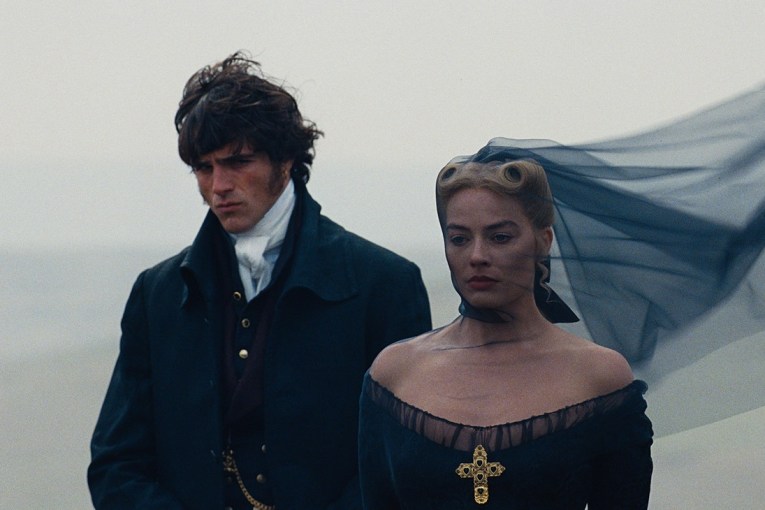
Source: Warner Bros
In the United States, 63 per cent of men under 30 identified as single in Pew Research Centre data, compared with 34 per cent of women.
In Britain, research from the Intergenerational Foundation suggests that 56 per cent of gen Z adults want a relationship but are not in one.
Closer to home, Monash University’s Australian Youth Barometer found that 59 per cent of young Australians were single, while just 34 per cent were in relationships.
These figures reveal an interesting contradiction. Young people are more digitally connected than any generation before them, yet romantic relationships appear increasingly elusive. Paradoxically, culturally, they have never been more obsessed with love.
In 2026, Tinder declared it the Year of Yearning. Its Australian research found that 76 per cent of young singles wanted to experience greater romantic yearning, while 81 per cent believed yearning was important to developing emotional connection.
Its partnership with Netflix’s Bridgerton was telling. Here was the world’s most recognisable dating app aligning itself with a television series built around stolen glances, anticipation and the agonising process of falling in love.
Then came Emerald Fennell’s Wuthering Heights, starring Jacob Elordi and Margot Robbie. Emily Brontë’s Heathcliff, wandering the windswept Yorkshire moors, consumed by his impossible love for Catherine, is perhaps literature’s ultimate figure of yearning. His love is obsessive, destructive and, ultimately, quite literally haunted. Catherine becomes a ghost, but in many ways she was always one: An idealised object of desire that could never be entirely possessed.
Elsewhere, The Summer I Turned Pretty captivated audiences with its protracted romantic tension, while Past Lives explored the emotional weight of a relationship that never materialised. Even Heated Rivalry speaks to an appetite for relationships in which desire develops through secrecy, anticipation and emotional risk.
Across these stories, the common denominator is not necessarily love itself. It is longing. The almost-relationship. The person who remains beyond reach. The future imagined but never realised.
Gen Z is becoming a hauntological generation. A generation haunted by the ghost of a love it may never have experienced. Love is never simply an individual emotional experience. It is a social construction, informed by cultural narratives, expectations, technologies and the historical moment in which we find ourselves.
Hauntology, associated with philosopher Jacques Derrida and later developed culturally by Mark Fisher, concerns the persistence of things that are absent: Lost futures, unrealised possibilities and the ghosts of experiences that continue to shape the present.
Love is particularly susceptible to haunting. We are haunted by relationships that ended, by people we imagined we might become, and by romantic futures that never materialised. But what happens when an entire generation begins yearning for an experience it has barely had the opportunity to practise?
Researcher Luba Kassova explored a related phenomenon in a 2026 Fortune essay examining gen Z’s embrace of analogue culture. She discussed anemoia, nostalgia for a time one has never experienced.
Young people are rediscovering vinyl records, film cameras, physical books and offline experiences. They are romanticising a pre-digital existence because it appears to offer something missing from contemporary life: Presence, attention and tangibility.
The same phenomenon may be occurring in romantic relationships. Gen Z is nostalgic for a kind of love it knows largely through cultural representation. The love of handwritten letters, accidental encounters, missed telephone calls and the unbearable anticipation of seeing someone again.
The kind of love that requires friction.

Past Lives explores the emotional weight of relationships that never materialise. Photo: AAP
We learn to flirt through awkward conversations, to negotiate rejection by experiencing it, vulnerability through uncertainty, and intimacy through proximity. These experiences are rarely efficient. They involve embarrassment, disappointment and risk. Yet they are fundamental to developing the social and emotional capacities that sustain relationships.
Digital dating has radically reorganised this process. The swipe replaces the approach. The profile replaces the introduction. The algorithm promises compatibility before two people have exchanged a word. Ghosting allows us to disappear without confrontation, while endless alternatives encourage us to imagine someone better is always one swipe away. Technology has not eliminated romantic friction, but it has created unprecedented opportunities to avoid it.
Then came Covid-19. For many young people, the pandemic interrupted precisely those formative years when romantic experimentation, social awkwardness and interpersonal negotiation would ordinarily have taken place.
We may be witnessing a generation with sophisticated romantic expectations but fewer opportunities to develop the practical skills necessary to realise them. They know the language of attachment styles, boundaries, red flags, emotional availability and relationship trauma. They can identify problematic behaviour in seconds. But recognising intimacy is not the same as practising it.
Perhaps this explains why Heathcliff is wandering the moors again, why audiences remain transfixed by Bridgerton, and why Past Lives, with its meditation on the people we might have loved, resonates so deeply.
These stories offer something digital dating often struggles to accommodate: The emotional significance of uncertainty. Desire develops without immediate resolution. Love is not simply compatibility, but timing, vulnerability and the possibility of loss.
Gen Z is often described as a generation that has rejected romance. The opposite may be true. This generation may be deeply invested in love, but increasingly alienated from the social conditions that allow it to develop.
Dr Lisa Portolan is a casual academic at the University of Technology Sydney. Her PhD on dating apps and intimacy from Western Sydney University was published in 2024. It has also been released as a book: Love, intimacy and online dating (Routledge, 2023)
Why gen Z yearns for a romance it has never known

Victoria may deliver first verdict on inflation dragon