Toddlers more likely to spread COVID-19 within households

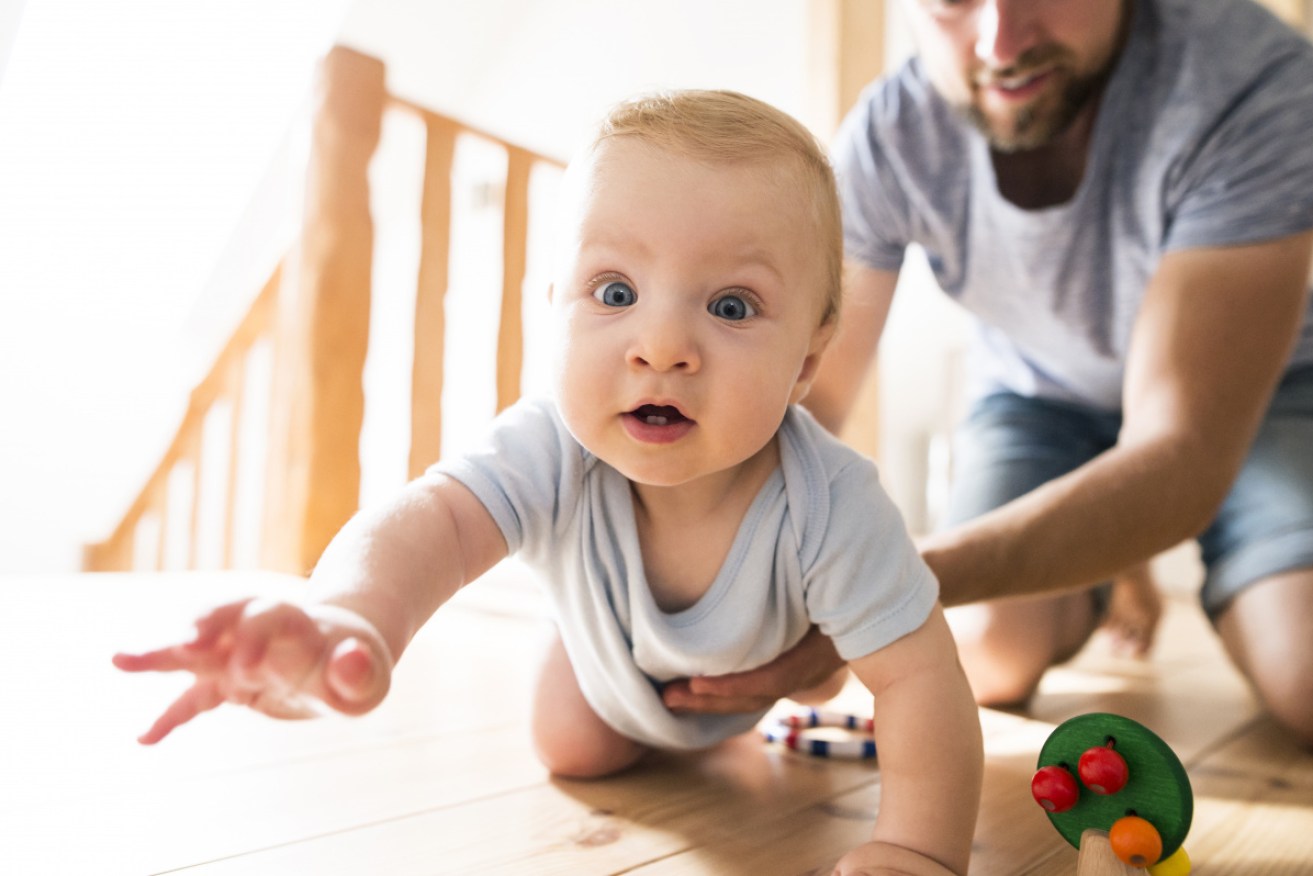
A new study has found babies and toddlers are more likely than teens to spread the virus within their family. Photo: Getty
Children under three have been identified as the most likely source of COVID-19 transmission within households, according to a new study.
This finding is “at odds with early reports suggesting that young children rarely transmit to others”.
It was found that older children and teens were more likely than toddlers and young children to be the primary household case, consistent with a higher degree of social mobility.
In other words, older children and teens tend to bring COVID-19 into a family – because they’re out and about in the wider world, even if it’s for a couple of hours during lockdown.
But once the virus is in the home, it’s babies that are more likely to spread it within the family.
What explains it?
The study looked at more than 6000 households in Canada where a child (resident under the age of 18) had introduced COVID-19 to the rest of the household – and at what happened next.
It worked out who got sick from whom.
The researchers said the odds of transmission of the virus from children aged three and under was 43 per cent, compared with teens.
Children aged 4 to 8 were close behind at 40 per cent, but those aged 9 to 13 were much less likely, at 13 per cent.
Why is this so?
Researchers drew the obvious conclusion: It’s almost impossible to isolate toddlers at home, let alone expect them to be reliable mask wearers and keep their distance.
Then there’s the fact that they demand more cuddling.
Young children increasingly in focus
Reporting on these findings, Australian Doctor said the “question of how frequently children transmit the virus has been prominent in Australia during the current COVID-19 outbreaks”.
In the NSW outbreak, “about a third of cases have been in children, and in Victoria, 20 per cent of recent cases have been in those under 10,” the publication said.
It comes after Victorian authorities closed public playgrounds as chief health officer Brett Sutton warned of “potential transmission” between children there.
On Monday, Victorian COVID-19 response commander Jeroen Weimar revealed 112 of the 494 active cases in Victoria were children under the age of 10.
Other countries are waking up to the idea that small children can be significant viral spreaders.
Israel, which is confronting a sharp rise in infections, requires anyone over the age of three to show proof of vaccination or a negative COVID-19 test before entering many indoor venues.
Why has this emerged?
According to an editorial in JAMA Paediatrics, during the early days of the pandemic, when people first began working and schooling from home, “there were few opportunities for virus to enter the family circle”.
Limited testing capacity, with a focus on testing elderly individuals, healthcare workers, and those ill enough to require hospitalisation “also contributed to the impression that this new virus spared young children”.
Under these circumstances, “we were understandably surprised when we diagnosed a young child with COVID”.
The obvious solution to protect a household with a sick young infant or toddler is: “To make sure that all eligible members of the household are vaccinated”.