The Stats Guy: The surprising difference in births for Australia-born and migrant mothers

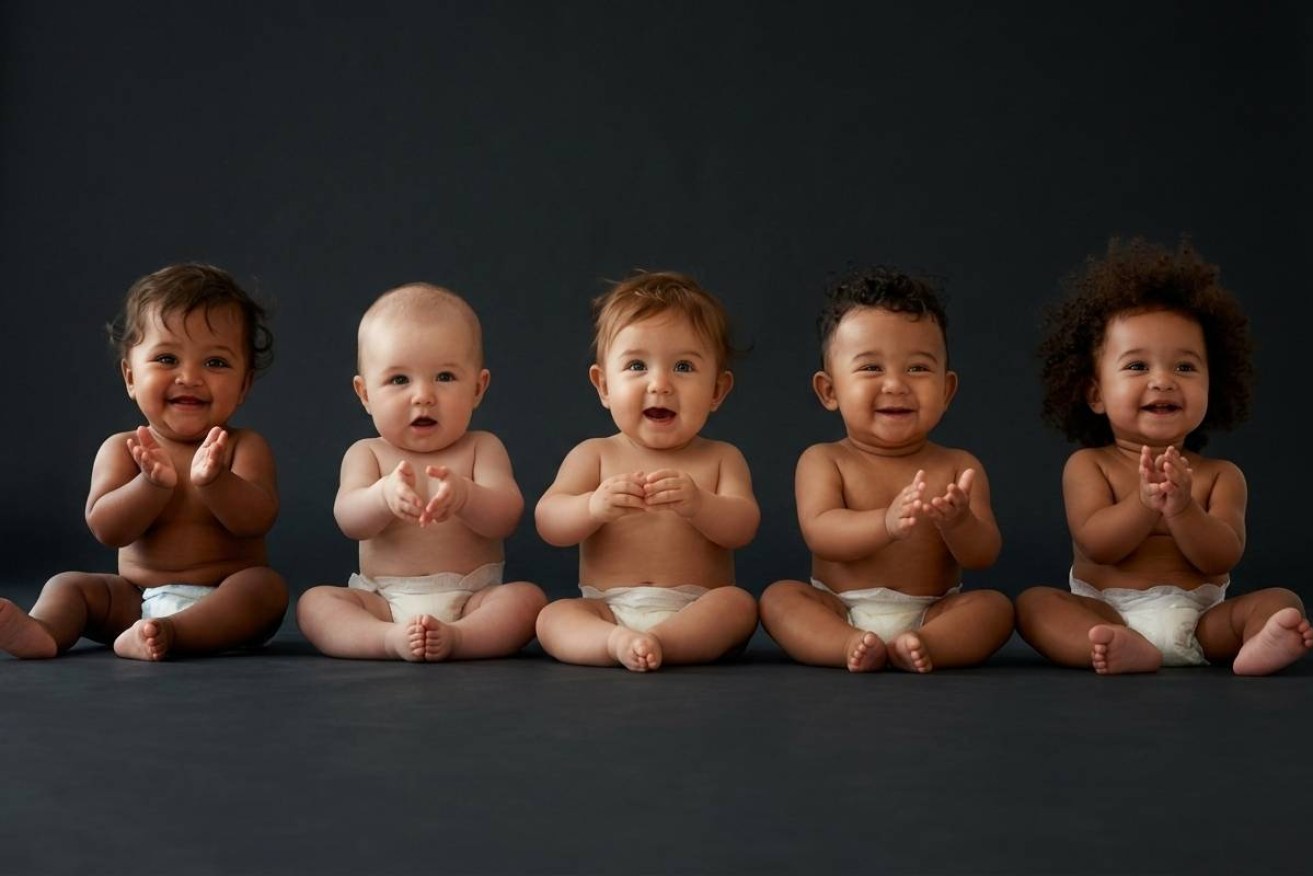
The two-child family is still the norm, but who is having the most babies offers some surprises. Photo: TND/Gemini
The 2026 census was a question short – “how many babies has each woman ever given birth to?”.
In the dry language of the Australian Bureau of Statistics, this data point is called TISRP, Number of Children Ever Born (ranges).
The ABS has returned it to a once-a-decade collection schedule and it was not asked in 2026. It will next return in the 2031 census.
This question tells us something very different from the total fertility rate (TFR) that appears in the news each year.
Australia’s total fertility rate was just 1.48 babies per woman in 2024. That does not mean the average woman who has finished having children had 1.48 children.
The annual rate is a synthetic measure. It asks how many babies a woman would have if she experienced today’s birth rates at every age from 15-49. It is sensitive to postponed births and to the composition of the population.
The census question is more literal. It asks women aged 15 and over how many live babies they have ever delivered, including children born before migrating to Australia. Adopted, foster and stepchildren are excluded.
To understand completed family size, we should concentrate on women aged roughly 45 to 50. Most have finished having children, although a small number will still add another baby.
Two children remain the norm
The 2021 census data shows that a woman aged 45 had given birth to an average of 1.96 children.
At age 50, the figure was 1.99. The number was higher at 2.05 for 55-year-olds, 2.13 at age 60, and 2.29 at age 70.
The two-child family is remarkably resilient.
Childlessness and one-child families have become more common in the past decades, while families with three or more children have become less common. Women remain childless for longer.
Research by ANU demographers Edith Gray and Ester Lazzari, also using the 2021 census, reached the same conclusion.
Completed fertility fell from 2.22 children among women born from 1952 to 1956 to 1.89 among those born from 1977 to 1981. The decline was driven primarily by rising childlessness and fewer families progressing beyond two children.
The first indicator that matters is birth cohort.
An 80-year-old and a 40-year-old woman did not make family decisions in the same economic, cultural or medical environment. Comparing them without controlling for age would be demographic malpractice.
Education dividing line
Among women aged 50 in the census, those with a bachelor’s degree or higher had given birth to an average of 1.79 children.
Women without a bachelor’s degree averaged 2.09. About 19 per cent of degree-qualified women were childless, compared with 15 per cent of women without a degree.
The education gap is not a story about highly educated women disliking children. Education delays stable earnings, partnering and home ownership. Professional careers also impose a larger penalty when a parent takes time out.
By the time the traditional prerequisites are in place, the biological window is narrower and you simply have less time to add children to your family.
Gray and Lazzari found that among women born from 1977 to 1981, completed fertility ranged from 1.52 children for postgraduates and 1.75 for women with bachelor’s degrees to 2.43 among women whose education ended at year 11 or earlier. Their results suggest the education gap has not simply disappeared among younger cohorts.
Education remains a powerful marker, but not a simple cause. It bundles together age at partnering, age at first birth, career structure, income, values and geography.
Do the rich or the poor make more babies?
At age 50, women reporting personal income below $52,000 averaged 2.09 children. The figure was 1.78 among women earning more than $104,000 and 1.74 among those earning more than $260,000.
This data doesn’t prove that earning more causes women to have fewer children. The census measures income after most childbearing has occurred.
Having children can itself reduce a woman’s hours, seniority and earnings. Also, a low-earning woman might be part of a high-income household. Standard census data doesn’t allow us to check birth data against household income (only personal income).
The more useful economic indicator is probably security rather than raw income. Can a couple find stable work, secure a suitable home, pay for childcare and trust that family life will not destroy one career?
The missing variable is a partner
If I were building a model to predict a young woman’s eventual number of children, the first variable I would want after age is not income, education or birthplace.
I would want to know whether she forms a stable partnership, and when.
Research by Anna Reimondos and Edith Gray shows why. Between 1991 and 2021, the share of women aged 25 to 39 not living with a partner rose from 26 to 34 per cent. Around 87 per cent of births in 2019 were still to partnered mothers.
Marriage itself is no longer essential. Cohabitation has replaced much of it. What matters is that fewer people are partnered during the ages when most families are formed. This shift materially reduced fertility, particularly among women in their twenties.
Partnering later also postpones the first birth. According to the Australian Institute of Health and Welfare, the average age of first-time mothers increased from 28.3 in 2010 to 29.9 in 2023. The average age of all mothers reached 31.3.
Delayed births do not always become forgone births. Many women catch up in their thirties. That is why an annual fertility rate of 1.48 and completed fertility of about two can coexist. Eventually, postponement compresses the time available for a second or third child.
Surprising migrant birth numbers
Census data runs against stereotypes of migrants driving up births in Australia.
At age 50, Australian-born women had given birth to an average of 2.02 children, compared with 1.91 among women born overseas.
The difference did not mainly come from migrant childlessness. Overseas-born women were more likely to have one child and less likely to have three or more.
Australia’s intake is selected toward educated workers and students, many from countries where fertility is already very low.
Birthplace is informative but too crude to stand in for culture. Country of origin, age at migration, religion, education and years in Australia tell us more.
Location matters too. Fertility is lowest in major cities and higher across much of regional Australia.
Housing, dwelling size and childcare matter, although families also move after deciding to have children. Geography can be a cause and a consequence of family size.
What will today’s young women ultimately do?
Most young Australians have not abandoned the idea of family.
Australian Institute of Family Studies data from 2023 found that 71 per cent of people aged 19-20 and 23-24 hoped to have children.
Among the whole group, 39 per cent hoped for two and 20 per cent hoped for three. Seventeen per cent did not want children and 13 per cent had not considered the question.
The desire for the classic two-child family survives. The uncertainty lies in whether young adults will translate that desire into two actual births.
I would watch the proportion of the population that is partnered by the early 30s, age at first birth, education and career pathways, housing and employment security, childcare, reproductive health and the division of unpaid work.
Current income and birthplace are proxies for this deeper machinery.
We will not receive another detailed census answer until 2031. By then, the women who were 40 in the 2021 Census will be 50 and their family sizes will be largely complete.
In 2021 they averaged 1.82 children, but many still had time to add another.
That 2031 result will tell us whether Australia still averages roughly two births across a completed reproductive life, even while the annual fertility rate hovers near 1.5, or whether postponement is finally producing much smaller families.
It is a long wait for one of the most consequential numbers in the country.
Simon Kuestenmacher is a co-founder of The Demographics Group. His columns, media commentary and public speaking focus on current socio-demographic trends and how these impact Australia. His podcast, Demographics Decoded, explores the world through the demographic lens. Follow Simon on Twitter (X), Facebook, or LinkedIn for daily data insights.