As electric vehicle sales surge, let’s end the ‘EV culture war’

Source: ABC TV
With demand for electric vehicles surging, Australians are being urged not to let culture wars over “woke” EVs and “big dumb utes” dictate their choice of car.
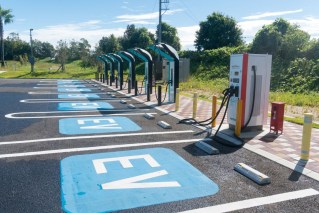
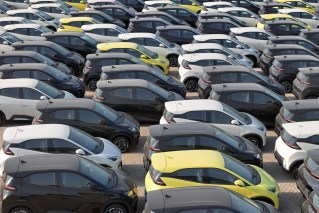
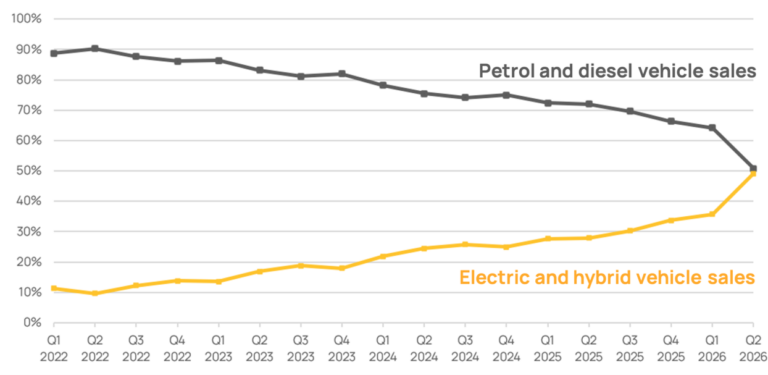
Australia has recorded its strongest quarter yet in electric vehicle sales, with the latest figures showing sales of new battery electric vehicles (BEVs) more than doubling, and hybrid sales reaching a record high in the three months to June 30.
“People are buying them in record numbers right now because petrol prices have gone through the roof,” Australia Institute co-CEO Dr Richard Denniss said.
The ongoing war in Iran and closure of the Strait of Hormuz – a critical crude oil shipping route – led the price of unleaded to climb to a record high of $2.53 a litre, while diesel hit almost $3.20 a litre.
“They’re getting a lot cheaper, there’s a lot more of them … and they meet more and more people’s needs,” Denniss said on his podcast What’s the Point.
Source: Australian Automobile Association
The latest quarterly data from the Australian Automobile Association showed that about one in five new cars sold was fully electric, increasing their market share from 12.25 per cent to more than 21 per cent over the first half of the year.
Denniss said while the figures were promising, most cars on Australian roads still ran on petrol and diesel.
However, he argued the uptick in EVs and hybrids was contributing to the nation’s fuel security.
“Even though we just went through this energy crisis, thanks to Trump invading Iran, and most Australians paid more for petrol, we didn’t run out of petrol,” he said.
“We didn’t have to queue for petrol. We didn’t have to ration petrol, that’s for sure. And the more people driving electric cars, the less people in petrol need to worry about running out of petrol.”
Denniss said the figures should put an end to the culture war over electric vehicles that dominated headlines ahead of the 2019 federal election.
Then prime minister Scott Morrison accused then-Labor leader Bill Shorten of wanting to “end the weekend” by introducing a target of 50 per cent of new car sales being electric, saying EVs are “not going to tow your trailer”.
“It’s not going to tow your boat. It’s not going to get you out to your favourite camping spot,” he said.
Denniss said it was a political strategy designed to encourage people to “pick teams”.
“The ute was this statement of kind of masculine intent of the intimidating size and power of these things was everything that a Lycra-clad cyclist hates and that a woke inner-city latte sipper hates,” he said.
“He was just trying to remind different groups in Australia that they don’t like each other and obviously that is not a very good way to win elections because Scott Morrison was wiped out.”
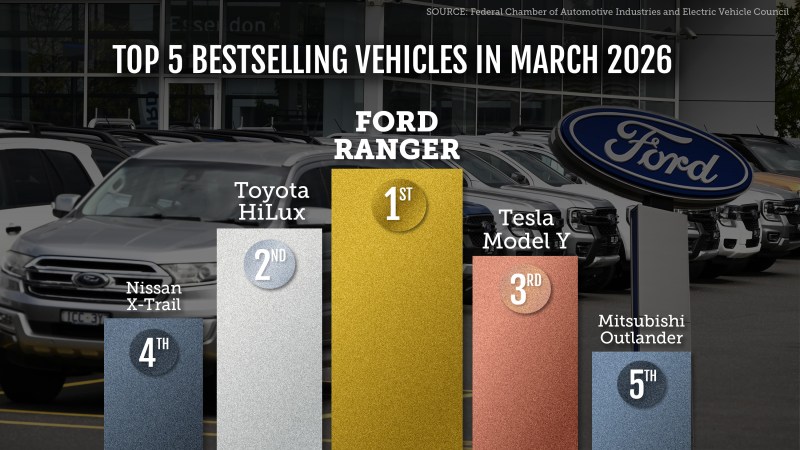
Australia’s best-selling vehicles, as at March 2026. Image: AAP
Deputy Liberal leader Jane Hume said the latest figures showed government subsidies on EVs, introduced in 2023, had “run out of control”.
“I think that’s the market speaking with its feet, and probably why we don’t necessarily need more subsidies on electric vehicles,” she said.
“Unfortunately, the subsidy program that’s been run by this government has run out of control and it’s costing Australians more and more.”
The Albanese government introduced the fringe benefits tax exemption at the start of 2023, making it thousands of dollars cheaper to buy an electric vehicle.
The scheme has proved far more popular than the government expected. By May, it was forecast to cost $1.35 billion this year alone, well above the initial estimate of $90 million.
In its latest budget, Labor announced it would slowly wind back the subsidy from April 2027, saving $1.7 billion over five years from 2025-26.
“In the short term, Jane Hume is slightly right. But she’s strategically silent about the enormous subsidies for those big utes that for some reason the National Party seems to love,” Denniss said.
He said if the EV discount was scrapped, the subsidies on those “big, dumb utes” should go too.
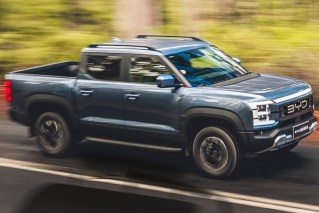
“The best-selling cars in Australia today are those giant utes,” he said.
“In time, we won’t need to subsidise electric vehicles, but let’s get rid of the subsidies for the big utes either beforehand or at the same time.”
What’s the Point? with Richard Denniss explains the political and economic decisions shaping the lives of everyday Australians lives, answering key questions along the way. By getting straight to the point, Richard helps listeners understand how democracy works and why it matters.
This article was originally published on The Point. Read the original article.
Republished under Creative Commons — Attribution-NoDerivatives 4.0 International — CC BY-ND 4.0.
Want to see more stories from The New Daily in your Google search results?
- Click here to set The New Daily as a preferred source.
- Tick the box next to "The New Daily". That's it.