Swimming, diving bans amid fears for cuttlefish numbers
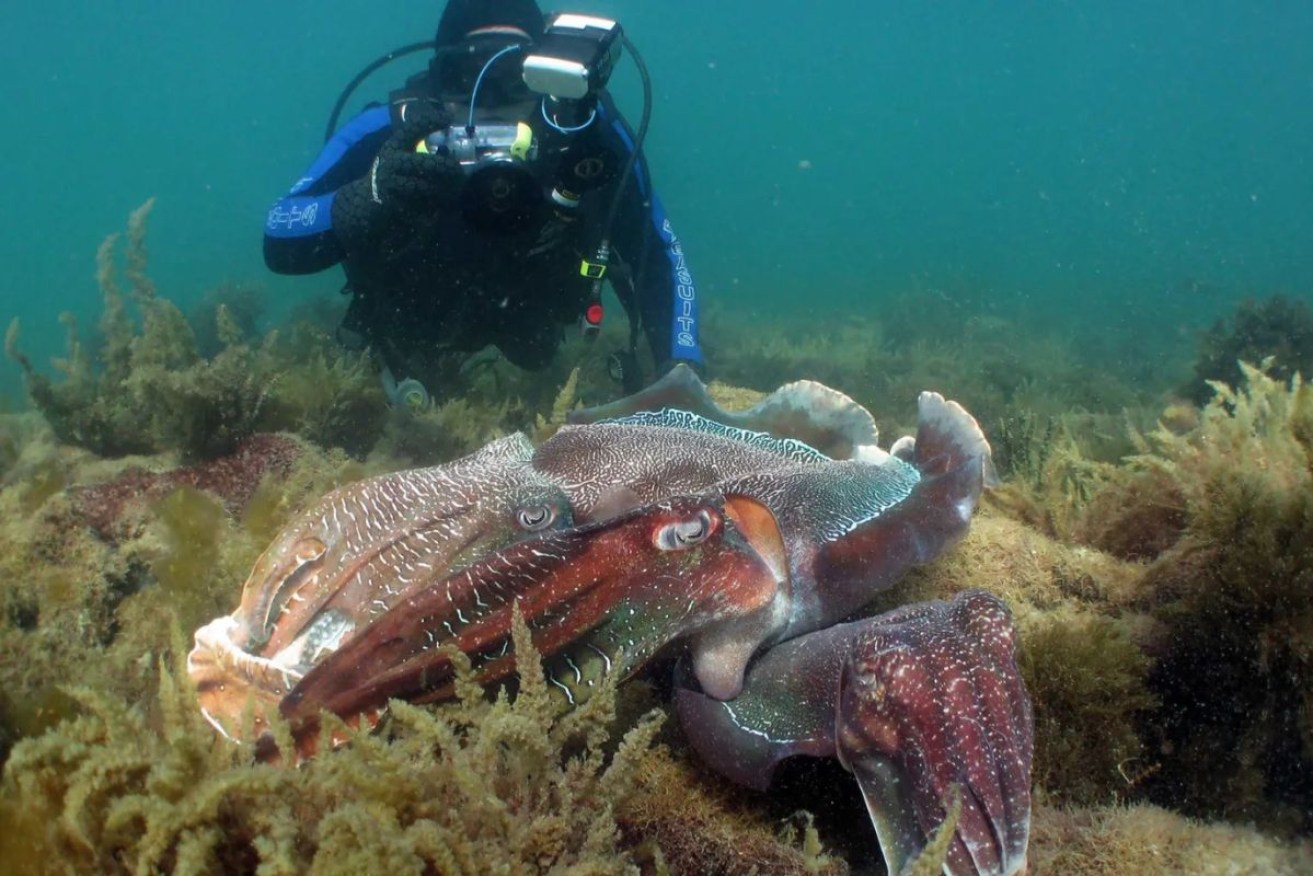
Waller said up to 200,000 giant cuttlefish sometimes gathered in waters off Whyalla. Photo: Whyalla.com
Tourism operators have welcomed temporary bans to protect Whyalla’s giant cuttlefish, with one local blaming South Australia’s harmful algal bloom for a “significant” fall in numbers.
The restrictions – which ban swimming, snorkelling, diving and vessel anchoring – apply across the Upper Spencer Gulf.
They are designed to protect the breeding site of giant Australian cuttlefish after “significantly low” numbers turned up for an annual mating ritual.
It follows revelations last week that a Whyalla tourism operator has turned away thousands of people hoping to see the spectacular giant cuttlefish mating ritual, blaming the harmful algal bloom for the species having almost disappeared from local waters.
SA Environment and Tourism Minister Emily Bourke said the temporary ban on recreational activities would minimise disturbance to breeding cuttlefish and help protect their eggs and hatching.
The 90-day exclusion zone applies from July 1 to part of the Upper Spencer Gulf Marine Park that includes a sanctuary zone between Black Point and Stony Point. There are fines of up to $100,000 for breaching the bans.
“This is a natural wonder – this is something we don’t see anywhere else in the world. Our giant cuttlefish come to one spot to breed, and that is in the Upper Spencer Gulf in Whyalla, and that’s why we need to have this temporary protection,” Bourke said on Tuesday.
Cuttys Boat Tours owner and operator Matt Waller said last week he had been unable to run boat tours this year because of depleted cuttlefish numbers, saying that it had caused a million-dollar black hole for Whyalla.
Waller believed that SA’s harmful algal bloom, which was present on the Upper Spencer Gulf coastline for one week around New Year’s Eve, had decimated the species.
“I don’t think there’s anything else that’s changed or abnormal or weird or different,” he said.
“[Whyalla has] always been a working-class, blue-collar town, but there’s a sense of pride that where we live is the most amazing place for one of the most unique scenarios ever to be seen, and it’s not happening.”
Waller welcomed the announcement, saying the “few remaining animals should be left undisturbed to do what they need to do to survive, without human interference”.
South Australian Research and Development Institute executive director Professor Mike Steer said divers had seen fewer than 50 individuals when they surveyed the area last week.
However, he said the breeding season could last until mid-August and he was hopeful that cuttlefish would still turn up.
“This time of the year, we would expect to see tens of thousands of cuttlefish start to aggregate around that Point Lowly stretch – it’s a really important part of the ecosystem, that rocky area that stretches from Black Point right up to Point Lowly,” Steer said.
“What we want to do is encourage a small amount of spawning that’s happening there at the moment, plus we want to encourage the successful eggs and hatching.
“The best thing that we can do is just leave them undisturbed.”
According to SARDI surveys, which began in 1998, cuttlefish numbers fluctuate significantly from year to year, with a high of 247,000 in 2020 and a low of 13,500 in 2013.
Steer said the toxic algal bloom could be a factor in this year’s depleted populations.
“There may be a link there, but we also know that temperature and food availability drive separate populations, and that includes cuttlefish, calamari and octopus,” he said.
“There could be a number of environmental drivers that are helping to shape that population stream.”
Bourke said the restrictions had the backing of local tourism operators and the Whyalla council.
Republished from InDaily