Nine spectacular – and serious – Australian hikes

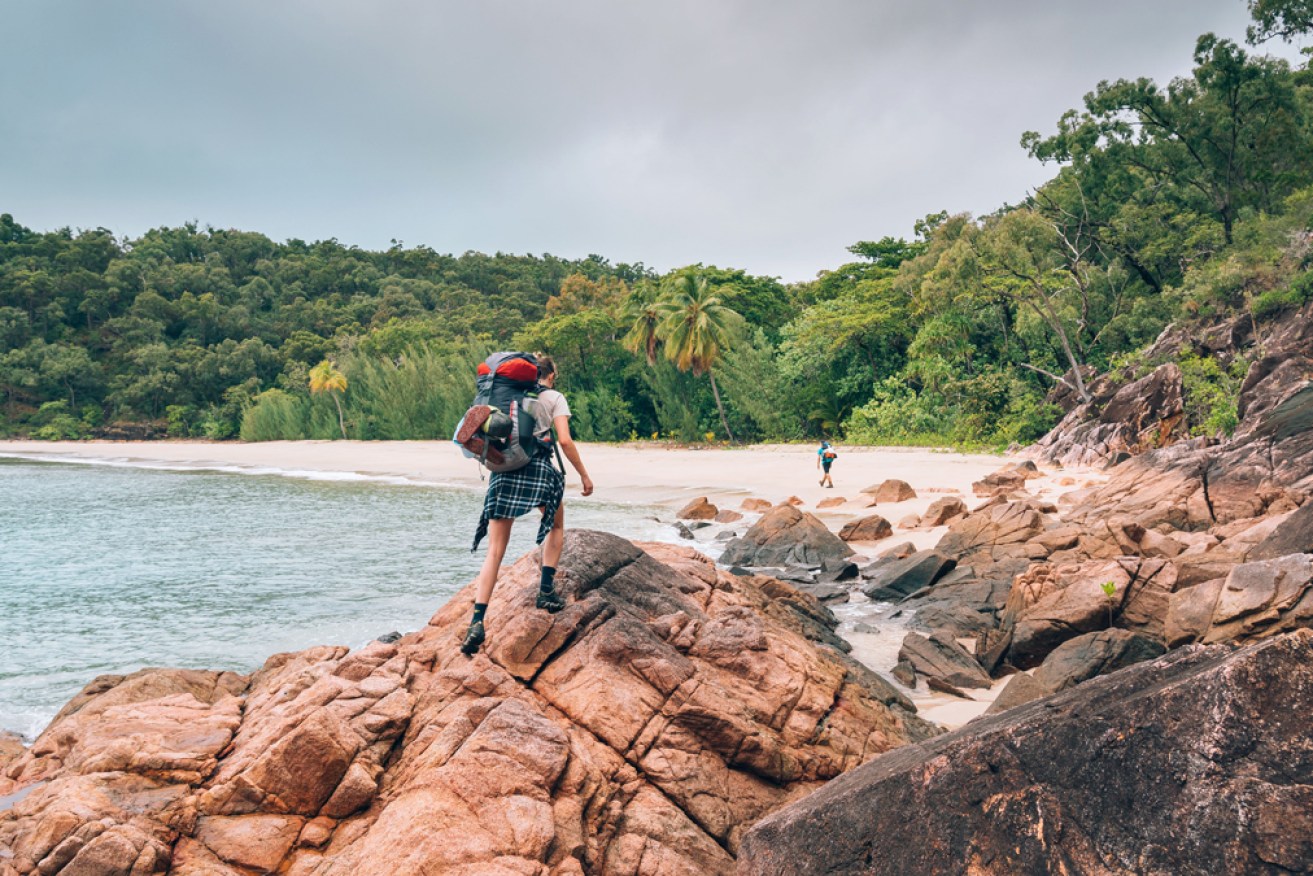
Into the wild on the remote Thorsborne Trail. Photo: Tourism & Events Qld/Jesse Lindemann
From rugged wilderness trails and epic outback adventures to lush tropical hinterlands, Australia offers some of the world’s most unforgettable walking experiences.
A new guide from Lonely Planet’s experts, breaks down exactly when to go, so you can make the most of every step.
Handily, there’s a walk that’s just right for almost every month of the year. Here are the travel company’s pick of the best Australia has to offer.
1. June: Thorsborne Trail, Qld
Play Robinson Crusoe on the isolated tropical wilderness of Hinchinbrook, Australia’s largest island national park.
Being cast away on a tropical isle is mostly as you’d anticipate. You’ll collect water from streams, shower under waterfalls, wallow in balmy lagoons. You’ll trek humid forest and empty coconut-palm-shaded beaches, and summit peaks for superlative views.
Known to the Indigenous Bandjin people as Munamudanamy, Hinchinbrook lies off the Queensland coast between Cairns and Townsville. Most of this pristine island of some 400 square kilometres is strictly off-limits – to humans, that is.
To experience this wilderness, hike the Thorsborne Trail along the east coast. Though relatively short, it’s deceptively challenging: entirely self-supported, you’ll need to wade or rock-hop across rivers, tackle sandy and swampy ground, and carry all supplies and camping gear, bedding down in basic campsites. Winter’s best – avoid the wettest months (the trail closes January and February).
The rewards are as rich as facilities sparse. Watch for dugongs on the crossing from Cardwell to Ramsay Bay, from where you’ll pass an ancient shell midden – one of few reminders of Aboriginal occupation – then stroll along Blacksand Beach before climbing Nina Peak (312 metres) for lookouts to inland mountains.
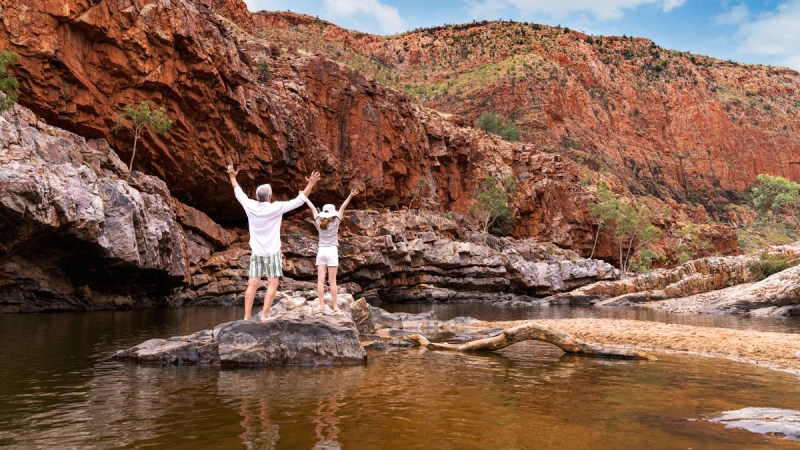
Ormiston Gorge is part of the spectacular Larapinta Trail. Photo: Tourism & Events NT/Shaana McNaught
2. August: Larapinta Trail, NT
Follow an ancient mountain range into the Red Centre on a trail that takes in sharp ridges, cool creeks and millennia of Indigenous Australian history.
It was around 450 million years ago when the Alice Springs Orogeny – a significant tectonic episode – started sculpting the surrounding Outback, gradually squeezing the continent’s edges into its middle and creating large mountain chains.
The Larapinta Trail follows the spine of one of those: The West MacDonnell Ranges – or Tjoritja, as it’s known to the Arrernte, the land’s Traditional Owners. The Arrernte chart their history back 40,000 years, and this region is imbued with their stories, sacred sites and Songlines. Now, the Arrernte allow walkers to explore here, too.
Linking Alice Springs to 1380-metre-high Mount Sonder, Tjoritja’s highest point, the Larapinta Trail is as challenging as you’d expect a multiday, off-grid, Red Centre bushwhack to be. The terrain is largely rough, rocky and loose underfoot, with steep gradients and occasional scrambles over boulders.
There are few facilities, just simple campsites and a couple of kiosks to pick up basic supplies (and a few treats). And unless they are on an organised tour, hikers must be able to fully fend for themselves in the Outback.
There’s also virtually no shade, which is why it would be verging on madness to try trekking the Larapinta outside the cooler winter months – walk it between May and August. Nights can be chilly, even dropping below freezing, but daytime temperatures loiter around 23 degrees.
This is also the driest period, with August often most arid – a good time to see resurgent desert wildflowers.
larapintatrail.com.au nt.gov.au
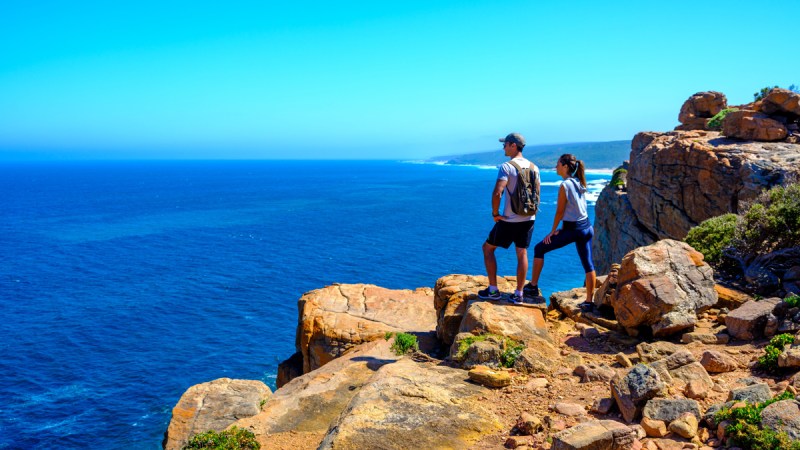
Contemplating a wild blue yonder on the Cape to Cape Track near Wilyabrup Cliffs. Photo: Tourism WA
3. September: Cape to Cape Track, WA
Tramp the epic shoreline of Australia’s far south-west, hiking between historic lighthouses as spring wildflowers bloom and whales cruise offshore.
You can’t miss the start and end points of this hike. Gleaming white towers loom over both trailheads, like gargantuan pins stuck in the map by a helpful giant: The lighthouses at Cape Naturaliste in the north and, 93 kilometres south as the crow flies, Cape Leeuwin.
This being Western Australia’s temperate extremity – ending at the mainland’s south-westernmost point – walking is possible year-round, though naturally hotter in summer (check for bushfire alerts), cooler and wetter in winter.
Plot a Venn diagram of criteria for a dream hike, and September sits plum in the middle. It’s warm but not scorching, with modest tourist numbers; wildflowers are starting to bloom in profusion; and whales are still cruising past, along with pods of bottlenose dolphins. Not to mention surfers: There are up to 80 breaks along this stretch of coast, depending who you ask.
The scenic drama kicks in almost as soon as you set out from Cape Naturaliste, assuming you’re walking north-south. Just a few kilometres in, the trail reaches the lookout over Sugarloaf Rock, the outcrop on which red-tailed tropicbirds nest from September.
It’s a theatrical curtain-up for the craggy climax along Augusta Sea Cliffs – all limestone pinnacles atop granite heft – to Cape Leeuwin, the point where the Indian and Southern Oceans meet: An apt high-five to congratulate triumphant hikers.
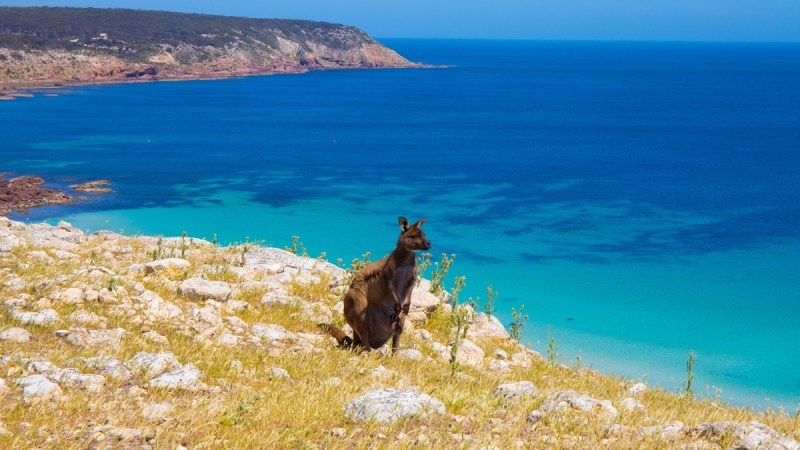
There are plenty of locals to meet on Kangaroo Island. Photo: SA Tourism Commission
4. October: Kangaroo Island Wilderness Trail, SA
There’s never a bad time to visit Kangaroo Island. Australia’s third-largest isle is a haven for native wildlife, so there’s always something to see: Wallabies bounding, koalas mating, seals pupping, whales cruising by.
But spring, with its budding orchids, bird-busy skies and mild temperatures, is lovely for a walk, as well as falling before peak bushfire season.
From the trailhead in the island’s wild west, the path for the reopened Kangaroo Island Wilderness Trail heads into the bush, first via Platypus Waterholes, then into eucalypt woodland and along the Rocky River. Day two heads to the crashing Southern Ocean – look for dolphins, seabirds and, between June and early October, southern right whales.
The route passes close to Cape du Couedic Lighthouse before day’s end at Hakea Campground. Beyond Hakea, the trail heads through mallee scrub towards the Dalí-esque Remarkable Rocks.

Camping on the Grampians Peak Trail. Photo: Visit Victoria
5. November: Grampians Peaks Trail, Vic
Names reveal a lot about a place – and a hike. Take the Indigenous Jardwadjali word for central-west Victoria’s Grampians Range: Gariwerd – “Big Mountain”.
Encompassing peaks with daunting monikers such as Mount Abrupt and Mount Difficult, this 1672-square-kilometre national park is a rugged, wild expanse of sandstone summits and crags.
Unsurprisingly, the Grampians Peaks Trail that snakes north-to-south through the park isn’t to be taken lightly. This 13-stage trek finally opened in 2021 after years of work. The result is a perambulating showreel of the park’s greatest hits – dramatic sandstone ridges and cliffs, ancient Aboriginal rock art, varied wildlife and, of course, inspiring views.
Hikers encounter the region’s main town, Halls Gap, at the end of stage four – offering a welcome chance to slumber in a comfy bed and feast on meals someone else has cooked – but for the rest of the trek you must be fully self-sufficient.
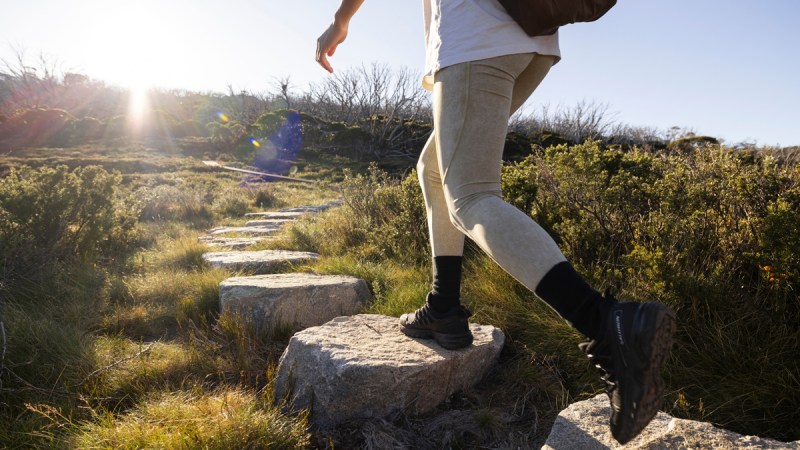
The Snowies Alpine Walk is a testing, but rewarding, challenge. Photo: Destination NSW
6. February: Snowies Alpine Walk, NSW
Bigger doesn’t always mean better – but sometimes it adds spice to a hike. So it is with this sky-scraping trek, NSW’s newest multiday ridge hike, which tackles some of the higher ridges and peaks of Kosciuszko National Park – including 2228-metre Mount Kosciuszko.
This is a testing challenge on often exposed trails, involving rock-hopping across the Snowy River and sheer climbs. But that’s not the only reason why it’s best walked in summer, when paths are typically clear of snow. It’s also wildflower season, when meadows are spangled with purple eyebright, alpine mint, white gentian, yellow billy button and everlasting and yam daisies. Look out, too, for grazing wombats, rare mountain pygmy possums and perhaps short-beaked echidnas.
The Snowies Alpine Walk is a point-to-point trail with no public transport, so you’ll need to set up transfers and consider accommodation – stay at one place and tackle it in four day-long outings, or move on to a new bed each night?
Source: Tourism Tasmania
7. March: Three Capes Track, Tas
Sample Tasmania’s epic wilderness, striding alongside dolerite cliffs, through dense forest and past pounding surf.
Boarding the boat at Port Arthur feels like release – and not just because you’re departing Tasmania’s most notorious former penal colony. You’re here for the eco-cruise across Port Arthur Bay, spotting cormorants and white-bellied sea eagles on an amuse-bouche for one of the island’s most accessible microadventures.
Taking in two dramatic capes, this moderate hike provides a taster menu of wild Tasmania: Cliffs, forest, beaches and all the animals they harbour. Walkers stay in simple cabins, and pass “encounters” – alfresco sculptures evoking natural and historic aspects of the Tasman Peninsula.
This gnarled south-eastern promontory is exposed to the wildest wind and waves, so many tackle the track in summer (December-February).
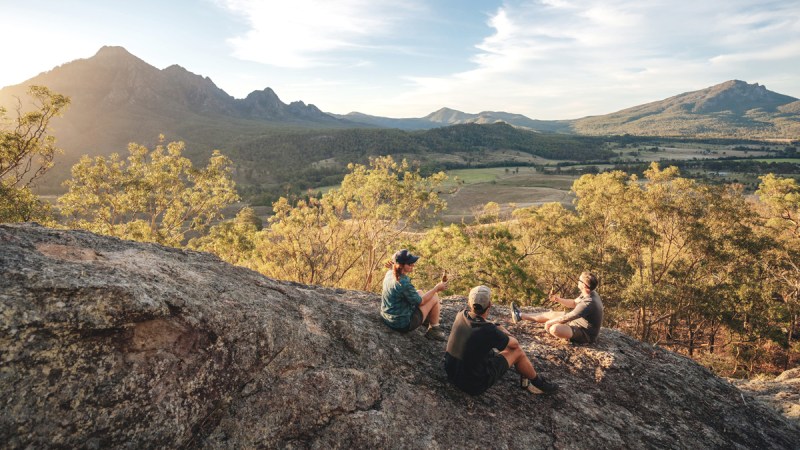
The climbs are steep but the views are worth it on the Scenic Rim. Photo: Tourism & Events Qld/Reuben Nutt
8. April: Scenic Rim Trail, Qld
Plunge into the world’s largest subtropical rainforest on a trek through Gondwana’s geological and biological history – a challenging hike for even the strongest legs.
There are views across forests, valleys and forest-cloaked peaks from numerous lookouts; and the walk traces a rim – of ancient volcanoes, as it happens, adding geological spice to an already tasty recipe of diverse wildlife and challenging tramping.
Paths are unmade, sometimes tricky to follow, often slippery and steep, with sheer ascents from day one on the sweaty climb through Thornton View Nature Refuge. Best come when the weather’s cooler and drier: Mid-autumn is a sweet spot when greenery is lush after the end of the “Wet”’, tourist numbers are yet to climb and camp bookings easier to snag.
You can pay for eco-luxury accommodation, toothsome catering and an expert guide with the Spicers Scenic Rim Trail experience. But experienced backcountry hikers can enjoy this wilderness adventure for just a few bucks a night. You’ll drink in the same clifftop vistas, tackle the same climbs, encounter the same astonishing animals.
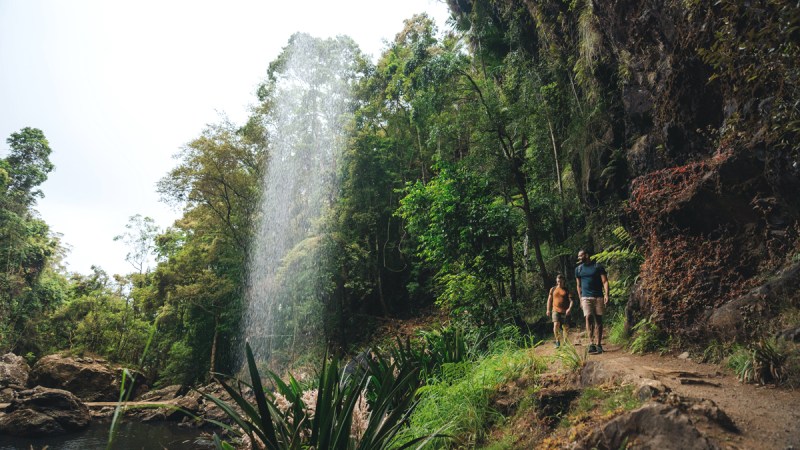
The Gold Coast, but not as you might expect. Photo: Tourism & Events Qld/Reuben Nutt
9. May: Gold Coast Hinterland Great Walk, Qld
Immerse yourself in a tale of two parks on this S-shaped Great Walk through ecosystems that pre-date the dinosaurs. Emerald, avocado, apple, jade, lime, lincoln, olive, pea, pistachio, turquoise: How many shades of green can you name?
Ponder that during a hike through the chunk of Gondwana Rainforests straddling Lamington and Springbrook National Parks. This luxuriant swathe is an ocean of greens swimming with wildlife – and hikers, thanks to the three-day Gold Coast Hinterland tramp.
There’s no guarantee you’ll stay entirely dry in this patch of primeval rainforest, but avoiding wetter November-March is wise. By May, conditions are that bit cooler, drier and more pleasant for walking.
You’ll likely hear the piercing, metallic calls of scrubbirds and the diverse mimicked songs of lyrebirds. Pademelons, wallabies, quolls, possums, sugar gliders and even platypus inhabit the parks, too.
Republished from Where to go When: Hiking by Lonely Planet, $55 RRP. shop.lonelyplanet.com
Want to see more stories from The New Daily in your Google search results?
- Click here to set The New Daily as a preferred source.
- Tick the box next to "The New Daily". That's it.

Four spectacular wildflower road trips in WA