The farmer wants a wife, the farm gets an entrepreneur
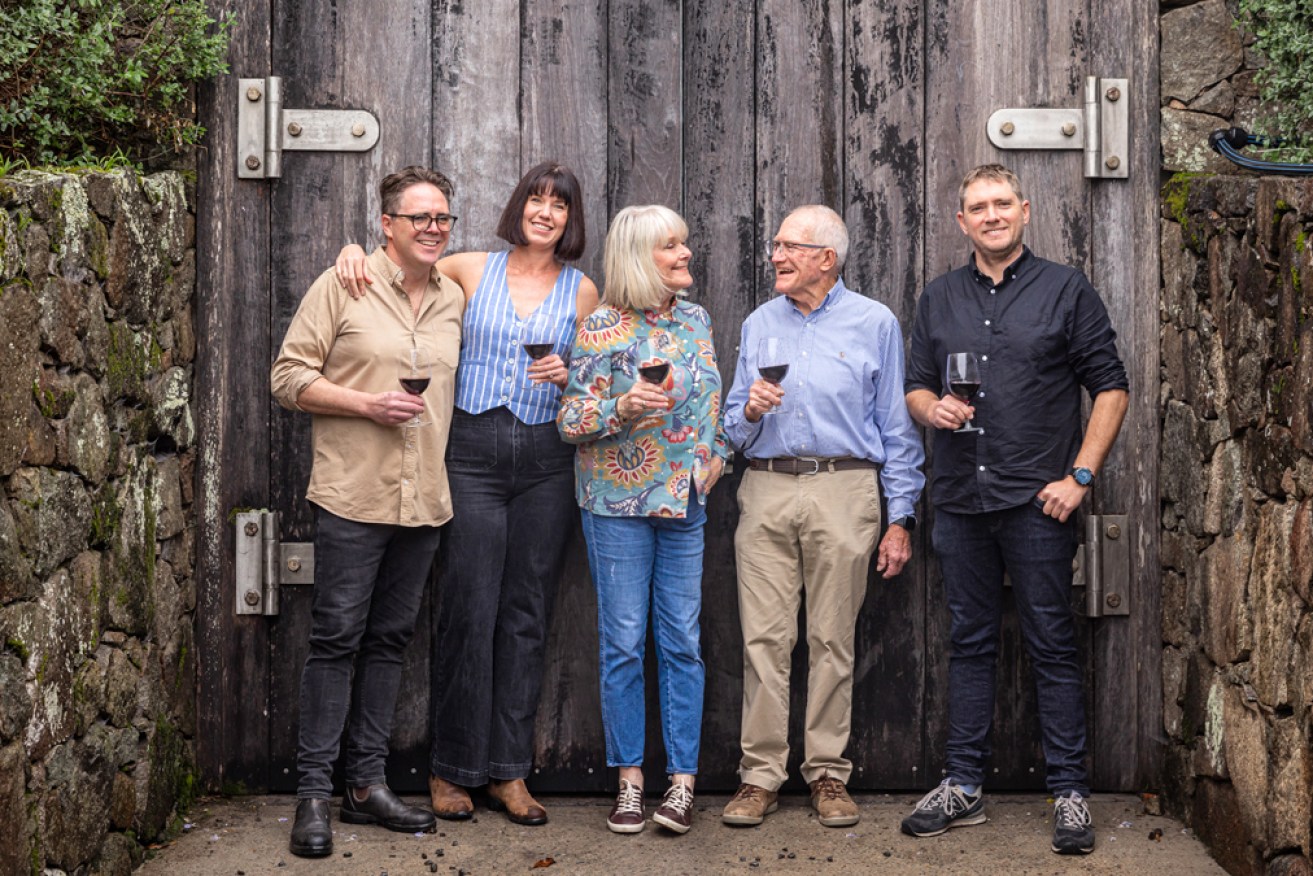
Tom, Libby, Rosie, Griff and Wally Cupitt at the family estate on the NSW south coast. Photo: AAP
When a prominent dairy farmer’s daughter married the neighbour’s son, the families’ rolling green coastal properties became one.
Nearly two centuries after that young couple took on Washburton Farm near Ulladulla, on the NSW south coast, the 75-hectare tract is now home to Cupitt’s Estate winery.
The long history of industrious families continues: Rosie and Griff Cupitt founded the winery, which is overseen by their son Tom, daughter-in-law Libby and head winemaker son Wally.
With an agritourism operation that includes luxury accommodation, vineyards, a cellar door and restaurant, the Cupitts need all hands on deck.
“Working for your family, you’re just so connected to it, it’s such a passionate thing,” Libby Cupitt said.
There’s more to agritourism ventures than just deepening family ties, according to business and tourism consultant Giovanna Lever.
Diversifying farm operations could help ease the tricky process of succession and handing over to the next generation, keeping young people in the regions and building the professional workforce, she said.
Lever said agritourism could breed a new crop of entrepreneurs, particularly among people who grow up rurally, move away and return with their spouses.
“Without making any farmer wants a wife jokes here, when children bring a partner onto the farm that can be quite confronting for them,” Lever, managing director of Sparrowly Group, said.
“Perhaps they’ve left a career or they haven’t necessarily been rural people but they’ve got all these skills.
“Often we find agritourism is a way for the partners or the kids themselves to come back or to stay on farm and then, by extension, diversify into agritourism.”
Cupitt joined her parents-in-law’s business in 2011 after working in town planning in London. Her qualifications equipped her with meticulous attention to detail, matched with a long obsession with food and wine.
“We came back and we just traded everything we had,” Cupitt said.
“This industry just lights me up.”
It appears to be a safe bet.
Australian agritourism is forecast to be worth $18.6 billion by 2030 and a key part of economic growth in regional areas, according to research by the CSIRO.
International visitors are likely to lead the growth, though it will be reliant on improvements to regional infrastructure such as roads and connectivity, the research says.
After diversifying the family vegetable farm and planting a macadamia orchard in Bundaberg, Queensland, Janelle Gerry and her brothers soon realised the powerful allure of on-farm experiences.
They expanded their operation to include a cracking plant, shop and cafe.
“Our cafe is amongst the macadamia trees, people can pick up nuts from under the tree and crack them,” Gerry, the managing director of Macadamias Australia, said.
“Much like they may have as a child, re-living those memories.”
With a third generation on board, the business is a leading exporter of the native nuts and also supplies major supermarket chains.
Having a family business drove innovation, Gerry said.
“Any multigenerational business has to be continually evolving and growing because there’s more people to look after,” she said.
“Your business can’t be stagnant.”
The Cupitt family has also looked beyond their own to build the local workforce, running a gap-year program that exposes high school graduates to winemaking, events and hospitality.
“One of the girls that did it wants to be a winemaker, when she hadn’t even drunk wine before this,” Cupitt said.
“It’s pretty incredible what you can open people up to if they’re passionate or excited.”
While peak bodies for wine are encouraging vignerons to expand into agritourism, producers in NSW face unexpected taxes.
NSW Farmers issued a warning to smaller producers that they appear to be in the sights of the revenue office over the definition of primary production.
A winery with a cellar door and a cherry farmer with a “pick-your-own” were among those slugged with land taxes after Revenue NSW ruled their properties were not used predominantly for primary production.
The state’s peak farming body has put pressure on the government, arguing the law discourages farmers from adding value to their produce and diversifying their income.
“We want to see our farmers having the opportunity to … make a buck and be able to diversify and re-invent agricultural production without getting penalised the moment they step over an imaginary line,” business, economics and trade committee chair John Lowe said recently.
After Cupitt returned from London with her husband, a trained civil engineer, she realised they had much to offer the regions.
“We really couldn’t see ourselves going back into the office,” she said.
“There was so much potential to be met.”
A national agritourism summit will be held in the NSW Tweed region in October.
-AAP
Want to see more stories from The New Daily in your Google search results?
- Click here to set The New Daily as a preferred source.
- Tick the box next to "The New Daily". That's it.