 Subscribe

Qantas to axe 850 jobs, outsourcing roles to India after tech deal
Airline carrier Qantas has told staff in an internal email it will axe around 850 jobs after signing an IT deal with consultancy firm Accenture.

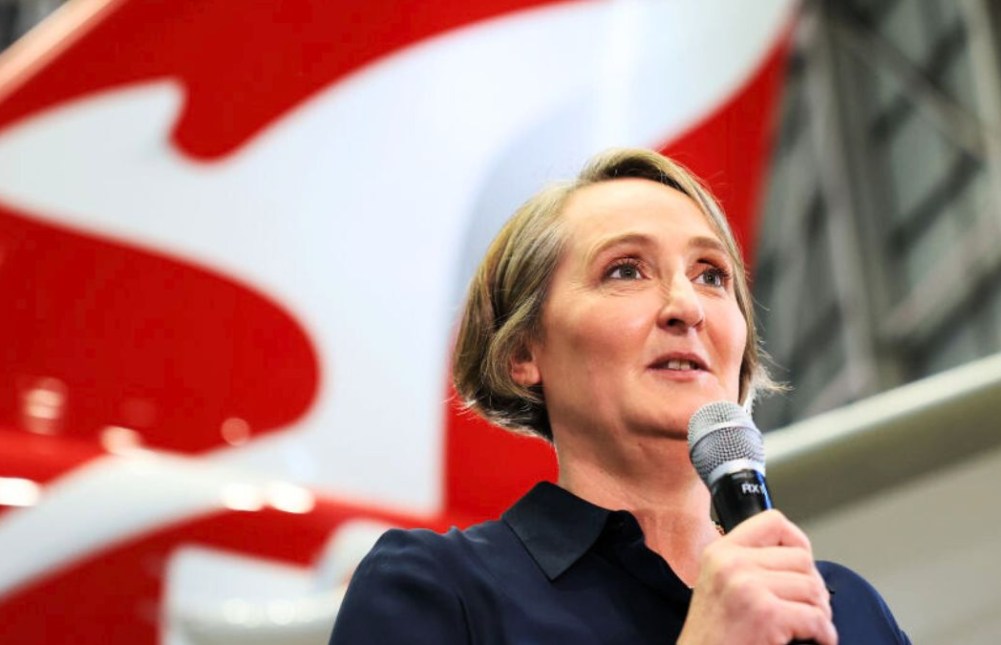
- Airline carrier Qantas has told staff in an internal email that it will axe around 850 jobs after signing an IT deal with consultancy firm Accenture.
- The first changes from the deal are expected to take effect by mid-2027.
- Qantas CEO Vanessa Hudson said Tuesday she knew the deal would come as “hard news for some.”
Qantas will axe around 850 jobs and outsource roles to India after it signed an IT deal with consultancy firm Accenture.
In an internal email to staff, a copy of which The Money Edition has seen, Qantas CEO Vanessa Hudson said she expects the first changes to be in place by mid-2027.
“I know this is hard news for some, and I’m sorry for the uncertainty it brings,” the email reads.
“While there are important reasons behind today’s news, I know that doesn’t make the impact on our people any easier.
“We expect around 850 roles to be affected over the coming years, with the first changes expected to be in place by mid-2027.”
A Qantas employee who spoke to The Money Edition on background said that the jobs at stake were mainly corporate roles. Flight attendant or pilot roles are unlikely to be affected.

“Together we will redesign and simplify parts of how our corporate functions work and reduce duplication, so teams across the Group can spend more time on work that creates value for our customers and the business,” Hudson’s email continues.“The first phase will start with finance, procurement, people and marketing, with some of the services in these areas moving to Accenture, delivered mostly by its teams in India and some in Australia.”
Hudson said “individual outcomes have not been determined”, and the airline will begin consulting affected employees and their union over the next few months.
Two hours after the email to staff, Qantas released a public statement stating the deal was made to bring more than 1,000 legacy technology systems into one cohesive process.
Hudson said the unprecedented adoption of AI meant the airline needed to adapt quickly.
“Modernising these systems and connecting the data across them is the critical next step to remove complexity, unlock innovation and accelerate the Group’s use of AI, with lasting benefits across the business,” the airline said.
“This comes as the airline responds to the pace of change in technology and AI globally, which is rapidly transforming how businesses operate, what customers expect and how people do their jobs.
“Like every airline, Qantas runs on technology built up over decades for a different era, including more than 1,000 legacy applications that were never designed to work together.”
Investors reacted strongly to the deal, pushing the airline’s share price up by almost 4 per cent after the news became public.
Qantas reported its full-year results in August, where it delivered a net profit of $1.3 billion, down 19.8 per cent on the previous year.
Union demands Qantas honour its word on jobs
The Australian Services Union (ASU) said when reports of a deal with Accenture, known internally as “Project iQ”, first became public, the airline assured it that no jobs would be impacted.
“Earlier this year, Qantas told us directly there was no plan to offshore any jobs,” ASU Assistant National Secretary Scott Cowen told The Money Edition.
“Today, they’ve come out and told hundreds of staff members that their work will now be delivered mostly from people overseas. Qantas staff have the right to an explanation.”
Cowen said the union will meet with Qantas members onsite today.
“AI is having a huge impact on workers across the country, but the cost of technology change should not be borne by the workers who have kept the airline running for years,” Cowen said.
“Sending more jobs overseas is not in the spirit of Australia.
“Our priority is keeping as many of these jobs as possible in Australia and ensuring that every affected worker has a real choice about their future at the airline.”
Sebastian Sinclair contributed to this report.