 Subscribe

Oil could hit $US150 if Trump resumes strikes, Westpac warns
Economists modelled Australian diesel prices rising to an average of $2.47 a litre, while petrol prices would average $2.31 a litre for a year or more.

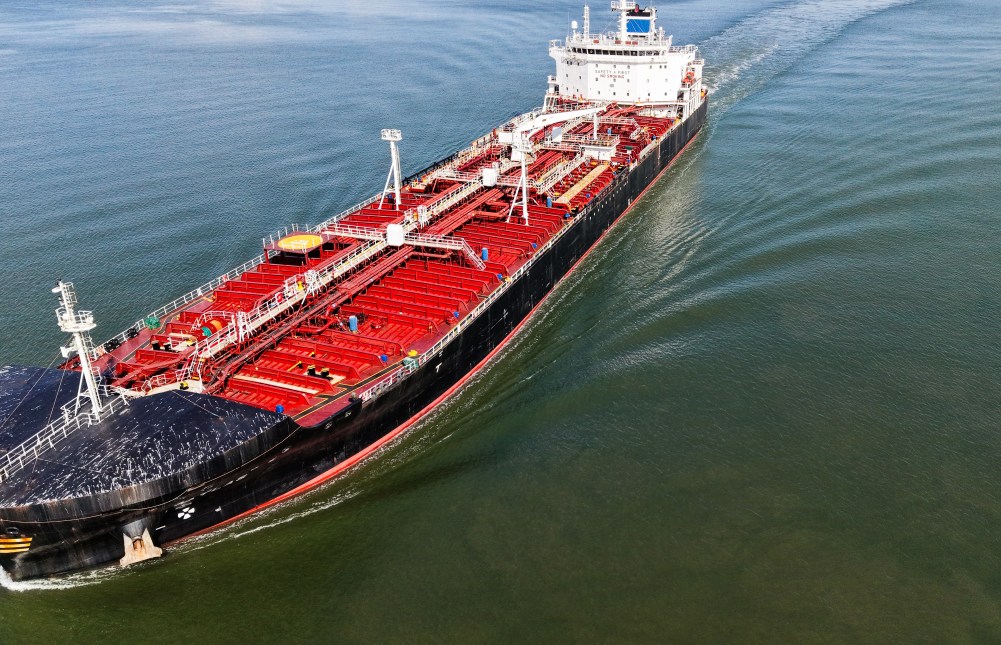
- Westpac has forecast that if the war between the US and Iran were to intensify, oil could hit $US150 a barrel.
- Such a prediction would cause shockwaves through the export and fuel market, where current prices are already hurting Australian motorists at the bowser.
- The prediction, which is modelled as a worst-case scenario, would likely contribute heavily to inflation in Australia and generate more RBA rate hikes.
Westpac has warned that oil prices could hit as high as $US150 a barrel under a worst-case scenario where the US escalated its war with Iran.
In a research note distributed to clients, Westpac economists said that under an “escalation scenario”, they forecast Brent Crude hitting record highs not seen even at the start of the war.
They modelled a scenario where “the gap between the US and Iran proved to be too wide and the US resumes strikes after the midterms.”
“Iran then responds with attacks on shipping and Gulf energy infrastructure, damaging export, storage and refining facilities,” the bank theorised.
“A lasting agreement is not reached until 2028.”

Under that scenario, the economists modelled Australian diesel prices rising to an average of $2.47 a litre, while petrol prices would average $2.31 a litre for a year or more.
“In the escalation scenario, higher fuel costs flow through to transport, food and other energy-intensive goods such as plastics and fertilisers,” writes Sian Fenner, Head of Business & Industry Economics at Westpac.
“Australian headline CPI remains above 4.5 per cent for much of 2027, with underlying inflation remaining sticky at above 3 per cent until late 2028.
“The RBA faces a difficult trade-off between much higher inflation and a significant hit to activity, as households cut discretionary spending and businesses defer investment.”
Of course, such a scenario remains hypothetical, with economists saying that under the most likely outcome—which is not the escalation scenario—Australia will still see a higher oil price.
“We do not see a lasting US-Iran agreement until at least mid-2027,” Fenner writes.
“In the meantime, we assume there will not be a return to full-scale military intervention.
“However, periodic Iranian attacks on ships and facilities are expected to continue, as will the US blockade of Iranian exports, keeping a supply risk premium in place.
“We look for Brent futures to average around US$101/bbl in Q4, then ease gradually as demand from refiners and governments to rebuild stocks partly offsets recovering supply.”
According to NSW-based motoring service the NRMA, the current average price for regular unleaded fuel in Sydney is 239.8 cents per litre.
Average regular unleaded prices are expected to fall to the mid-230 cents per litre over the coming week due to falling wholesale prices.
Topics: Australian economy, Banks, Economy, Petrol Prices