 Subscribe

Trapped in a mortgage prison? Here’s how to escape it
It’s called a “mortgage prison”, and some of Australia’s most vulnerable new buyers could soon find themselves behind (financial) bars.

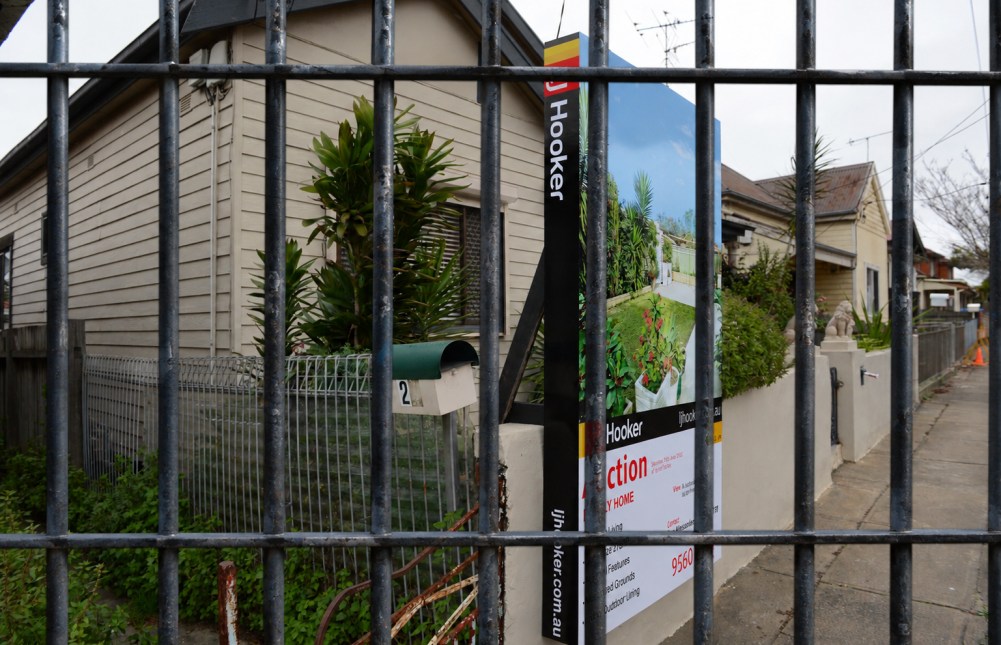
- First homebuyers who purchased with just a 5 per cent deposit could find themselves in “mortgage prison” and unable to refinance their loan.
- Mortgage prisoners are often trapped because they cannot pass the serviceability tests of other lenders.
- First homebuyers with small deposits could be at risk if falling house prices suddenly drop them into negative equity.
There is no steel bars, no armed guards, and no yard to exercise in – but thousands of new Aussie borrowers could find themselves trapped in the financial penitentiary known as “mortgage prison”.
Coined after the Global Financial Crisis in 2008, a “mortgage prisoner” is a borrower locked in with one lender who can’t meet the tests required to refinance.
The latest data from property research firm Cotality shows the Australian housing market is on track to record its steepest downturn in 40 years, with the average home price falling for six consecutive months.
A fall in prices, particularly if someone bought at the peak with a small deposit, could quickly land many buyers in mortgage prison.

What is a mortgage prison?
A mortgage prisoner is a borrower locked in with their current lender and unable to refinance their home loan.
By definition, they are “locked up” behind a repayment rate that could plunge them deeper into financial stress.
The irony of being a “mortgage prisoner” is that many borrowers in this situation haven’t done anything wrong and are often reliable and sensible with their finances.
Analysis by mortgage broking firm Aussie Home Loans found that 20.7 per cent of buyers, or one in five, who purchased a property since July 2023 had less than 20 per cent equity, placing them likely in “mortgage prison”.
Data from the Reserve Bank of Australia (RBA) shows that the number of mortgages in arrears remains low at just above 1 per cent, despite more than 1 million households reporting that they were currently spending more than 45 per cent of their household income on their mortgage repayments.
How does someone end up in mortgage prison?
Several factors can cause a borrower to suddenly find themselves in such a situation.
To refinance with another lender, a borrower must pass a “serviceability test,” which assesses their ability to comfortably afford the loan.
Typically, new lenders apply a stress test three points higher than the current offered rate to account for changing economic conditions.
If your living costs have gone up (or perhaps you’ve had another child), you may struggle to meet that test.
As Sally Tindall, Director of data insights at Canstar, told The Money Edition, this becomes an issue when borrowers buy at the peak of the market, and then suddenly find themselves in a slump.
“Even if you’ve got a good track record of paying down your debt, the new bank will still put you through their standard serviceability test to make sure you can afford to repay the debt that you’ve got that you’re lugging around,” she said.
“A lot of people who borrowed, took on a home loan when rates were at record lows, they borrowed every last dollar that they could from the bank or close to it.
“Then, when they wanted to go and refinance, they realised that they couldn’t because they couldn’t pass the new bank’s serviceability test at higher rates.”

So, how do you escape from mortgage prison?
The simplest way to escape mortgage prison is also, cruelly, the hardest: increase your income, cut your living costs, and make extra repayments to build more equity in your home.
For many, that just isn’t possible. But as Tindall explains, you might not have to sit and accept your predicament.
“If you’re told you’re in mortgage prison, do not accept it as fact until you test it out yourself,” she says.
“Understand exactly why you’re there, whether that’s accurate and whether there’s a way out, and that might be paying lenders mortgage insurance.
“The insurance payments may be small enough for you to decide that it’s okay to pay, or it might be that you can find a bank that’s willing to lower that serviceability test for you.
“Don’t just go to one bank and go, ‘Oh, they said no, so that’s the end of it.’ Or don’t just go to a mortgage broker who tells you it’s not worth it without testing it out for yourself.”

Why would this be affecting first-home buyers?
Failing to meet serviceability tests is not the only way a borrower could find themselves in mortgage prison.
Most lenders require a Loan-to-Value Ratio (LVR) of 80 per cent or lower to refinance, without paying expensive lender’s mortgage insurance, which could run into the tens of thousands of dollars.
First homebuyers who bought using the government’s 5 per cent deposit scheme, and then suddenly found that market prices were falling, could end up with a loan well above what the property is worth—and the stake they have in it.
“People kind of look at that lender’s mortgage insurance fee and go, no, refinancing is not for me at this point. So people tend to wait till they’ve got 20 per cent equity in their mortgage,” Tindall explains.
“Some people will find that if they bought at the peak with a 5 per cent deposit and haven’t made any extra repayments, some people will find in certain areas that they’re actually in negative equity.
“And you’re not getting out of mortgage prison in negative equity.”
Topics: Home Loans, money, Mortgage, Property