 Subscribe

‘Dangerous situation’: What ANZ boss’s warning means
ANZ CEO Nuno Matos was warned that the global economy is on the precipice of danger. But what does he mean?

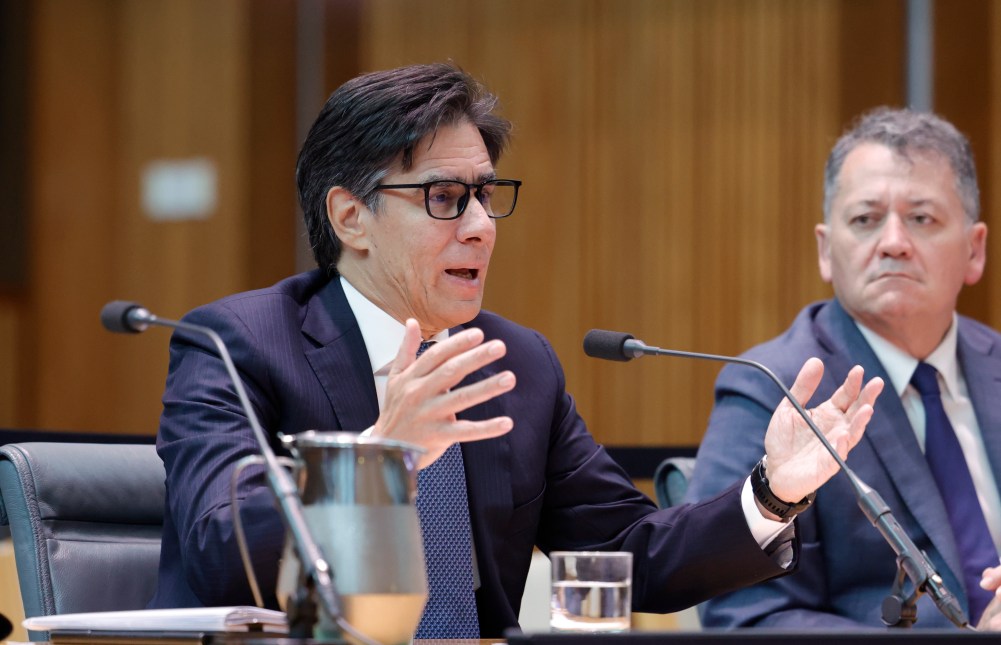
- ANZ chief executive Nuno Matos told a parliamentary inquiry “it’s not compatible to have rates at this level and such levels of equity valuations.”
- He said governments competing with AI infrastructure for long-term capital is “creating inflation.”
- Matos disputed claims banks profit from rate rises, calling mortgages “one of the least profitable” businesses in Australian banking.
ANZ chief executive Nuno Matos has warned that a global scramble for capital to fund AI, defence and government deficits is pushing up inflation and the cost of money, as record share prices collide with the highest interest rates in years.
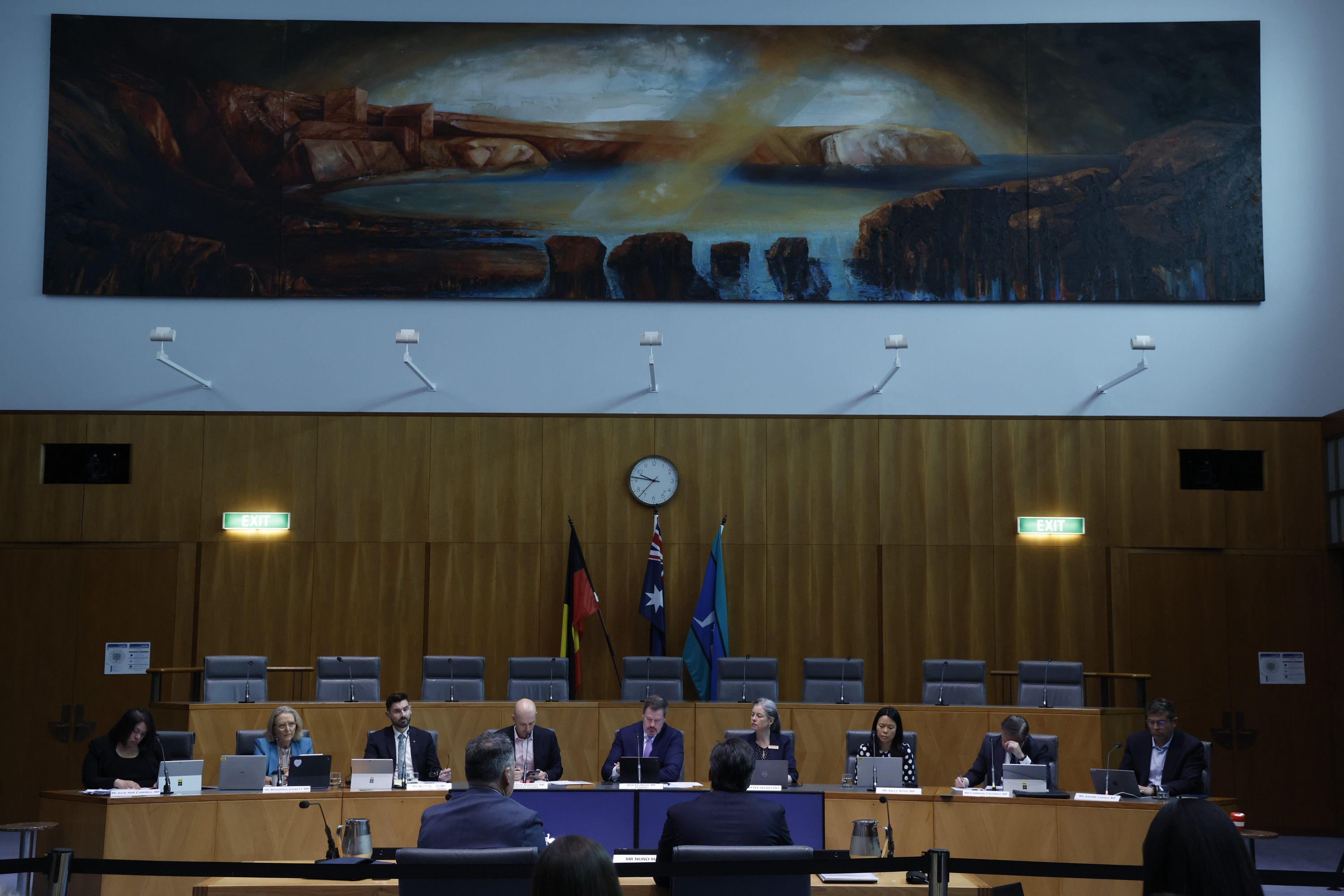
Matos told the House of Representatives Standing Committee on Economics in Canberra on Thursday that record equity markets driven by “the tech wave”, alongside high interest rates, were “a dangerous situation for the world,” saying “it’s not compatible to have rates at this level and such levels of equity valuations.”
Asked whether Australia risked a recession, Matos said it was “not our central scenario,” with ANZ forecasting growth below 2 per cent in 2026 and 2027, but warned the bigger threat sat offshore.
“After a decade of low productivity gains, many Australians feel that they are not getting ahead,” Matos said in his opening remarks.
Australian borrowers have faced five interest rate rises this year, with the Reserve Bank of Australia (RBA) lifting the cash rate to 4.85 per cent in November.

AI blip
“If we have an AI, let’s call it an AI blip in the world, we will have globally a big problem,” he said.
Matos noted he was “more concerned on the external environment for a recession than I am on the internal environment,” pointing to the never-before-seen sums invested in AI and warning “if that derails things can be complicated.”
The bank’s chief executive said global competition for capital “has intensified,” on top of higher energy costs from the Middle East war, describing it as an “expenditure super cycle” that has pushed up borrowing costs worldwide.
He pointed to Australia’s cash rate sitting at its highest level since 2008, and US bond yields recently reaching their highest since 2002.
Every time governments borrow, they now compete with AI infrastructure for long-term funding, which Matos said “is creating inflation.”
Asked by Liberal MP and deputy chair Simon Kennedy whether cutting government spending would curb inflation, Matos said lower spending from either government or the private sector would ease inflation by definition, which in turn would make room for lower interest rates.
Global outlook
Matos told MPs “inflation today is a global phenomenon” and “many factors are out of control of Australia.”
Inflation was being driven by heavy investment in renewables, defence spending “in the aftermath of several wars,” and AI infrastructure, he noted.
Geopolitical instability “is now sadly the new normal” as international relations “move from principle-based to power-based approaches,” the ANZ chief said.
Matos also warned “Western social cohesion is being challenged because of concerns about living standards,” which he said was clear in Europe and “to a lesser degree here in Australia.”
Even so, he said “there are very few countries in the world that… have the conditions of Australia to succeed,” but cautioned “it’s important to not confuse opportunity with result.”
Asked why Australia was such an outlier, with the fifth-highest inflation of 43 advanced economies and the only one to raise rates five times this year, Matos said the country had “a 2 per cent ceiling on growth” because “the lack of productivity does not allow us to go above without creating inflation.”

Mortgage profits
When Labor MP and committee chair Ed Husic put it to Matos that only the country’s largest businesses seemed to be escaping the squeeze, he defended ANZ’s $7.59 billion cash profit.
Husic cited Australia Institute figures showing a big four bank makes about $234 a week in profit from an average family’s home loan.
Matos said he would “dispute the conclusion” of the report, insisting “the mortgage business, it’s one of the least profitable business in banking in Australia,” and that banks were “not the cause for rates to go up.”
He acknowledged arrears were rising after Kennedy noted the share of ANZ home loans at least 90 days behind had climbed from 0.83 to 0.95 per cent in six months, warning the numbers “will get worse before they get better.”
The ANZ chief said he hoped affordability would improve as inflation eased and rates fell, telling MPs “rates can come down rapidly, hopefully.”