 Subscribe

Federal Court approves $750 million Toyota class action
The Federal Court has approved a $750 million class action payout to owners who argued more than 250,000 Toyota vehicles were defective.

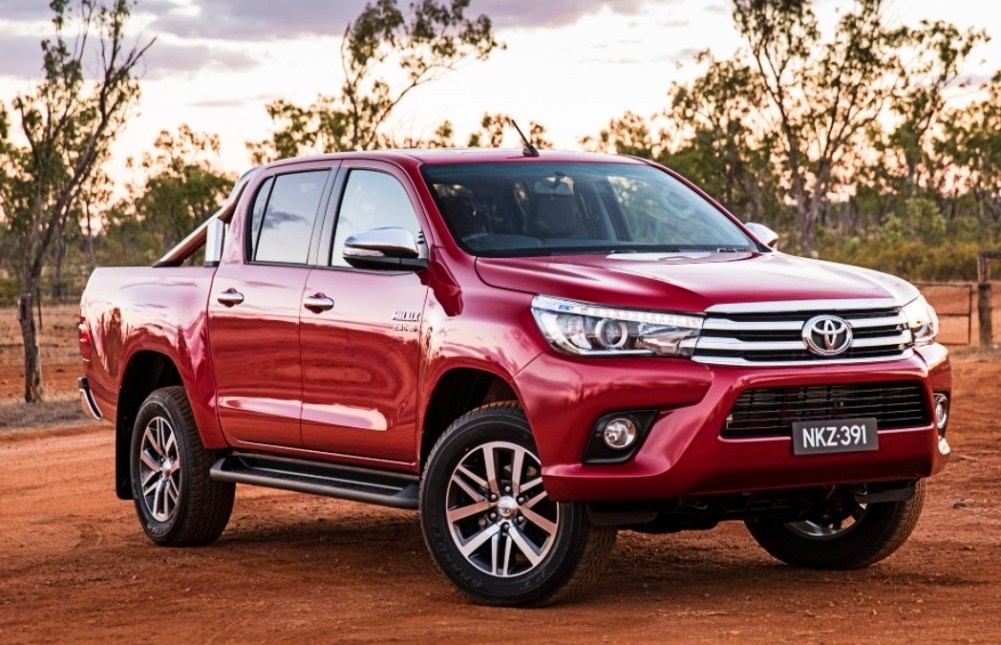
- The Federal Court on Friday approved a $750 million compensation payout for members of a class action lodged against Toyota.
- Owners of certain years of Toyota’s HiLux, Prado and Fortuner models argued that an emissions filter in the exhaust was faulty and would cause the vehicle not to operate correctly.
- While the $750 million payout has now been approved, an administrator will be appointed to distribute the funds to owners, class action funders, and litigants.
The Federal Court of Australia has approved a $750 million compensation payout for members of a class action who argued Toyota supplied them with vehicles that had a faulty diesel particulate filter (DPF).
The class action affected owners of Toyota’s HiLux, Prado and Fortuner models bought between October 1, 2015 and April 23, 2020.
Now approved, the class action has become the largest in Australian history, surpassing the $475 million compensation pool approved following the Robodebt class action.
In documents seen by The Money Edition, Justice Michael Lee said the size of the action did not weigh on his decision to approve the compensation.
“This is, in monetary terms, the largest class action settlement for which approval has been sought in Australia,” he said.
“That fact naturally commands attention, but it should not be allowed to obscure the character of the task. Size is not synonymous with complexity
“The settlement provides for payment by Toyota of $750 million, inclusive of the amounts ultimately allowed for legal costs, administration and litigation funding; but, despite the unprecedented size of the fund, the question whether the compromise falls within the range of fair and reasonable outcomes is not a difficult one.”

Justice Lee said he judged the $750 million figure to be “fair and reasonable”, given owners of the affected vehicles suffered from not just the cost of repair but of “reduction-in-value damages.”
The exact nature of the payouts, and how much will be distributed to class action members, remains to be seen.
An earlier order estimated that if an owner bought an affected vehicle and still owns it today, they could be paid as much as $7370.
The Court ordered that an administrator be appointed to the settlement to help distribute the funds in a way that does not unfairly bring high clerical charges.
“The applicants propose the appointment of Deloitte as administrator. Deloitte has already performed extensive work in relation to registration, data and modelling, which is an important consideration,” Justice Lee said.
“It does not follow, however, that the Court should appoint the proposed administrator without asking whether the work still to be done could be performed as well, and at lower cost, following a competitive process.”
The Money Edition has contacted Toyota Australia for comment.
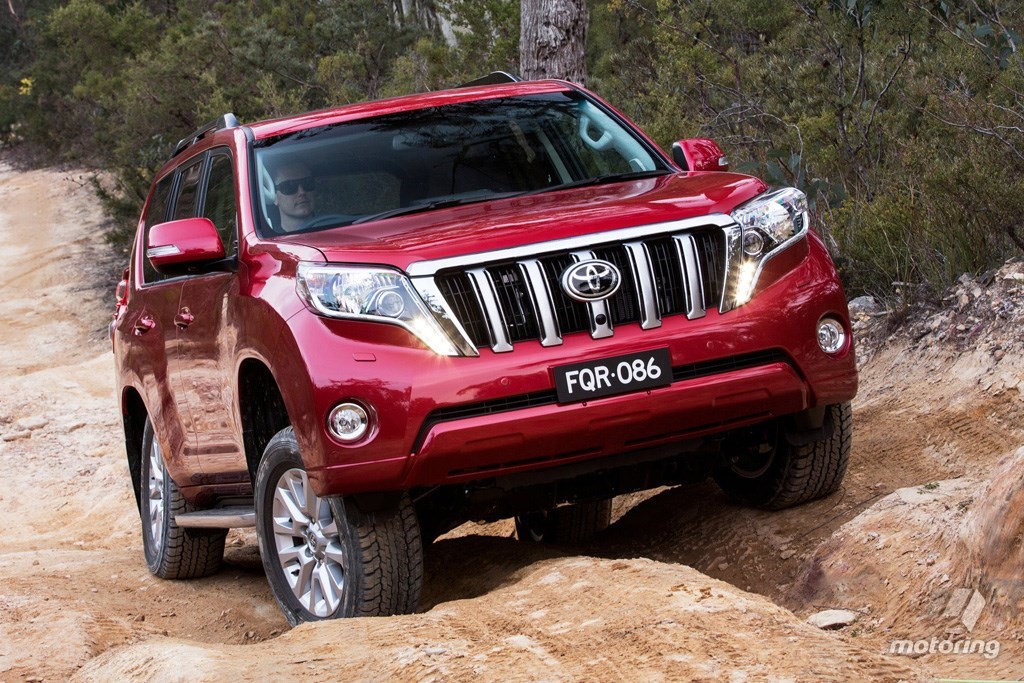
The long road to record DPF class action settlement
The Court’s approval on Friday was more than eight years in the making.
The original class action was filed against Toyota in August 2019, where lead applicant Kenneth Williams argued that Toyota had broken Australian Consumer Law by supplying a vehicle that would fail under “normal driving conditions”.
Diesel engines in the affected vehicles were fitted with a DPF that would produce white smoke and reduce power if a vehicle was not driven on a highway or under load for a sustained period.
By May 2020, Toyota had rolled out a free hardware and software fix for all affected vehicles.
In May 2022, Justice Lee ruled in favour of the class action members, finding that the conditions a DPF needed to operate effectively were not reasonable for everyday driving.
Arguments over costs dragged on; a second class action was introduced concerning owners who bought second-hand, and litigators sought more members.
By October 2026, Toyota and the class action holders agreed to an in-principle settlement of $750 million, the largest in Australian history.
Topics: Cars, Electric Vehicles, Toyota