 Subscribe

Inside Nvidia’s spectacular rise and the scandal that brought its founder down
From supporting the video games industry to powering the AI revolution, Nvidia has become one of the world's most valuable companies. It now faces a reckoning.

- Nvidia shares have fallen more than 30 per cent since their October peak, wiping US$1.8 trillion from its market value.
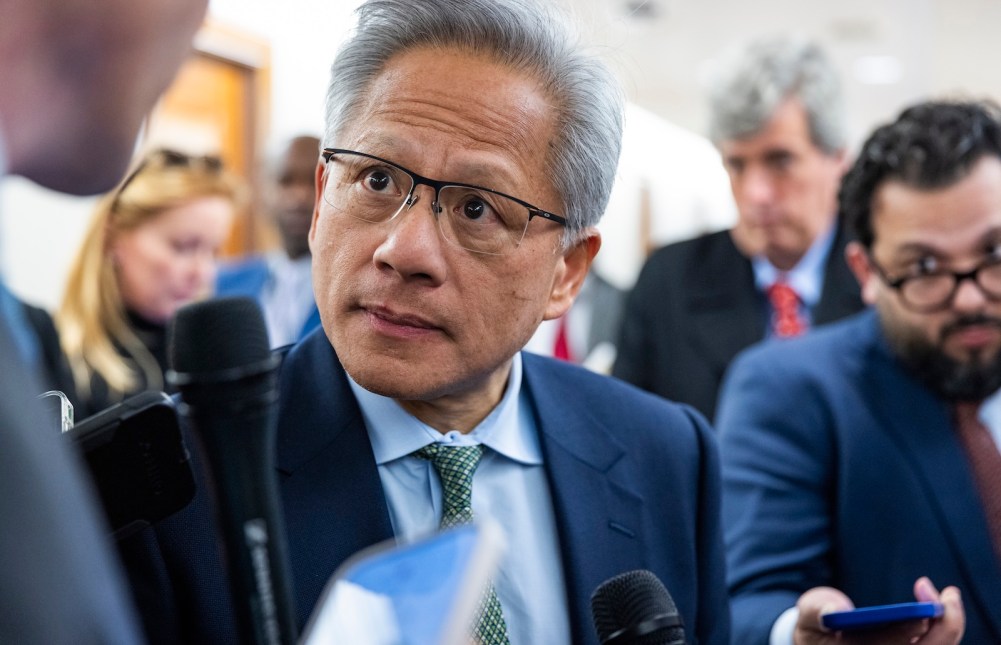
- Former CEO Jensen Huang has resigned after 33 years as chief executive amid an investigation into his relationship with a woman suspected of links to Chinese intelligence.
- Even so, Nvidia’s latest quarterly revenue more than doubled to US$96.2 billion, as the extraordinary growth of its AI business forges ahead.
Few companies have enjoyed a rise quite like Nvidia.
Founded to make graphics chips for video games, the Californian technology giant has become a central driving force behind the artificial intelligence revolution, having reached a market valuation of almost US$5.8 trillion in October.
But just weeks later, its fantastic rise has been overshadowed by a collapsing share price and the downfall of its billionaire founder.
Nvidia shares have lost more than 30 per cent from their October record, erasing US$1.8 trillion in market value.
The sell-off accelerated on Friday when co-founder and chief executive Jensen Huang resigned following revelations about extramarital affairs, including a relationship with a woman US intelligence reportedly suspects of spying for China.
Beijing has denied the allegations, while Nvidia says it has no reason to believe company secrets or national security were compromised. In any case, investors aren’t happy.
The company’s shares plunged as much as 14.2 per cent before recovering to finish roughly 4.3 per cent lower by early Friday morning.
From video games to AI
Nvidia’s story began in 1993, when Huang founded the company alongside engineers Chris Malachowsky and Curtis Priem. Their ambition was to improve computer graphics, particularly for the rapidly growing video game industry.
In 1999, Nvidia introduced graphics processing unit (GPU) technology that would ultimately transform computing.
The breakthrough came in 2006 with CUDA, software that let developers harness graphics chips for complex calculations beyond gaming. By 2012, Nvidia’s technology was helping researchers achieve major advances in artificial intelligence.
Then came ChatGPT from OpenAI roughly a decade later, triggering an unprecedented race to build AI systems, with Nvidia well positioned to supply the computing power the industry desperately needed.
Technology giants including Microsoft, Amazon and Google have since poured billions into AI infrastructure, with much more forecast for the coming decade, sending demand for Nvidia’s chips soaring.
And the financial results for the nearly 34-year-old company have been extraordinary.
In its second-quarter results, Nvidia posted US$92.6 billion in revenue, up 106 per cent from a year earlier. Of that, US$89 billion came from its data centre business.
Since the commercial debut of ChatGPT, Nvidia’s annual revenue has climbed from approximately US$27 billion in 2023 to nearly $216 billion this year.
“AI has reached its inflection point,” Huang said in August, alongside its earnings results. “It’s doing useful work. Its tokens are productive and profitable. Now, compute is revenue.”
The question on everyone’s lips right now is whether the departure of Nvidia’s leather jacket-wearing charismatic founder and former CEO is enough to tip the scales. The answer is probably not.
What happens now?
Chief financial officer Colette Kress has been appointed interim chief executive while the board searches for a replacement. But concerns extend beyond the leadership scandal.
Investors are increasingly questioning whether the billions being spent on AI infrastructure can deliver sustainable profits, particularly as competitors develop alternative chips.
For Australians, the stakes extend beyond Wall Street. Major superannuation funds and international share ETFs hold Nvidia, meaning its volatility can affect retirement savings.
That’s likely to be fairly muted, as long as any fallout remains contained to one or two technology giants and the risks are appropriately managed, The Money Edition was told recently.
The next important test of whether Nvidia can stem the bleeding of its $4 trillion market valuation will come in the form of its next quarterly earnings, set to be released on November 17.
Eagle-eyed investors will be watching closely, ready to abandon or trim their stake at a moment’s notice in one of the world’s most powerful companies that has delivered such vast wealth.
For many, that’s just the cost of doing business. For Huang’s legacy, though, perhaps no market rebound may be enough to undo the spectacular fall of a man who helped build an empire.
Topics: AI, Nvidia, Shares, Technology