
The Australian government on Tuesday secured an agreement with The Greens to guarantee passage of its long-awaited digital duty of care bill.
The bill puts the onus on big-tech companies to address foreseeable online harms.
The deal with The Greens includes a number of measures to strengthen the bill, including bigger fines for platforms (to as much as 5 per cent of global revenue) and a private right for people to sue the companies that breach their duty of care.
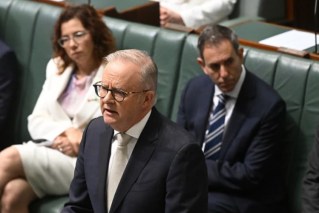
Federal Minister for Communications Anika Wells acknowledged that it’s impossible to “cure” the internet of its ills. But she emphasised the digital duty of care bill provides basic safety standards that have to date been lacking.
She described the package as “seismic reform”.
What exactly is a ‘digital duty of care’?
At its core, the bill requires the person responsible for an online service to ensure – as much as is reasonably practicable – a safe online environment.
That phrase is borrowed from workplace health and safety law, and the logic is similar: rather than waiting for harmful content to be reported and taken down, platforms must identify the risks their services create and act to reduce them.
The duty replaces the existing industry codes – which Wells described as “drafted by big tech for big tech” – as well as the eSafety Commissioner’s Basic Online Safety Expectations.
Under the new bill, platforms would have to complete annual written risk assessments, keep them for six years and produce them to the eSafety Commissioner on request.
The legislation has been years in the making. A statutory review of the Online Safety Act, delivered in October 2024, made 67 recommendations to strengthen the law. Its central one was a single, overarching “duty of care”, which the government committed to.
After nearly two years, the government released an exposure draft in September, the headline feature of which was an “off switch” for personalised, algorithm-driven feeds for users.
The bill was introduced to parliament on October 15. A Senate committee then reviewed the bill, receiving 182 submissions. Last week, it released its recommendations, which included a civil right of action and an exemption for low-risk services, such as small business websites. It backed passage of the bill, subject to its recommendations.
What are the new changes?
Wells outlined seven new changes to the bill as part of the government’s deal with the Greens:
- a private right of action, allowing individuals and groups to sue platforms that breach the duty
- stronger privacy protections
- expanded powers for eSafety to remove nudify services
- the naming of addictive platform design features as a specific risk that platforms must assess
- a clarified definition of “hostile attitudes to women”, which Wells said targets content promoting hatred, violence and threats, not disagreement with feminism
- a rule-making power to create an external dispute resolution pathway
- higher fines for violations of the law.
The penalty change is the headline amendment. The bill already carried a maximum penalty of about $109 million for companies found to have breached the obligation.
The amendment adds an alternative penalty of up to 5 per cent of global revenue.
Among jurisdictions with similar laws, this would place Australia between Canada at 3 per cent and the European Union at 6 per cent. The Greens had sought 10 per cent.
The dispute resolution pathway is what the Greens call a pathway to an independent ombudsman for big tech. It creates a three-tiered option for social media users to bring complaints of harms against tech companies.
First, they can turn to the platforms’ internal complaint process. If that fails, they can complain to a yet-to-be established tech platform ombudsman. Then if that fails, they can use the private right of action to go to court.
The duty of care law would go into force after a 12-month transition. The government has confirmed low-risk, small businesses will be exempted from the law through rules, rather than in the bill itself.
A significant shift
There are several reasons why the changes to the bill are significant.
First, the private right of action changes who enforces the law.
Until now, online safety regulation in Australia has depended almost entirely on the eSafety Commissioner’s resources and priorities. A statutory duty that individuals and groups of people can use to sue means platforms face litigation risk, as well as regulatory risk.
That matters because suing platforms has been difficult. For example, Australian mining magnate Andrew Forrest’s case against Meta over scam advertisements had to be pursued in a US court.
Wells argued that Australians have previously had to attach claims to existing laws in order to sue. The new law would create a cause of action that does not currently exist.
However, she said she expects it to be used rarely. Much will depend on how the courts approach causation in these types of cases, and on whether those financially backing litigation see class actions against platforms as viable.
Second, the revenue-based fine raises the stakes with Washington. Wells said she met the US ambassador on Tuesday morning and acknowledged “points of difference” on this clause.
She noted that courts elsewhere have rarely imposed maximum penalties against companies. The 5% figure is a ceiling, not a starting point.
Third, the politics have changed. The Coalition opposes the bill, and Wells noted it will be the first online safety law to pass without bipartisan support. Online safety has been a rare area of consensus in Australia in the past.
If the Coalition votes against the law, it is more exposed to being unwound, or simply under-resourced, after a change of government.
Much of the detail is still to come. The dispute resolution scheme, the small business exemption and the treatment of addictive design all depend on rules yet to be written and on eSafety’s judgement.
Regardless, with the passage of the bill now secured, the duty of care will shift responsibility to the companies that build these services.
Rob Nicholls is Senior Research Associate in Media and Communications at the University of Sydney.