The Stats Guy: Uber Eats and our appetite for convenience have transformed Australia

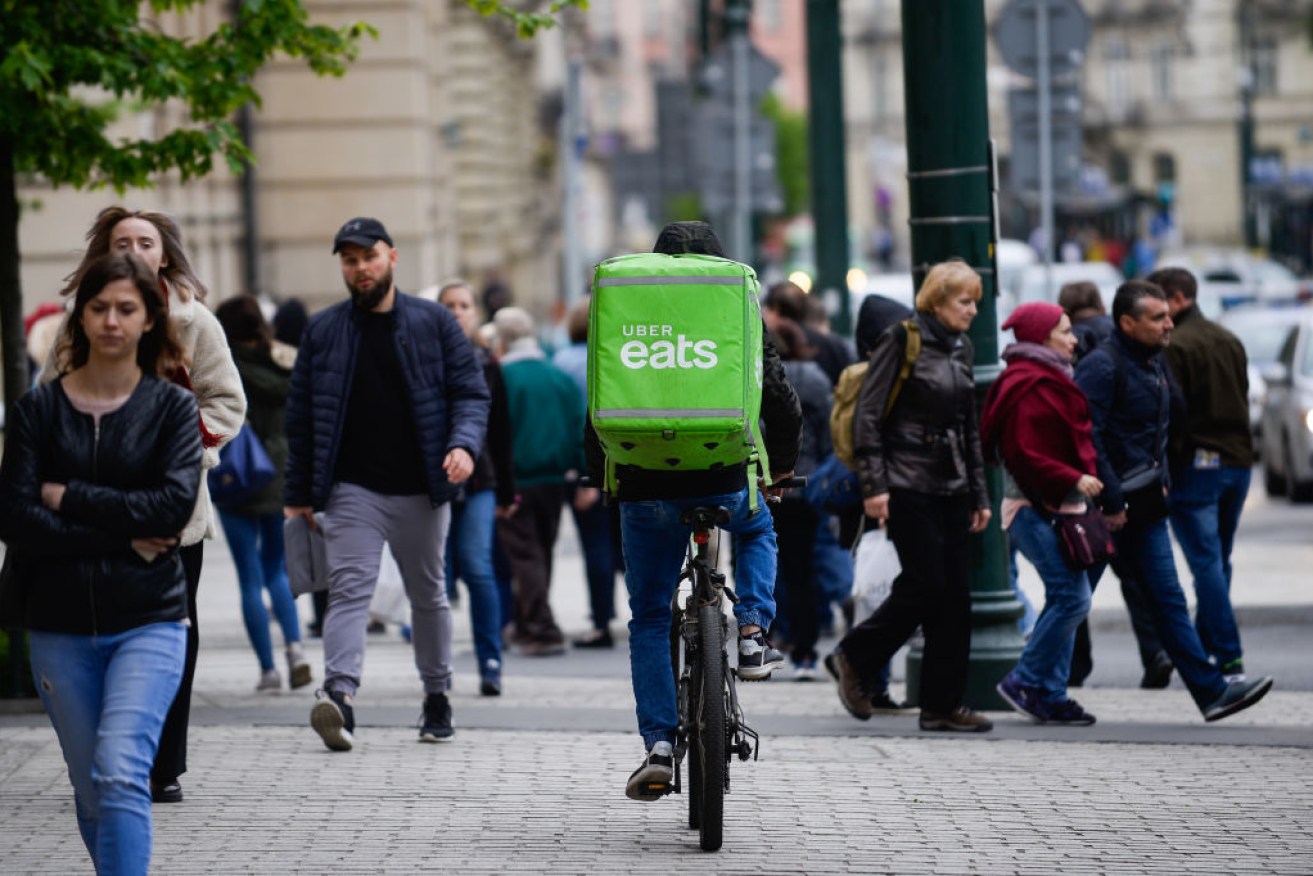
Uber Eats turns 10 this year. Photo: Getty
Uber Eats turned 10 in Australia this year. The service launched in Melbourne in April 2016.
Pizza delivery was already familiar to Australian consumers. What Uber Eats (and its competitors) changed was the range of food available, the ease of ordering and, eventually, our expectations.
We became accustomed to watching dinner inch towards us on a little map.
This anniversary tells us something about Australia in general. We value lifestyle, dislike unnecessary hassle and will pay someone else to deal with it.
Delivery apps have made that transaction easier than ever. They have also created a workforce whose convenience looks rather different from ours.
The chart below shows the number of Australians working as delivery drivers, covering goods such as parcels as well as food.
It starts at about 27,200 in August 1986 and reaches 84,400 in February 2026. That is more than a tripling over almost four decades.
The more relevant comparison for this birthday is February 2016, shortly before Uber Eats arrived. There were about 44,800 delivery drivers. Ten years later, we almost doubled (+88 per cent) the number of delivery drivers while the total number of employed people grew only by 24 per cent.
Uber Eats isn’t responsible for the whole increase of course. Online retail, population growth and the pandemic all shaped this trend.
The quarterly estimates bounce around, and recent growth has hardly been a straight line. Nor is this a count of everyone with a delivery app on their phone: Occupation statistics record people’s main jobs, missing delivery work done on the side. Not every driver is a gig worker, either.
Still, the long-term message is clear. A larger workforce is bringing things to us.
Australia Post’s 2026 eCommerce Report estimates Australians spent a record $82.6 billion online in 2025. Shopping online has become an ordinary way to buy things, rather than a technological novelty or a pandemic necessity.
Calling this laziness is wrong. Consider a household juggling two jobs, school pick-up, homework and bedtime. Ordering dinner buys a little breathing room. A delivery fee purchases time as well as transport.
For someone living alone, cooking one meal can involve a disproportionate amount of planning and cleaning. For someone with limited mobility, groceries arriving at the door can support independence.
Sometimes convenience is a luxury. Sometimes it makes an otherwise difficult day manageable.
During Covid lockdowns, we moved functions into our homes that previously were reserved for third places (a fancy way of describing anywhere that’s not your home or place of work).
The flood of exercise bikes and free weights on Facebook Marketplace at the moment is an amusing, if unscientific, reminder that most of us went back to the gym eventually. Regardless of where we exercise, we still have to actively work out.
Food and parcel delivery, on the other hand, fully removed a task. It is easy to understand why the habit of shopping for food and stuff online remained attractive after lockdown restrictions disappeared.
Technology was designed to make the habit of online ordering stick. Your address is saved, your payment details are stored, and yesterday’s order is available again.
The distance between wanting something and buying it has shrunk to a few taps. We can shop during moments that previously contained no shopping at all.
There is nothing inherently wrong with this. Outsourcing chores can leave more time for children, friends or sleep. But a convenience purchased occasionally can quietly become a recurring expense.
The relevant price is the total at checkout, and the relevant budget is the month’s spending, not tonight’s delivery fee.
A takeaway can also substitute for a more expensive night out. Continuing to order food does not necessarily mean a household is immune to financial pressure. It might have abandoned restaurant drinks, taxis and babysitters while protecting one modest pleasure.
Our appetite for convenience has another side. Somebody has to make the delivery.
There are real advantages to app-based work, and dismissing them would mean ignoring why some people choose it:
- Fewer hiring gatekeepers: There is no conventional interview where a manager decides whether your accent, sex, age or skin colour fits their idea of the right applicant. Subject to eligibility, checks and activation, entry can be more straightforward. That can be a meaningful opening for people overlooked elsewhere.
- Flexibility: The ability to work around study, caring responsibilities, or another job can be valuable. A conventional employer may struggle to accommodate the same flexibility.
- A financial bridge: Delivery work can provide an income while someone searches for a permanent role, establishes themselves in a new city or navigates a gap between jobs.
- Less need to sell yourself: The platform finds customers, processes payments and provides the ordering system. Workers do not have to build a website or persuade strangers to hire them individually. For some socially anxious people this is a real win.
- An easy start: Someone who already has suitable equipment may enter without lengthy retraining or a large business investment. A bicycle can offer a different cost structure from a car.
We should not turn that first advantage into a claim that discrimination disappears. Customers can be prejudiced, ratings can reflect bias, and automated decisions deserve scrutiny.
Signing up also means applying for access to work, not receiving a guarantee of enough paid hours.
The disadvantages are just as real:
- Little to no career progression: Completing thousands of deliveries does not usually lead to a promotion, a qualification or a management position. Experience can improve efficiency, but platforms offer little resembling a conventional career ladder.
- The platform is god: The platform can change pay, incentives, allocation systems, and operating terms. A worker has the flexibility to log on whenever they please but they have no power over what happens then.
- Vulnerability in a downturn: If customers order less, if more delivery drivers sign on, drivers compete for fewer deliveries. Earnings per hour can fall through longer waits or reduced incentives, even without a cut to the payment for each job.
- Costs that obscure the real wage: Fuel, maintenance, depreciation, equipment and insurance can turn an attractive gross payment into a less impressive net income. Time spent waiting or returning from a delivery matters too.
- Less security between jobs: Contractor arrangements generally lack the paid annual leave and sick leave associated with permanent employment. An illness or breakdown can interrupt earnings precisely when money is needed.
- Physical and emotional exposure: Traffic, bad weather, aggressive customers, and isolation are part of the job. Working at the most profitable times may also mean giving up the evenings and weekends everyone else enjoys.
Australia has started addressing some of these problems. New minimum-pay and accident-insurance standards for covered app-based delivery work took effect in August.
Crucially, payment protections relate to time from accepting an order to completing it. They should not be mistaken for a guaranteed wage for every hour logged on and waiting.
That distinction gets to the central tension. Easy entry can be a lifeline for an individual while leaving the whole workforce exposed to competition for available orders. Flexibility is valuable, but its value depends on whether you can afford to exercise it.
A few hours of delivery work to fund a holiday is a different proposition from relying on it for next week’s rent. The same platform can offer welcome freedom to one person and relentless uncertainty to another.
After 10 years, the interesting question is no longer whether Australians want convenience. We plainly do. The challenge is to preserve accessible work and useful services while ensuring that workers share in the benefits.
When an app saves us an hour, that hour has not vanished. Someone else has spent part of their working life making ours easier. A country that prizes lifestyle should care about theirs too.
Simon Kuestenmacher is a co-founder of The Demographics Group. His columns, media commentary and public speaking focus on current socio-demographic trends and how these impact Australia. His podcast, Demographics Decoded, explores the world through the demographic lens. Follow Simon on Twitter (X), Facebook, or LinkedIn.
Want to see more stories from The New Daily in your Google search results?
- Click here to set The New Daily as a preferred source.
- Tick the box next to "The New Daily". That's it.