As the world wrings its hands over AI, a lone voice pleads for help addressing this unfolding global catastrophe

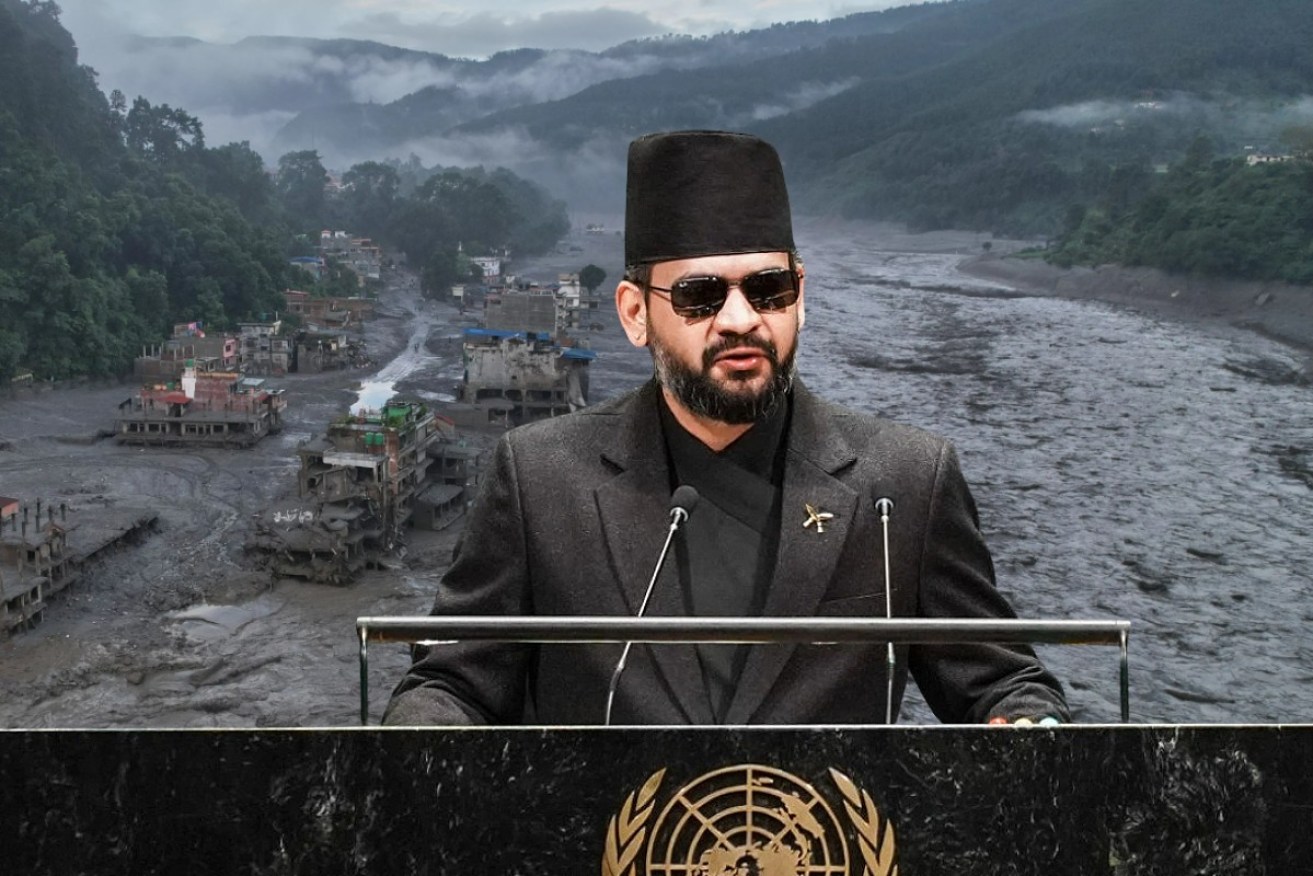
Those who have the power to act on climate pretend it is a problem without a solution. Photo: TND/AAP
As Anthony Albanese and the world pretend to wring their hands over both the ‘inevitability’ of AI and the ‘struggle’ to set guardrails, the leader of Nepal delivered a speech that was infinitely more consequential.
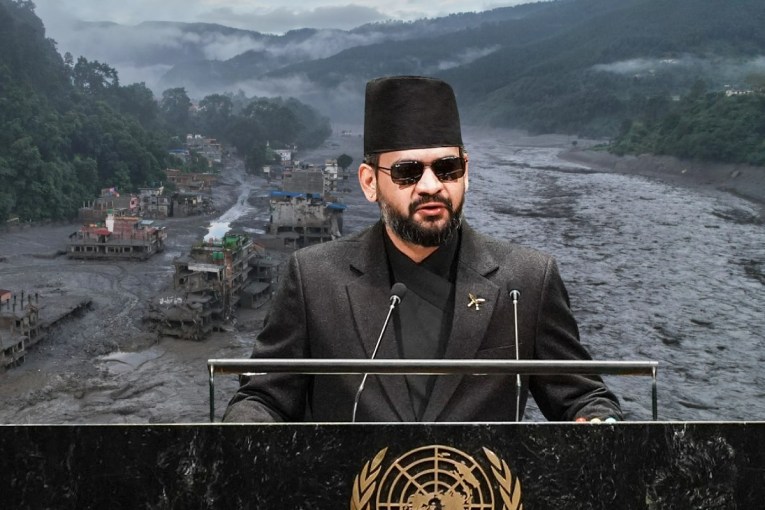
Addressing the United Nations General Assembly in New York on Friday, Prime Minister Balendra Shah thanked those who responded to the horrific floods in Nepal last month.
So far, 1400 bodies have been recovered after a glacier, and the bedrock which cradled it, fell 1200 metres into the valley of a river, causing a devastating flood.
In terms of size, it was like two and a half Empire State Buildings worth of ice, rock and dirt hitting the river valley at once. We know the result.
As Shah was delivering his address in New York, his people were protesting for the government to act faster to recover what is left of their loved ones, with an estimated 6000 people still buried beneath the debris.
As predictable as the wringing of hands around a technology we have allowed a select few to control, was the response to calling what happened in Nepal a climate tragedy.
It was like a tsunami occurring in the Himalayas, and still, STILL, those who have the power to act on climate pretend it is a problem without a solution.
All the while, as Shah pointed out, those same people race to build weapons and claim world domination on a timeline they set and deliver on themselves.
“When a poor farmer in Nepal went to sow her seeds in monsoon, fertilisers didn’t reach her on time,” Shah told the assembly.
“When we wanted to pay for a new highway, there was no bitumen. When a family sat down for an evening meal, there was a shortage of cooking gas,” he went on.
Shah pointed out that while on the one hand there are melting glaciers, failing harvests and floods arriving without warning, “on the other hand, a global supply chain punishes poor people for causes beyond reason”.
“Intercontinental missiles arrive on time. Rifles and ammunition cross borders, clear every bottleneck, meet each deadline. But a peasant in Nepal cannot procure his fertiliser or fuel at market price at a time of need,” he said.
“We have built a world with flawless logistics for war, and broken logistics for food, and this is not Nepal’s private misfortune. Ask Bangladesh, ask Bhutan, ask India, ask the Maldives, ask Pakistan, ask Sri Lanka, ask any other country in our region, and you’ll hear the same account.
“Hit by the climate, we did not warm, and again hit by the wars, we did not start.”
Shah is right. Nepal contributes less than 0.1 per cent of global greenhouse gas emissions. It does not have the institutional or global power to force change, even as its people are swamped by the consequences of inaction.
“Our glaciers are retreating, our mountain slopes are becoming unstable, our rivers are becoming less predictable and every major disaster threatens to erase years of development,” he told the UN.
For Nepal, climate catastrophe is not just a humanitarian event, but a development emergency.
“It destroys roads, bridges, schools, homes, farms, and livelihoods. It destroys clean energy infrastructure that we need to fuel our future, and it forces a poor country to borrow money to repair damage it did not cause,” Shah pointed out.
As Shah rightly says, we can deliver missiles on time. But not climate action. Even as it threatens us all.
It’s all linked, it always has been.
Albanese’s urgings for the world to come together leave out the silent parts – he means the world he is part of.
For as the Coalition prepares to fight another election on removing net zero and subsidising our destruction even more than what the current Labor government allows, Australia pretends its hands are tied when it comes to climate action and being a ‘responsible global citizen’.
The security council bid means Australia will stay even more silent on issues which may prompt a veto from the United States, and by association Israel, even as Albanese claims a seat on the council will give Australia more power to speak up for what’s right, and more influence in making it happen.
As a nation, we made becoming a top 10 global arms manufacturer a priority in 2016. It’s a fact our leaders hope will be forgotten, but one we have pursued wholeheartedly, and now ties our hands on any action when it comes to where those arms will be used.
We pledge climate action, while shoring up fossil fuel usage and compartmentalising the damage our exports do, as if it’s not all one planet.
And now we are rushing to welcome data centres as if that won’t put more pressure on resources and build the case for further fossil fuel usage, even as the renewables industry begins to see dollar signs.
Renewables are only good for the planet if they replace fossil fuels, not come on top of.
But it seems that no matter how many warnings there are for humanity – until the bridges, roads, homes, schools and businesses are swept away or burnt down are ours – we are tied to a future of building missiles on time, but not cutting emissions.
As Shah and countless others already experiencing what eventually will come to us all have made clear – global warming does not pay attention to borders.
Want to see more stories from The New Daily in your Google search results?
- Click here to set The New Daily as a preferred source.
- Tick the box next to "The New Daily". That's it.