What The Stats Guy thinks about the Intergenerational Report

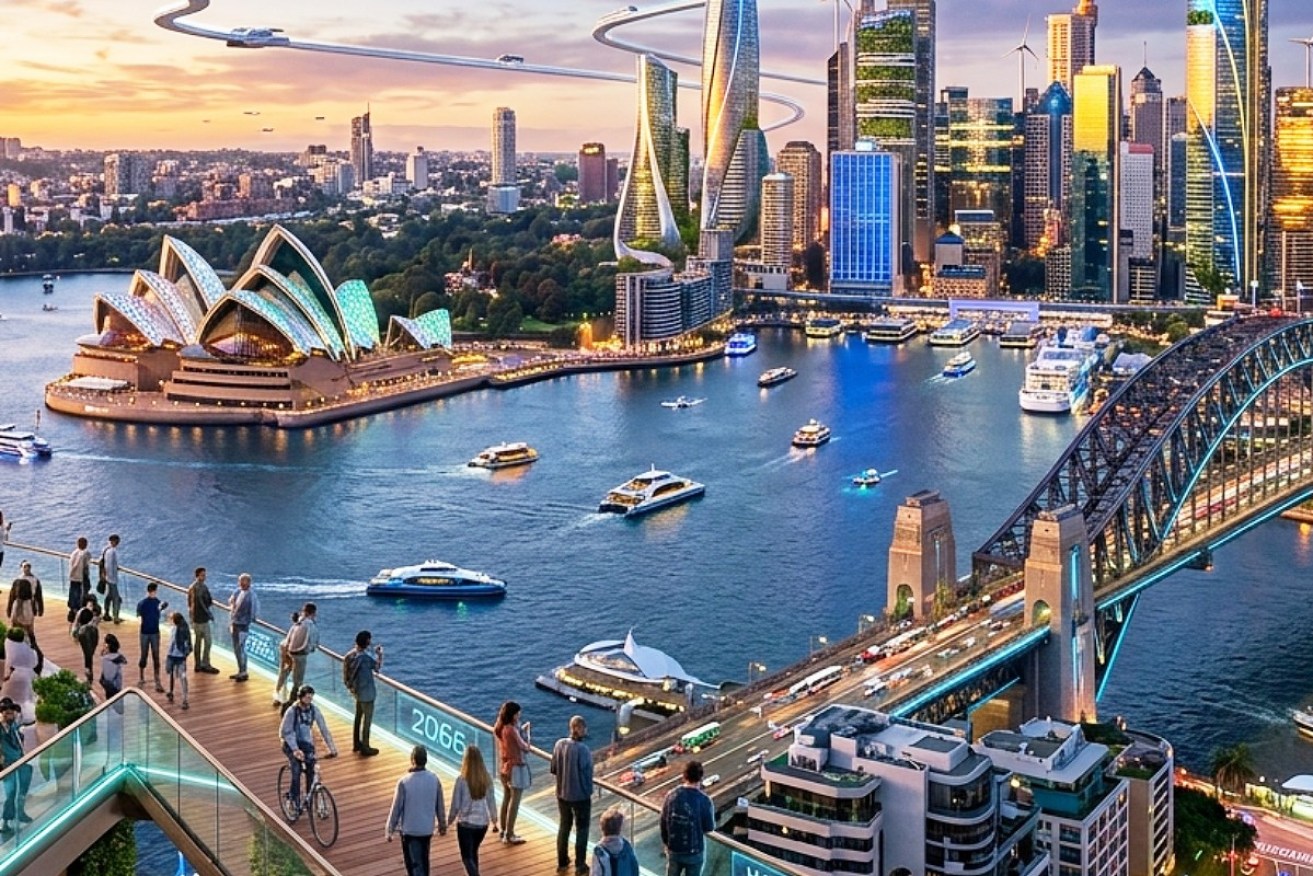
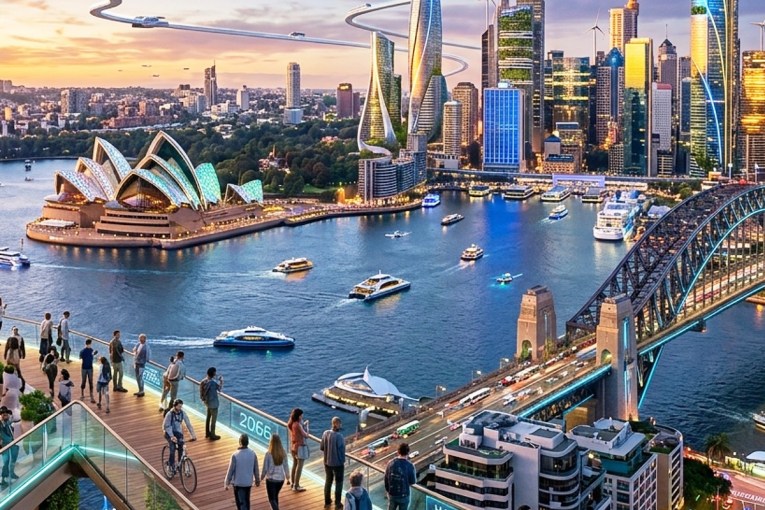
The 2026 version of the Intergenerational Report looks all the way to 2066. Photo: TND/Gemini
Every few years, Treasury performs a task that demographers do every day. It tries to imagine Australia decades into the future.
The 2026 version of the Intergenerational Report looks all the way to 2065-66.
These reports aren’t forecasts in the conventional sense. Nobody at Treasury seriously claims to know precisely what Australia will look like in 40 years.
Think about trying to predict Australia today from 1986 – the internet barely existed. The Soviet Union still did. China was poor. Australia’s population was about 16 million. Melbourne’s median house price was below $100,000. Artificial intelligence was science fiction.
The point of an Intergenerational Report isn’t to tell us exactly what will happen but to take today’s demographic, economic and fiscal settings, make reasonable assumptions about the future, and ask “where do they take us?”.
This year’s answer is fascinating. Australia gets bigger, older and richer.
Treasury expects the population to reach around 39 million by the middle of the 2060s. We live longer lives. The number of Australians aged 85 and over triples. Population growth slows.
Eventually, in the 2060s, Australia reaches a demographic milestone we’ve never experienced before – more Australians die each year than are born.
None of this should surprise regular readers of this column.
I’ve spent an unreasonable amount of my adult life talking about ageing populations.
The generations entering the workforce are increasingly smaller relative to the generations leaving it. Healthcare and aged-care demand rise. Skills shortages become harder to fill.
Migration remains important because it adds disproportionately young working-age people to the country. Migration can’t stop ageing, it can only slow the process.
Overall, Treasury and I are broadly looking at the same demographic Australia.
Where things get much more interesting is the economy – Treasury’s Australia of 2066 is significantly richer than today’s Australia.
The IGR is of course also a tool for government to tell voters how wonderful things will be under their stewardship, so I naturally take views about our future riches with a grain of salt.
To collectively become richer, we need productivity growth.
The most important number in the report
Buried among hundreds of pages of projections, is arguably the most consequential assumption in the entire exercise.
Treasury assumes long-run labour productivity growth of 1.2 per cent per year.
While that doesn’t sound like much, over 1 per cent each year for four decades is huge. Productivity is ultimately how we become richer without simply working more hours.
If a worker can produce more value in an hour of work, wages can rise without necessarily creating inflation. Businesses can make more money. Governments collect more tax. Living standards improve.
Compound tiny, annual improvements for decades and you create an enormously richer country.
The problem is that Australia hasn’t exactly been smashing the productivity game lately.
Productivity growth over the past decade has been miserable and simply assuming that future productivity gains will occur because we say AI a lot seems too easy to me.
We haven’t even discussed yet whether productivity gains are being translated into higher wages or whether they just line the pockets of the employers.
Treasury knows these difficulties, which is why the report also models a weaker productivity scenario.
The consequences are enormous. Under the central projection, real national income per person reaches about $150,000 by 2065-66. Under the low-productivity scenario it is around $130,000. That’s roughly $20,000 per Australian per year disappearing because the economy becomes more efficient a little more slowly.
The effect on government finances is equally dramatic. Lower productivity means lower wages, lower profits and lower tax receipts while many of the expenses associated with an ageing population continue arriving regardless.
This is where I become less comfortable with the sunny baseline.
Last week I wrote a deliberately dystopian column asking how Australia might end up in a Mad Max scenario.
One of my scenarios was spectacularly boring – productivity growth effectively stops. No economic collapse. No tanks in Canberra. No hyperinflation. No Great Depression. Australia simply becomes a little less productive than it otherwise could have been every year.
At first nobody notices. Then a decade passes. Then two. Healthcare, aged care, defence, the NDIS and infrastructure still need to be funded. The population is older. There are relatively fewer workers supporting relatively more retirees.
Instead of arguing about how to distribute an expanding economic pie, politics increasingly becomes an argument about who gets which piece of a pie that isn’t growing quickly enough.
Treasury’s own modelling shows just how dangerous that scenario is.
Don’t bet the country on AI
There is, of course, a very plausible reason productivity might improve dramatically – artificial intelligence.
The Intergenerational Report rightly identifies AI as one of the great economic transformations of the next 40 years.
I’m more optimistic than pessimistic about AI. Knowledge workers will increasingly have access to extraordinarily capable digital tools. Doctors will diagnose diseases faster.
Engineers will design infrastructure more efficiently. Small businesses will automate administrative work. Governments might even figure out how to make filling in a form less painful.
AI could deliver a productivity boom. But “could” is doing a lot of work in that sentence. Australia has adopted extraordinary technologies before while simultaneously experiencing disappointing productivity growth.
Technology only becomes economically transformative when businesses reorganise around it, workers develop the necessary skills, infrastructure supports it and regulations allow productive applications to spread.
Simply having access to ChatGPT doesn’t automatically make Australia productive.
We must actually change how we work and then also hand those productivity gains to workers. Since the IGR doesn’t promise us that tax brackets will finally be adjusted to inflation, we might see heaps of our future productivity gains gobbled up by tax.
Yay, Treasury is more pessimistic about babies
On fertility, Treasury’s thinking has moved closer to an argument I’ve made repeatedly in this column. Australia’s birth rate is very low and will continue to fall.
For years official population projections (from Treasury or the UN) tended to assume fertility would eventually recover somewhat. So far fertility just kept tanking.
The forces pushing fertility down are powerful: Expensive housing, later partnering, later home ownership, later parenthood, the high opportunity cost of leaving the workforce and changing attitudes towards family formation.
The new Intergenerational Report projects such weak natural population growth that by the 2060s deaths finally overtake births – a phenomenon already occurring in many developed economies by the way.
A society can function perfectly well with low fertility, but the arithmetic changes. If fewer children are born today, fewer 25-year-olds enter the workforce 25 years from now. We can respond by working longer, increasing workforce participation, becoming more productive or bringing in working-age migrants.
Realistically, Australia will do all four. Which brings us back to migration.
Migration isn’t a population target
I’ve argued repeatedly that Australia needs migration.
As a rule of thumb, I’ve advocated for around 200,000 net overseas migrants per year. The precise number should obviously move with housing construction, infrastructure capacity and labour demand.
But I think our national debate still approaches migration backwards. We shouldn’t first decide how many people Australia will receive and then figure out where they will live. Population growth should emerge from a national planning exercise.
How many nurses will we need? How many aged-care workers? How many engineers? How many builders? How many homes can we construct? Where will the infrastructure go? Which skills can realistically be trained domestically and where will migration be required?
Only then should we determine the migration intake and its composition.
An ageing Australia will need migrants. That doesn’t mean any migration system is automatically a good migration system.
I’ve argued before that we should favour carefully selected permanent migrants over endless churn through temporary visas. A temporary migrant fills a vacancy.
A permanent migrant can fill that vacancy for decades, raise children, buy a home, build a business and become part of the community.
Housing remains the missing link
This is also where I think we need to connect the Intergenerational Report more explicitly with Australia’s housing crisis.
Population policy without housing policy is just wishful thinking. If Australia continues adding millions of people while dwelling construction fails to keep pace, housing becomes even more expensive.
Young Australians delay leaving home. Couples delay having children. Workers can’t afford to live near productive jobs. Migrants become political scapegoats for a housing system they didn’t design.
Housing remains taxed very heavily. We could make it more affordable tomorrow by lowering taxes. But whoever lowers a tax must raise a tax.
The IGR is just a scenario playing current policy settings forward. I’d love a scenario under a reformed tax structure but that’s not going to happen.
Meanwhile, enormous amounts of Australian household income and capital continue flowing into increasingly expensive land.
Housing therefore sits in the middle of almost every long-term challenge identified in the report. It affects fertility. It affects migration and the attitude towards migrants. It affects workforce mobility. It affects wealth inequality. It affects intergenerational equity. And increasingly, it determines who gets to participate in the Australian middle class.
The inheritance economy is coming
The report gives much greater attention to intergenerational equity. That’s great. Australia desperately needs to think about this.
Over the next few decades, the enormous stock of wealth accumulated by older Australians will gradually move down the generations.
As I’ve argued previously, the great boomer downsizing wave isn’t coming. The great boomer inheritance wave certainly is.
This will create a strange Australia. Two 40-year-olds might have identical jobs, identical qualifications and identical salaries. One inherits half a $1.5 million house. The other inherits nothing. Their economic lives immediately diverge.
We should be very careful about creating a society in which your parents’ property portfolio matters more to your financial security than your education, career or work ethic.
That’s not merely a housing issue. It’s an intergenerational issue.
Australia in 2066
The Intergenerational Report isn’t wrong. In fact, I think it’s one of the most useful documents the federal government produces as it forces politics to look beyond the next election.
Treasury’s demographic picture in the 2026 IGR is increasingly difficult to argue with.
Australia will be older. We will need more healthcare and aged care. The domestic workforce will grow more slowly. Migration will remain important. Natural population growth will fade. The 85-plus population will explode.
Where I am more cautious is the assumption that economic growth will obediently, will magically arrive alongside these demographic changes because of AI. Demography gives us a pretty good idea of what is coming.
Productivity isn’t predetermined in the same way. Neither is housing supply. Neither is infrastructure. Neither is innovation. Neither is social cohesion. Those outcomes depend on decisions.
That’s why the most important lesson from the Intergenerational Report isn’t that Australia will have 39 million people in 2066 or that there will be three times as many Australians aged 85-plus. It’s that our future living standards depend increasingly on doing difficult things well.
We must build enough homes now. Add future-proof infrastructure. Train enough of the right type of workers. Select migrants intentionally and integrate them successfully. Get more people into productive work. Use AI and distribute productivity gains back to workers.
Move capital towards productive investment rather than burning all our cash on housing. And somehow pay for an ageing society without loading the entire bill onto a shrinking share of working-age Australians.
Treasury has shown us a plausible enough version of Australia in 2066.
A Mad Max version of Australia in 2066 also remains an option, so working hard on creating a prosperous country tirelessly remains essential.
Simon Kuestenmacher is a co-founder of The Demographics Group. His columns, media commentary and public speaking focus on current socio-demographic trends and how these impact Australia. His podcast, Demographics Decoded, explores the world through the demographic lens. Follow Simon on Twitter (X), Facebook, or LinkedIn.
Want to see more stories from The New Daily in your Google search results?
- Click here to set The New Daily as a preferred source.
- Tick the box next to "The New Daily". That's it.