Why the Greens aren’t picking up the voters Labor is losing

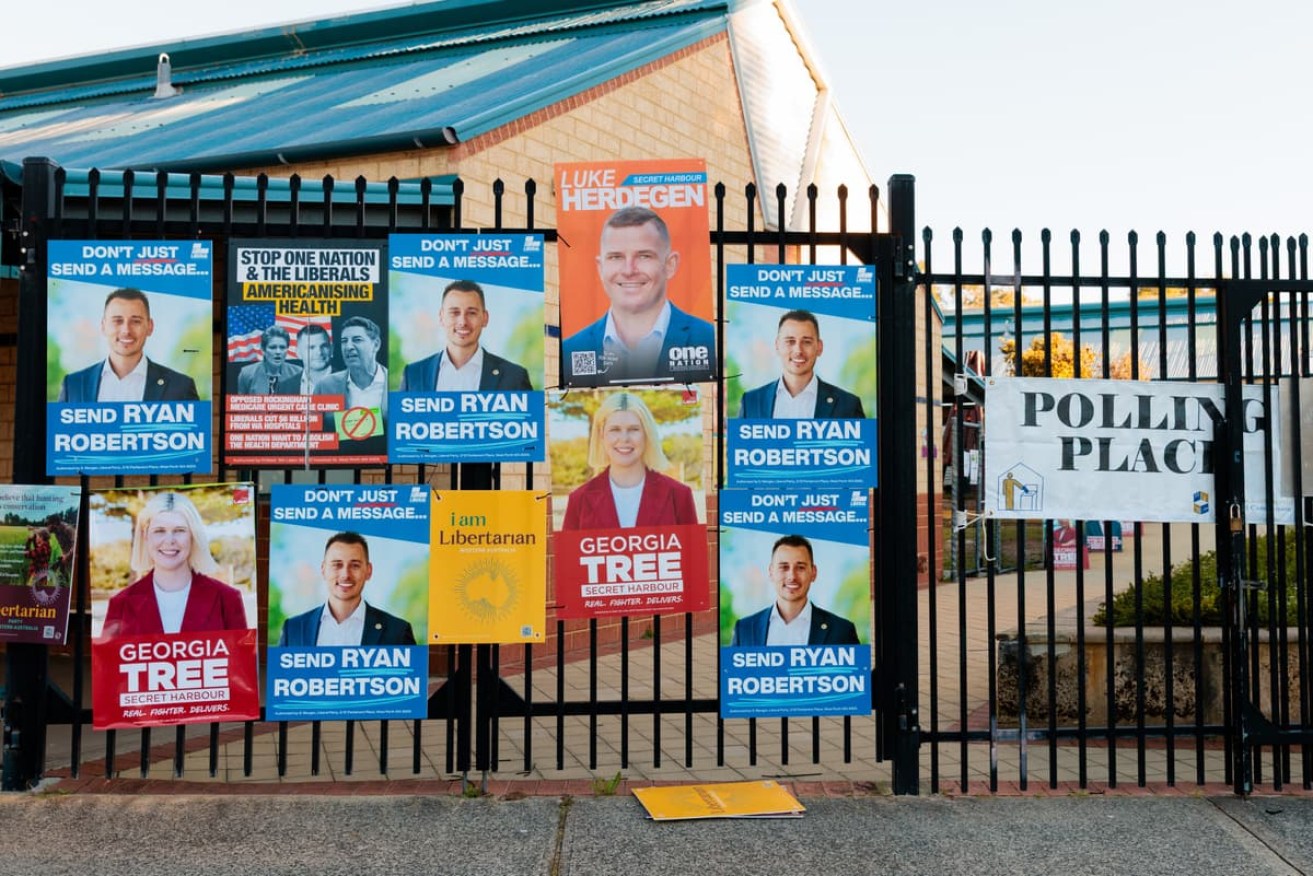
despite the huge number of voters Despite voters fleeing the once major parties, the Greens are flatlining. Photo: AAP
One Nation’s historic victory in the once safe Labor seat of Secret Harbour was of no more surprise than its recent defeat of the Liberals in the Farrer byelection.
But the failure of the Greens to pick up any of the votes Labor is shedding has attracted far less attention.
The big question is, if the Greens can’t pick up an exodus of Labor voters, what is their plan to grow their support?
Labor lost nearly half of its voters in last Saturday’s poll but, despite the huge swing, the Greens primary vote actually also fell.
Put another way, even though more than 6000 people who voted for Labor in 2025 changed their vote to someone else on Saturday, the Greens primary vote also fell by over 400.
While local factors obviously played a role in Perth, the same pattern was clear in the recent federal byelection in Farrer where, despite the huge swing away from the Liberals, and the fact Labor didn’t even field a candidate, the Greens managed to lose over half their vote too. Ouch.
But the clearest evidence of the Australian Greens’ failure to pick up any of the voters that Labor is losing comes from the published national polls.
Since the 2025 election, Labor has seen its primary vote fall from 35 per cent to 28 per cent, a slump of around 7 per cent. Likewise, the Coalition’s primary vote has fallen by 10 per cent.
But despite the huge number of voters fleeing the once major parties, the Greens are flatlining.
So, what’s going on? As climate change and inequality get worse by the day, why hasn’t Greens leader Senator Larissa Waters been able to capture the public’s attention — or the votes of fleeing Labor voters – since taking the leadership after last year’s election?
Most would think the times suit the Greens.
The Albanese government has gone out of its way to signal its support for fossil fuels expansion, fossil fuel subsidies and native forest logging.
The AUKUS submarine deal is unpopular with the public and Labor branches, as are Labor’s cuts to the NDIS and its refusal to ban gambling advertising.
But despite the Greens’ popular positions on Labor’s unpopular policies, it is One Nation and independents that have been the beneficiaries.
On becoming leader, Waters promised a “different style” based on her belief that “people are fed up with the shoutiness, they’re fed up with politicians talking about themselves”.
But in the 16 months since then, the “shoutiest” people in Parliament – Pauline Hanson and Barnaby Joyce – have not only talked endlessly about themselves, they have talked millions of former Labor and Liberal voters into supporting One Nation.
Across Australia and around the world, people are demanding big change. Voters are sick of waiting for the benefits of neoliberalism to trickle down to them.
Indeed, they are so sick of waiting for the benefits of incremental change proposed by cautious clever people that they voted for Nigel Farage’s Brexit, Donald Trump’s promise to “drain the swamp” and now Hanson’s plan to take us back to the future.
The modern media landscape doesn’t reward nuance and subtlety.
Voters want to know whose side politicians are on, and while people might not know much about Hanson’s policies, they know exactly where she stands on some of the things they care about.
Once social media algorithms know what people like, those people will be swamped with affirmation that they have chosen their side well.
And like it or not, modern voters like shouty – whether it’s Jacqui Lambie’s anguished demand that the PM treat veterans better or Joyce’s angry shouts at his dog – voters who feel let down by the “system” want to see some passion from the politicians promising to shake things up.
That’s exactly where the Greens seem to be struggling.
In tough times, people want leaders who will fight for them.
Canadian PM Mark Carney and UK Greens leader Zack Polanski have shown progressives can prosper in these dark times. But while Waters may have succeeded in changing the tone of the Greens, she is yet to pick a big enough fight to show she can succeed in changing voting intention or the country.
The Greens’ 10 senators have the balance of power in the Senate, which means that when Labor and the Coalition cannot agree on whether a law should be made, the Greens have the deciding votes.
A the precise point in history where voters are demanding radical change, the Greens seem content to negotiate small amendments to Labor’s centrist agenda rather than demand a government with a big mandate, think a lot bigger.
Holding the balance of power is a double-edged sword.
If you block too many weak proposals from the government, you get accused of “making the perfect the enemy of the good”, but if you tweak and pass too many weak proposals from the government, you just look like a less powerful, and less sincere, version of the government.
Leading a minor party is a tough gig, but historically voters have rewarded parties willing to make tough calls.
The Democrats managed the tensions until they blew up over the GST. Nick Xenophon was never afraid to say no to a PM. And, of course, after Bob Brown and his colleagues voted down Labor’s climate policy — the CPRS — the Greens went on to win a record share of the vote, a record number of seats, and enough seats in Parliament to force the new prime minister Julia Gillard to rework her party’s plans into a new and successful compromise.
Despite, or perhaps because of, the political payoff the Greens enjoyed from blocking the CPRS, Labor talks endlessly about the dangers of the Greens “creating another CPRS moment”.
Indeed, Labor works hard to forget that the man it originally asked to design its climate policy, Professor Ross Garnaut, described the version of the plan that the Greens voted against as “one of the worst examples of policy making we have seen on major issues in Australia”.
But even though Waters first won her seat in Parliament off the back of Brown and Christine Milne’s brave gambit, her strategy seems to err on the side of cautious and conservative.
First big climate test
On September 15, Waters will face her first big climate test in this Parliament when the Greens vote on Labor’s plans to allow the creation of even more of the carbon offsets used by the fossil fuel industry to justify increasing their pollution.
While Brown and Milne have urged their former colleagues to disallow these new offsets, Chris Bowen has actually warned them of creating another “CPRS moment”.
Ironically, that would seem to be exactly what the Greens need right now.
There is no right way for a crossbench party to use balance of power and there is no playbook for how to cut through in a social media world where passion and clarity go viral, and nuance and complexity go nowhere.
But what is clear is that the millions of voters fleeing Labor and the Coalition are running straight past the Greens on their way to parties and candidates who provide them with the clarity and sincerity that they crave.
Whether the Greens decide to tinker with Labor’s latest offset scheme or to take on Labor and the fossil fuel industry when Parliament next stirs, will be a clear indicator of whether the Greens under Waters will stay with the cautious course she has trod for the first half of this term, or whether she plans to start picking some fights with a Prime Minister with the lowest primary support in modern history.
While the next big test for the Greens will be the Victorian state election, the real test will be whether they can actually do anything to stop the expansion of fossil fuels and the growth in inequality in Australia.
These are big goals that likely need a lot more ambition and fewer amendments.
Richard Denniss is co-chief executive of the Australia Institute
The article first appeared in The Point. Read the original here
As anti‑govt violence grows, a response must too