The Stats Guy: The demographic lottery as self-storage wins, foster care loses


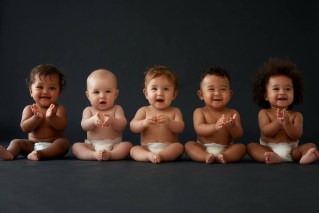
Foster care has demographic trends working against it. Photo: Pixabay
Demography is the study of people – for businesses and industries. It helps answer two questions: “Who will buy my stuff, and who will do the work?”
Good demographic analysis goes further.
Which age groups are growing? What stage of life are they entering? Where will they live? How much money, time and space will they have?
Will your industry have enough workers to serve them? Are demographics kind to you or do population trends make your life harder?
Compare two sectors sitting at opposite ends of Australia’s demographic spectrum.
One has almost every major trend working in its favour. The other has almost every trend working against it.
Welcome to the demographic lottery.
Self-storage. Unlikely demographic champion
Self-storage is not the most glamorous industry in the Australian economy.
The product is essentially a securely locked cube of empty air.
Customers fill it with furniture, bicycles, boxes, Christmas decorations and exercise equipment that will definitely be used again one day.
Yet self-storage might be the closest thing Australia has to a demographic all-weather business.
Across Australia and New Zealand, about 9.2 per cent of adults use self-storage.
Facilities average 85 per cent occupancy and the sector is valued at about $20 billion, according to the Self Storage Association of Australasia.
Start with housing.
Australian homes remain extraordinarily expensive relative to household incomes. Younger households buy or rent smaller homes, remain in apartments for longer, move further from the city or stay with their parents.
Buying an additional bedroom, a bigger garage or more land is prohibitively expensive. Renting a few square metres in a storage facility is much cheaper.
Self-storage allows households to separate their living space from their stuff. You might not be able to afford a bigger home, but you can rent the equivalent of an extra cupboard or garage elsewhere.
Greater urban density strengthens the case.
Australia needs more townhouses, apartments and smaller dwellings in established suburbs. That shift is necessary, but smaller homes come with less storage.
The spare bedroom becomes the nursery. The garage becomes the home office. The apartment cage downstairs is full within three weeks.
Self-storage becomes the pressure-release valve.
Millennials are now Australia’s biggest generation. They are aged from their late-20s to mid-40s and are moving through the family formation and peak consumption stage of the lifecycle.
Families accumulate stuff – lots of stuff.
A baby arrives with a cot, pram, car seat, highchair, clothes, toys, nappies and half the contents of a Baby Bunting store.
Soon follow bicycles, scooters, sporting equipment, bulky Paw Patrol plastic monstrosities, school supplies and boxes of clothes saved for the next child.
Millennials are accumulating family-sized quantities of stuff while increasingly living in homes not designed for family-sized quantities of stuff.
That is an excellent business model for self-storage.
The sector also benefits from life transitions. People use storage when they move, renovate, separate, relocate, downsize, inherit possessions or combine households.
Self-storage even benefits from your divorce. As one household turns into two small households, some furniture and seasonal items will be parked temporarily in self-storage.
Australia’s population will grow by millions over the coming decade. That means more households, more moves and more possessions.
As at least some baby boomers downsize from large family homes, they will not be ready to part from all their stuff just yet. Storage lets them postpone difficult decisions of what to keep and what to toss.
Self-storage has one more huge demographic advantage – it does not need many workers to operate.
As I described in many previous columns, Australia’s quintessential economic problem is the prolonged skills shortage.
Baby boomers are retiring in large numbers, while the smaller generations entering the workforce cannot replace them one-for-one.
Aged care, construction, health, education and hospitality must fight over a limited pool of workers.
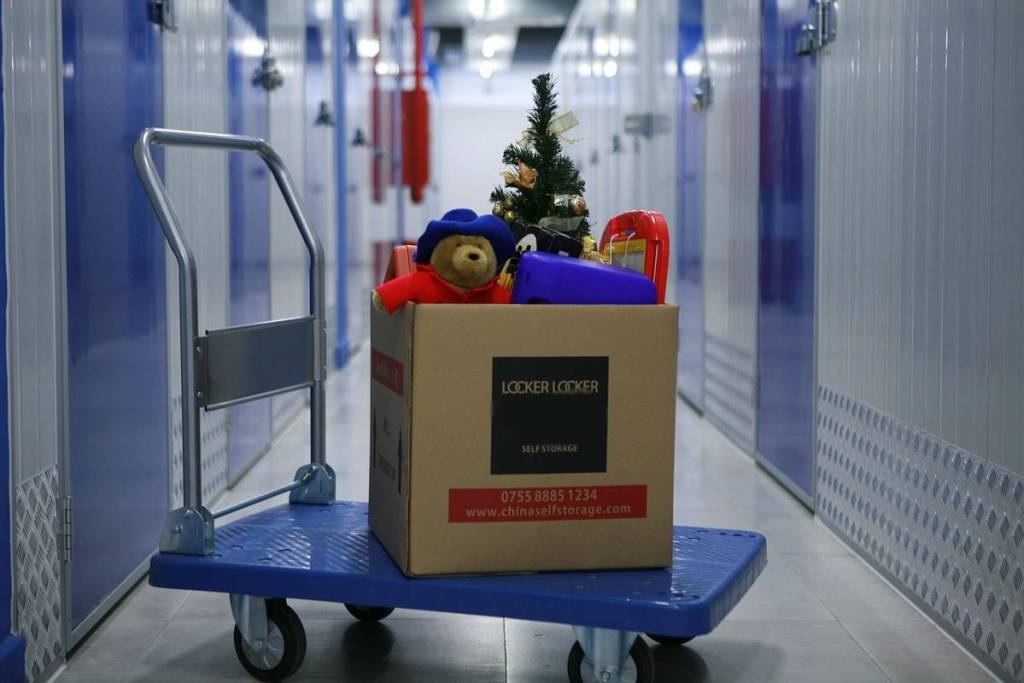
Self-storage is the clear winner of the demographic lottery. Photo: Pixabay
Once operating, self-storage facilities can serve hundreds of customers with relatively small teams. Online bookings, automated payments, digital access systems, security cameras and remote management reduce staffing needs.
In a decade when workers are scarce, businesses requiring relatively few workers gain a structural advantage.
Demography does not eliminate the need for competent management. It simply means the sector is swimming with the demographic current rather than against it.
Self-storage is the clear winner of the demographic lottery.
Foster care – everything gets worse
Now let’s travel to the other end of the spectrum.
Foster care is not an industry in the conventional commercial sense, and children must never be treated as units in a business model.
It is, however, a system that needs a reliable supply of suitably equipped people. Demographically, the outlook is deeply worrying.
At June 2024, about 44,900 Australian children were living in out-of-home care. Australia had about 8000 foster-carer households with a placement. During 2023-24, only 910 households commenced foster care while 1300 exited.
The pool of people able to foster is being squeezed by several demographic and economic trends.
Foster carers generally need a spare bedroom. In a housing crisis, spare bedrooms are expensive luxuries. Many rooms that appear “spare” in Census data are now home offices or bedrooms used by adult children who cannot afford to leave home.
Carers also need time. More households rely on two incomes to manage mortgages, rent, childcare and living expenses. Middle-aged Australians increasingly juggle paid work, their own children and ageing parents.
Spare time has become almost as scarce as spare bedrooms.
Financial stability matters too. Foster carers receive allowances to cover costs, but fostering is not designed to provide an income. Households under severe financial stress are unlikely to feel capable of taking on another major responsibility.
I wrote in the past about the changing shape of Australian society. Back in the day, society resembled a Bell curve – a big middle-class flanked by relatively few rich and poor people.
Nowadays Australia resembles a letter U – a small (and shrinking) middle-class flanked by large numbers of rich and poor people.
Foster children tend to come from poor, disadvantaged families (which we have more of now). Foster parents tend to come from lower middle-class families (which we have fewer of).
Australians are also starting families later. People spend more of their 20s and early 30s establishing careers, finding partners and saving deposits.
The period during which they might feel experienced enough, financially secure enough and energetic enough to foster becomes narrower.
Unlike self-storage, foster care cannot automate its central task.
Artificial intelligence cannot comfort a frightened child at 2am. A digital access system cannot attend a school meeting, prepare dinner or patiently rebuild a young person’s trust in adults.
Foster care is intensely human, super time-intensive and emotionally demanding. It operates in a country where humans, time and emotional capacity are all becoming scarcer.
Healthy, recently retired baby boomers are the clearest opportunity. Many are empty-nesters with spare bedrooms, financial security, parenting experience and more time available.
Yet relying on boomers is not a permanent solution. The generation is ageing, and many provide grandparent care, support elderly relatives or manage their own health problems.
Foster care needs systemic reform, not merely a better advertising campaign.
Governments should explore better allowances, paid care leave, reliable respite options, less administrative friction and stronger caseworker support.
Greater investment in early intervention could also prevent some children from entering care.
The contrast is brutal – self-storage booms because all demographic trends work in its favour. Foster care only has demographic trends working against it.
Where does your sector sit?
Every Australian industry sits somewhere between self-storage and foster care.
Your sector might benefit from population growth but suffer from worker shortages.
It might serve a rapidly growing older population but require expensive face-to-face care. Your regional business might see strong demand but you struggle to attract staff there.
The task is not simply to count customers. Businesses must identify which age groups drive demand, what life-cycle stages they are entering, where they will live and how much they can spend.
Then comes the uncomfortable question: Who will deliver the product or service? How labour-intensive is the operating model? Can tasks be automated? Is the workforce close to retirement? Does the business need scarce qualifications?
Demography doesn’t determine the future. A poorly managed self-storage business can still fail. An exceptionally well-run foster-care organisation can deliver extraordinary outcomes despite massive structural headwinds.
Demography changes the odds though. Businesses and investors that understand those odds can redesign services, target different customers, automate where appropriate, retrain workers and lobby for sensible reform.
Setting up your business to work with rather than against demographic trends should be a major part of your annual strategy review.
Simon Kuestenmacher is a co-founder of The Demographics Group. His columns, media commentary and public speaking focus on current socio-demographic trends and how these impact Australia. His podcast, Demographics Decoded, explores the world through the demographic lens. Follow Simon on Twitter (X), Facebook, or LinkedIn.
Want to see more stories from The New Daily in your Google search results?
- Click here to set The New Daily as a preferred source.
- Tick the box next to "The New Daily". That's it.