As NAIDOC Week marks 50 years, let’s reflect on on almost a century of ‘deadly education’

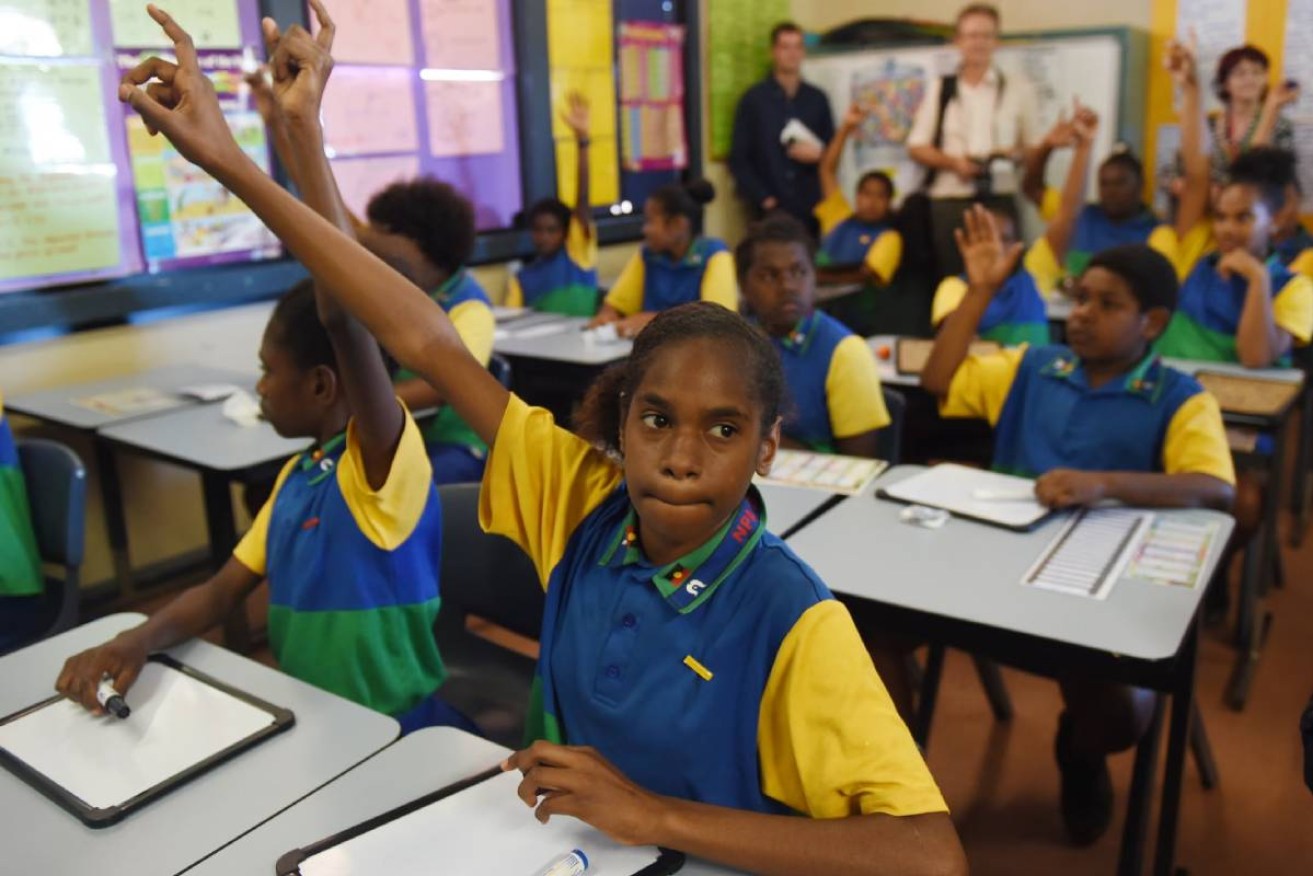
The fight for First Nations Education is almost 100 years old, and it's not over. Photo: AAP
[Aboriginal and Torres Strait Islander readers are advised that this article contains the names and pictures of deceased Aboriginal persons. Readers are warned there may be words and descriptions that may be culturally distressing.]
“Give our children the same chances as your own, and they will do as well as your children! We ask for equal education, equal opportunity.”
These words might have been spoken this year. In fact, they come from the national statement of the Aborigines Progressive Association which, in 1938, called for a “Day of Mourning and Protest” to mark 150 years of British occupation.
To reflect on this year’s NAIDOC theme – 50 Years of Deadly– we revisited nearly a century of First Nations educational activism. Across petitions, pamphlets, dialogues, and speeches, the same educational aspirations appear again and again.
Different generations, but the same demands.
This piece is an invitation to listen across time.
Give our children the same chances
Across nearly 90 years, First Nations leaders have insisted on equality of educational opportunity.
On the steps of the Sydney Town Hall for the Day of Mourning in 1938, Jack Patten declared that Aboriginal inequality was “not a matter of race, it is a matter of education and opportunity”.
Two years earlier, Yorta Yorta leader William Cooper had written to the NSW premier demanding that Aboriginal children receive full educational opportunities so that they might become “doctors, nurses, teachers”.
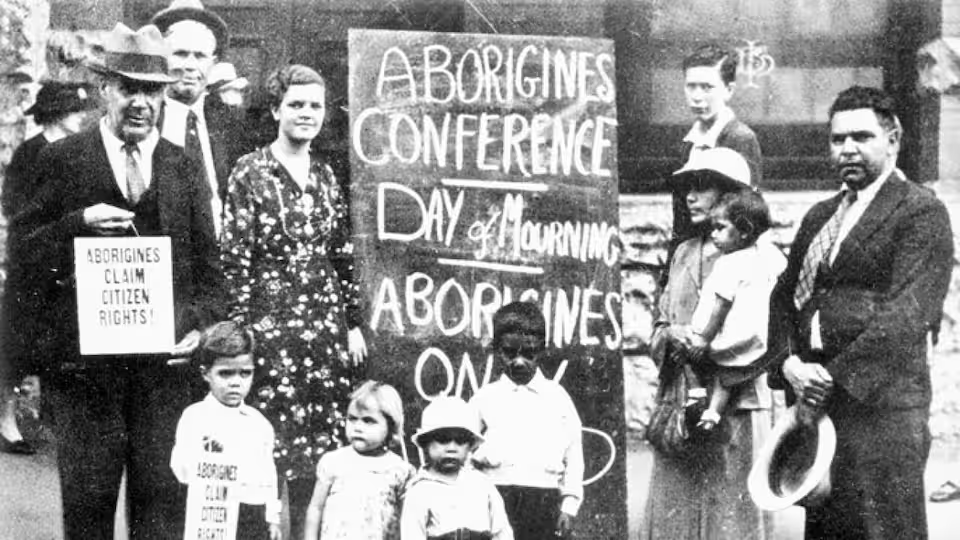
Patten (far right) led a protest outside Australia Hall in 1938. Photo: Library of NSW
Half a century later, speaking to the Australian Teachers Federation ahead of the 1988 Bicentenary, Alyawarre woman Pat Fowell (now Pat Anderson AO) shared the same vision.
“We need community administrators, doctors, nurses, lawyers, educators, teachers,” she said, echoing Cooper’s words.
Nearly three decades later, reflecting on the closure of Dhupuma College in Arnhem Land, Yolngu leader Dr Yunupingu lamented that Aboriginal children were being left with what he described as “a Mickey Mouse education” while “a much higher standard” was “provided to white communities in towns and cities”.
Face the truth
First Nations people have also insisted that education must tell the truth – not only for Aboriginal and Torres Strait Islander children, but for all Australians.
The Day of Mourning pamphlet urged non-Indigenous Australians to “face the truth” about dispossession.
Fifty years later, Pat Fowell warned that schooling itself had been “one of the mechanisms used over the last 200 years to separate Aboriginal people from their title to the land”.
She challenged teachers to use the bicentenary to “correct history and create some longer-lasting effects”.
Giving evidence to the Royal Commission into Aboriginal Deaths in Custody, author Sally Morgan reflected that telling history was about asserting “the validity of our own experiences” and exposing “the silence of 200 years” as “a lie”.
But she also reminded non-Indigenous Australians that these histories belonged to them too: “Like it or not, we are part of you.”
That same call continued throughout the First Nations Regional Dialogues that informed the Uluru Statement from the Heart.
In Melbourne, participants said that “all of our history, our milestones need to be acknowledged name by name and in our schools. It is well overdue”.
Following the Indigenous Voice referendum, First Nations leaders again addressed the Australian public: “Our truths have been silenced for too long.”
Be our own masters
For First Nations people, education has never meant simply gaining access to someone else’s system. Across generations, it has also meant the authority to shape education according to their own needs and aspirations.
The Aborigines Progressive Association’s 1938 statement called not only for equal education but for Aboriginal people “to be our own masters”.
Fowell returned to the same question 50 years later: “Education for what? What kind of education?” Those, she argued, were questions Aboriginal people “must address and answer for ourselves”.
Schools too often reproduced dominant European-Australian values, she argued, while failing to meet Aboriginal educational needs.
Yunupingu offered another vision. Reflecting on his own schooling, he said: “We were sent to Brisbane for a purpose … to arm ourselves with knowledge and education for the future – not just for ourselves but also for our people.”
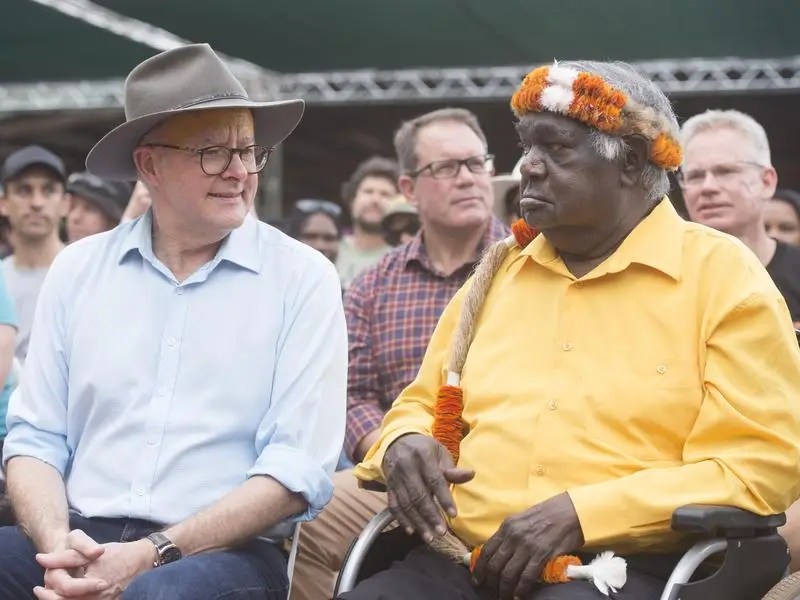
Yunupingu understood the power of education for First Nations children. Photo: AAP
Participants in the Regional Dialogues echoed that understanding.
In Perth, people described Country itself as “our university”, where “we have learnt through the leaders of the Pilbara Strike, we have learnt from the stories of our big sisters, our mothers, how to be proud of who we are”.
At Ross River, participants reflected that education gave them “strength and courage to have a voice, and a strong voice”.
Across generations, the same principle – education should empower First Nations people to be strong in their culture and to determine their own futures.
An invitation
Looking across almost a century, First Nations people have spoken with clarity and resolve about education.
Equality, truth, self-determination. Those principles connect the 1938 Day of Mourning, the 1988 Bicentenary, the Uluru Dialogues, and conversations following the Voice referendum. They remain as urgent today as ever.
Perhaps that is the deeper significance of this year’s NAIDOC theme. Fifty years of Deadly is more than a celebration of resilience. It is an invitation to embrace a continuous tradition of First Nations educational leadership that has continually challenged Australia to imagine a fairer future.
As Fowell reminded teachers in 1988: “Our history is yours as well, respect it, teach it, be reconciled to it.”
Following the Voice referendum, First Nations leaders wrote: “Today we think of our children, and our children’s children. Our work continues as it has always done.”
Education has long been the terrain on which equality, truth and self-determination are contested.
If nearly 90 years of advocacy teaches us anything, it is that First Nations people have never lacked vision for the future of Australian education.
So how might that vision yet come to shape Australia’s future? Let’s not wait another 50 years to find out.
Sue-Anne Hunter is national commissioner for Aboriginal and Torres Strait Islander children and young people
Dr Matthew R Keynes is a non-Indigenous scholar working as a senior research fellow at the University of Melbourne’s Faculty of Education
NAIDOC Week runs until July 12

China and housing: Two things we may have missed