Australia’s migration system lacks something crucial – a plan

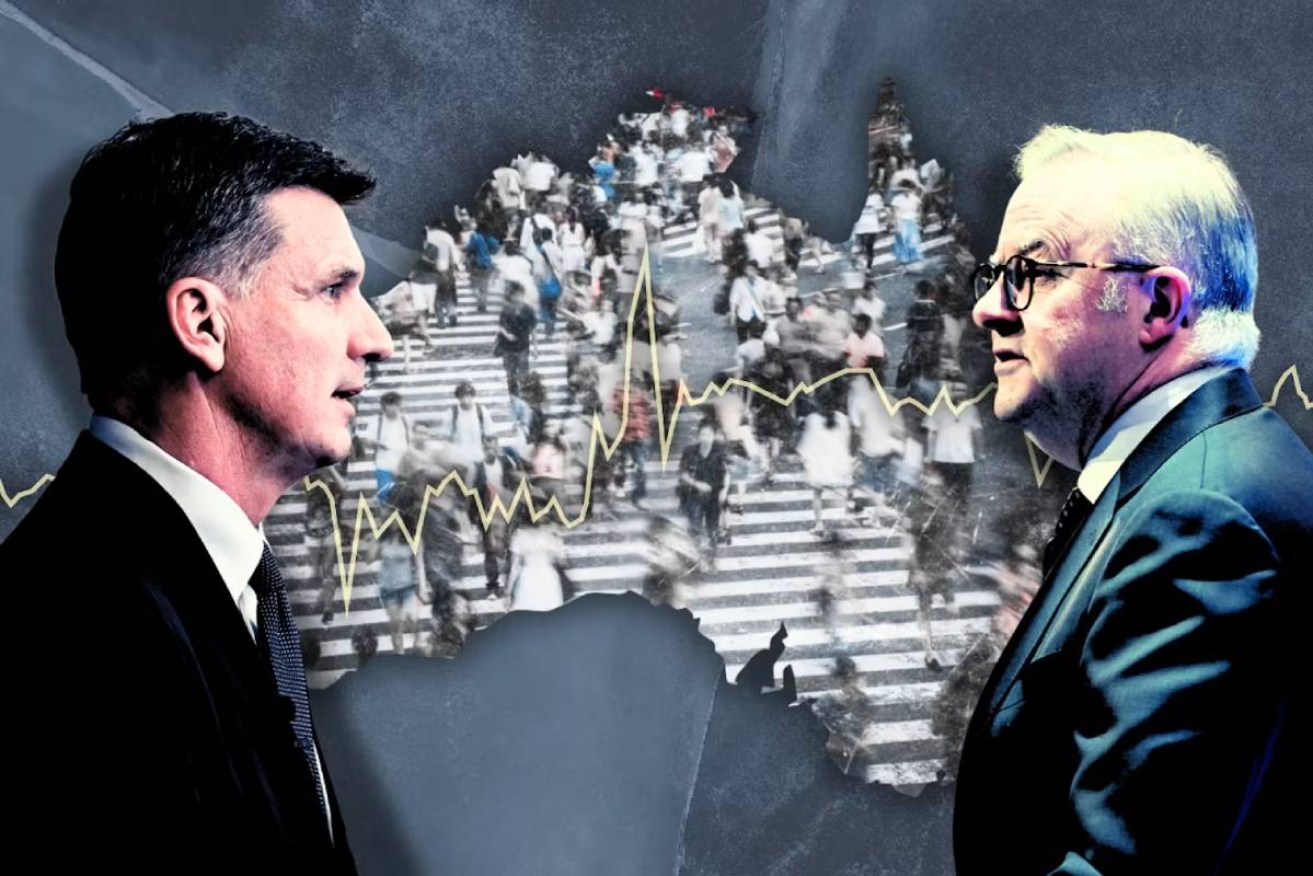
There appears to be not the slightest agreement about what the level of migration should be. Photo: AAP/The Conversation
The political debate about migration often boils down to a numbers game. The question is typically what the precise level should be and the answer depends on who you ask.
Clive Palmer says zero. Pauline Hanson says around 130,000. Angus Taylor says it should equal the number of dwelling completions (175,000 in 2024-25).
Anthony Albanese has recently opted for the Treasury’s long-term estimate of 225,000. One Nation’s David Farley has said he is happy with 306,000.
This is a very wide range suggesting that there is not the slightest agreement about what the level of migration should be.
Part of the reason for this is political, but another reason is policy. Australia’s migration levels are rarely a result of careful and sophisticated planning, but it’s time they were.
Where is migration currently at?
Discussions about migration numbers centre largely around one figure: Net overseas migration, or NOM. It’s the net gain or loss of population through immigration to Australia and emigration from Australia.
Net overseas migration was 301,000 in 2025, according to the latest Australian Bureau of Statistics data. This was down from 330,000 in 2024 and 530,000 in 2023.
The relatively small fall from 2024 to 2025, compared with the fall from 2023 to 2024 has led some commentators to conclude that net overseas migration is settling around 300,000.
But this conclusion ignores the fact this figure is made up of numerous different movements in and out of Australia, several of which are far from being “settled”.
For example, working holiday makers leaving Australia increased by more than 12,000 between 2024 and 2025. The movements of Australian citizens contributed an extra 7000 to net overseas migration in the same timeframe.
Another factor that affects net overseas migration is the movement of New Zealand citizens in and out of Australia. It’s something the government has little control over and the numbers fluctuate a lot.
So while some reporting has said net overseas migration remains higher than the last pre-Covid year, 2019, if you excluded New Zealanders in both 2025 and 2019 calculations, the figures would be very similar: 264,000 in 2025 and 241,000 in 2019.
It’s also important to note that the current net overseas migration figure for 2025 is based on preliminary estimates made by the ABS. It’s not a final figure and is based on statistical algorithms that are changed regularly. We won’t know the final 2025 figure until June 2027.
So net overseas migration numbers are a shaky foundation on which to debate migration as a whole.
The effect on housing
The housing debate is a clear example of how the net overseas migration figure can be used as a blunt, and unreliable, instrument.
One of the biggest contributors to net overseas migration is temporary migration.
But temporary migrants are only a small part of the housing purchase market and most, especially international students, are located in the big cities.
This means while they definitely affect the rental market, this impact is highly localised to areas around the universities in Sydney and Melbourne.
Many temporary migrants to Australia are also the highly skilled ones we might wish to attract.
ABS data show in 2025, driven by labour demand, there were 176,000 migration arrivals of New Zealand citizens, temporary skilled workers and working holiday makers, compared with only 33,000 permanent skilled worker arrivals.
My colleague Alan Gamlen and I have estimated about half a million skilled jobs nationally are filled by temporary migrants.
As a result, Australia’s economy has become increasingly dependent on temporary migrants in sectors such as aged care, agriculture and hospitality. The temporary migrant population has grown year on year since 2013.
While temporary migrants add to rental housing demand, this needs to be weighed against the important contributions they make to the economy.
So what do we need to do instead?
The central problem with Australian migration policy is that the level of migration is considered to be an input to planning rather than an output.
Treasury budgets and intergenerational reports simply assume a future level of migration and then analyse what is required in planning.
Levels of migration across the various visa types should be outcomes determined through a sophisticated planning process that incorporates demand for labour, university financing, housing, infrastructure and energy.
Government agencies such as Treasury and the Productivity Commission have the capacity to model these outcomes.
So instead of looking only at numbers coming in and out, we need to pay closer attention to who is here temporarily, whether they will stay, and have better systems to help them become permanent residents, if they like.
Canada has adopted a temporary migration target, but has done so without adequate modelling, leading to a decline in the national population and a devastating impact on international student numbers.
Australia needs to plan carefully and slowly. The 2026 census will provide detailed data on the temporary population. These data will become available in about 12 months from now.
In the meantime, policy makers should be designing the modelling that will be required to plan the most appropriate level of migration for Australia.
Inevitably, results for different components of such modelling will conflict. Labour demand is likely to conflict with housing supply, for instance, but at least the information underlying opposing choices will be available.
The level chosen will remain a political decision, but the values and facts underlying the decision will be transparent.
Peter McDonald, Honorary Professor of Demography, Centre for Health Policy, The University of Melbourne
This article is republished from The Conversation under a Creative Commons licence. Read the original article