PM rejects US claims of social media ‘censorship’
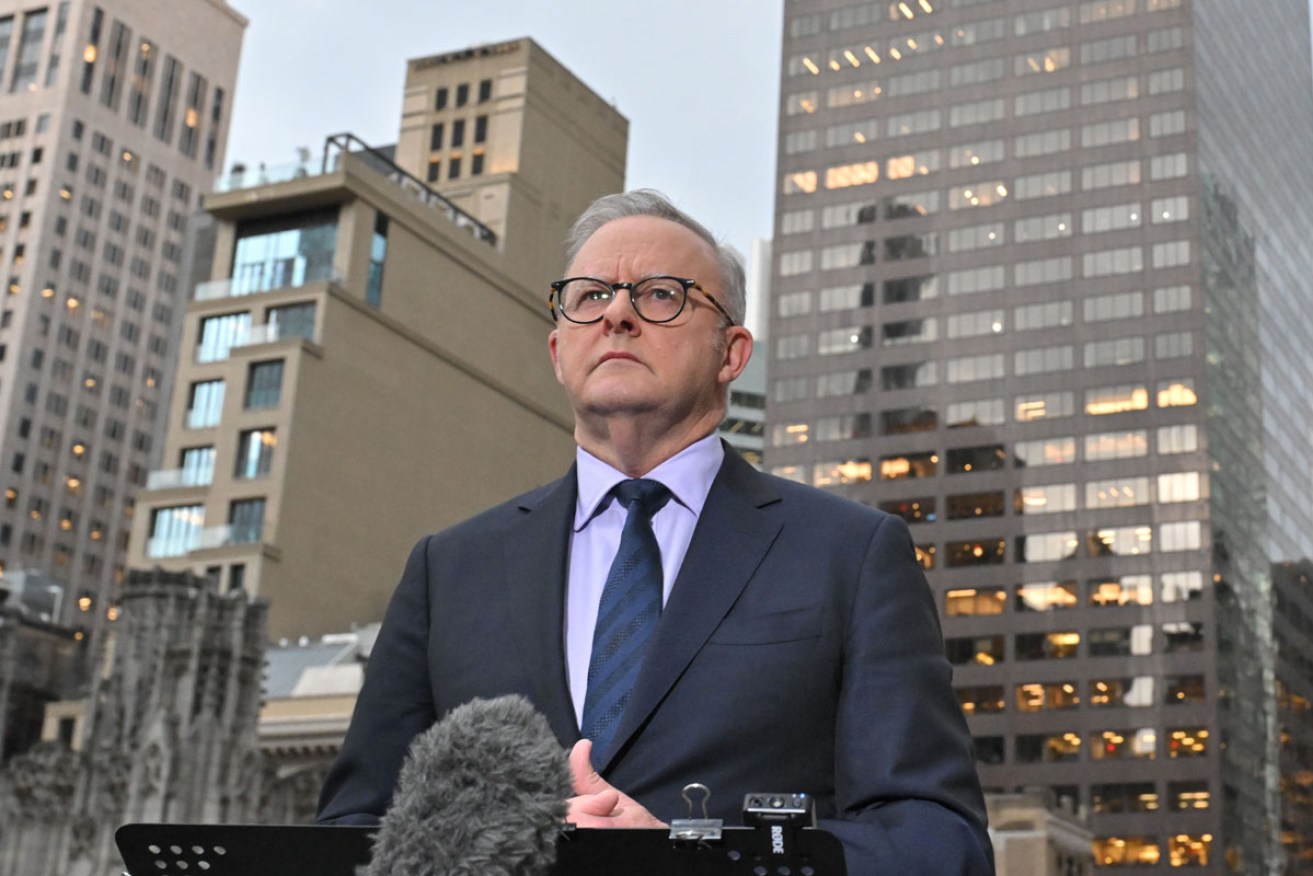
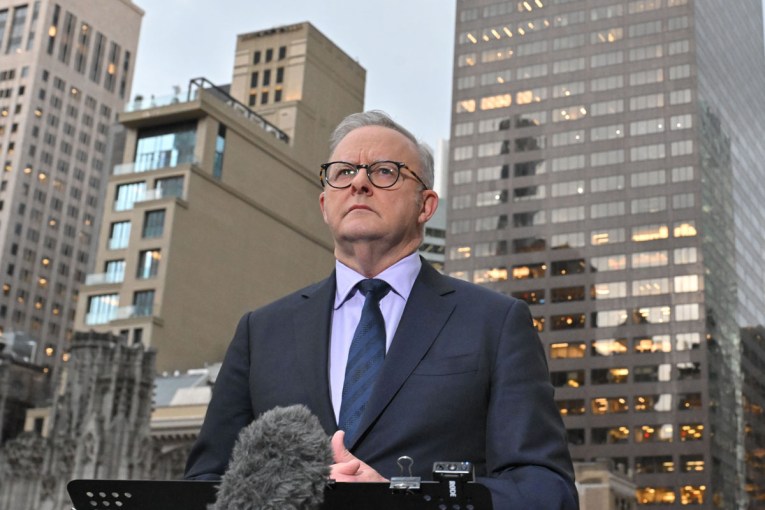
Australia's social media overhaul is in the national interest, Anthony Albanese told reporters in New York. Photo: AAP
Anthony Albanese has rejected US government claims that Australia’s proposed social media overhaul amounts to censorship.
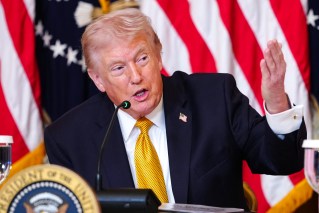
The Trump administration’s response to Australia’s proposed digital duty-of-care laws said the US government had serious concerns about the plans, calling for America-based platforms to be exempted.
“A framework that empowers governments to enforce vague definitions of ‘harm’ risks becoming a mechanism for viewpoint-based censorship,” the US government said in a statement posted on the website for the US Embassy in Australia.
“Platforms will be incentivised to over-moderate speech that should be protected to avoid regulatory penalties.”
Under the digital duty of care, social media users will have the option to remove an algorithm-driven feed and instead default to seeing content from people they follow.
Tech platforms would also be forced to protect under-18s from harmful posts such as misogynistic content, pornography, posts that encourage eating disorders or content that glorifies crime.
The eSafety Commissioner would also have powers to issue removal notices to social media platforms.
Prime Minister Anthony Albanese introduced the proposal in early September, releasing a draft for consultation.
He said the changes were in the national interest.
“The digital duty of care is something that we’ve foreshadowed for some period of time,” he told reporters in New York.
“It’s not about giving government control, it’s about giving people back control over what they receive on their devices.”
But the US government said Australia needed to define how the harm and risks would be determined and whether standard definitions would be needed.
The statement said calls to filter content would not be different to outright removal.
“The US government would likely consider such a measure as facilitating censorship,” it said.
“We ask that Australia withdraw any plans to mandate that platforms algorithmically suppress content based on ambiguous, government-defined safety criteria.”
The US called for the federal government to explain its response to industry concerns and how the definitions of what constituted harmful content would be determined.
The statement noted American companies would be disproportionately impacted by the measures.
“The large majority of social media and video-sharing platforms that would be affected are US-headquartered companies, operating substantially on US soil and serving American users alongside Australian ones,” it said.
The statement was made hours before Albanese spoke at the UN General Assembly about protecting children online.
Albanese addressed the Coalition for Children’s Rights and Protection in the Age of AI, alongside French President Emmanuel Macron and Spanish Prime Minister Pedro Sanchez.
The Labor leader said the digital duty-of-care laws built on world-first reforms that banned under-16s from having social media accounts.
“Australia is now introducing additional laws … to put choice back into the hands of Australia over the algorithm,” Albanese said.
“They will make social media platforms give people the choice.”
He also discussed the social media measures with former Apple chief executive Tim Cook at the tech giant’s California headquarters on Sunday.
The pair had a one-hour, closed-door meeting after they had a previous conversation over the phone on child safety measures on Apple devices.
Such measures were inspired by the social media ban.
Albanese told the UN coalition the social media ban was showing results.
“Our ban gives our children precious breathing space in which to mature and make safer social media decisions,” he said.
Critics of the laws’ implementation have pointed to research and anecdotal evidence showing teens have been easily able to circumvent the ban and continue to access social media.
Trump’s AI call
Anthony Albanese has also denied that Donald Trump’s comments rejecting calls to rein in the use of artificial intelligence had dampened efforts by Australia and other nations to slow the roll out of AI.
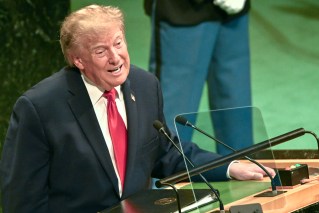
In an address to the UN General Assembly on Wednesday, Australian time, the US President said the technology should be renamed as “super intelligence”, rejecting calls for further protections for it.
“The use of the word ‘artificial’ makes intelligence sound fake. It is not fake, it’s actually amazing,” he said.
“The United States also totally rejects any attempt to construct a globalist scheme to control the artificial intelligence being spoken of.”
But Albanese still believes a coalition of nations can work together to put in place greater protections for the technology.
“We have put forward a strong position,” he told reporters in New York.
“There are a range of advantages, but we need to make sure that humans are in control.”
–AAP
Want to see more stories from The New Daily in your Google search results?
- Click here to set The New Daily as a preferred source.
- Tick the box next to "The New Daily". That's it.