Mars digger bites the dust after two years

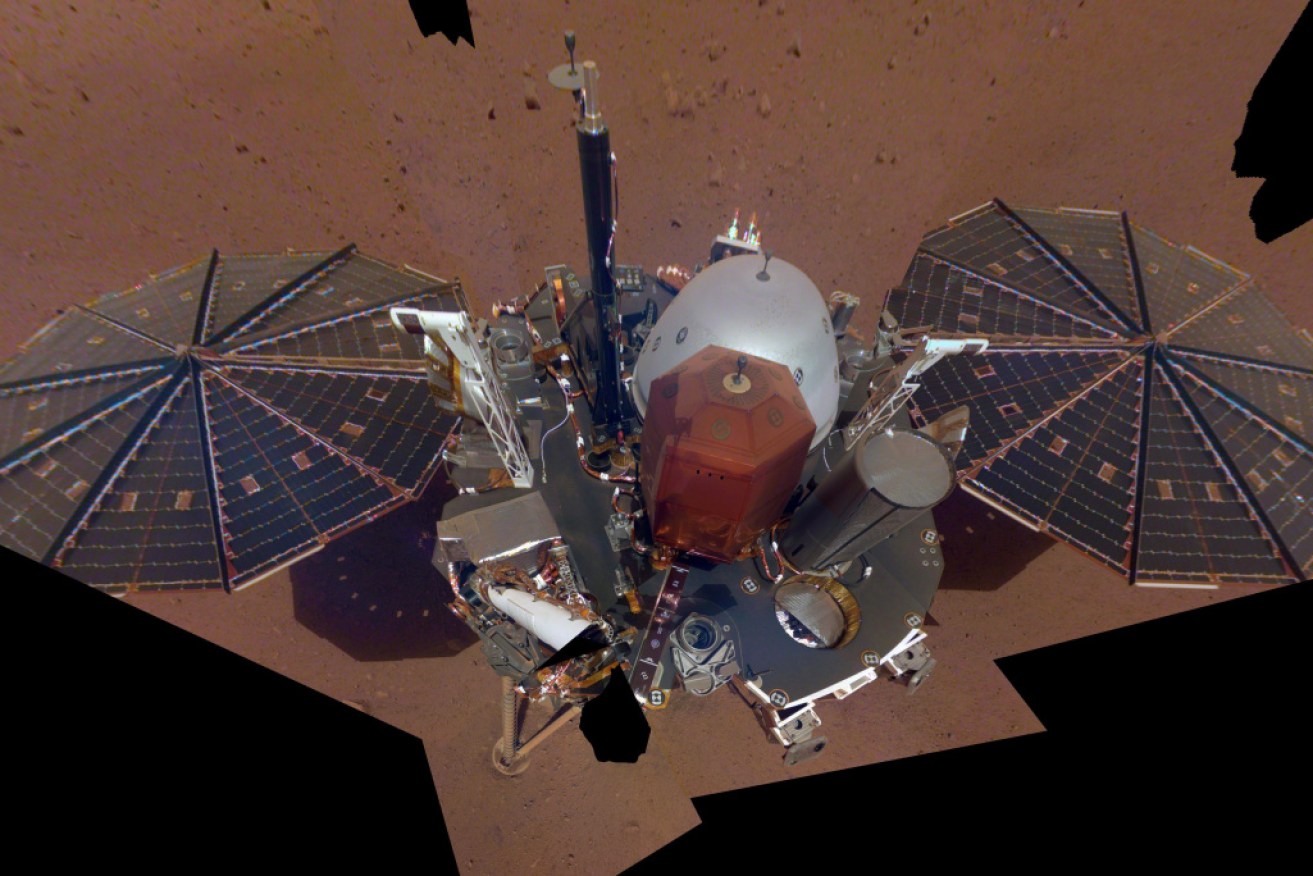
The InSight lander's Mars digger has been declared dead. Photo: AP
NASA has declared the Mars digger dead after it joined a host of spacecraft to have tried to uncover the red planet’s secrets and lost.
Scientists in Germany spent two years trying to get their heat probe, dubbed the mole, to drill into the Martian crust and take its temperature.
The lander itself is still operational and studying shaking of the surface or interior of the planet, known as Marsquakes.
But the 41cm-long device that is part of NASA’s InSight lander could not gain enough friction in the red dirt.
The probe was supposed to bury five metres into Mars but only drilled down about 60cm.
Following one last unsuccessful attempt to hammer itself down at the weekend with 500 strokes, the team called it quits.
“We’ve given it everything we’ve got but Mars and our heroic mole remain incompatible,” said the German Space Agency’s Tilman Spohn, the lead scientist for the experiment.
The effort would benefit future excavation efforts at Mars, he said.
Tweet from @NASAInSight
Mars has long proved a formidable foe for scientists attempting to assess its terrain.
The British lander Beagle 2 was deployed in 2003 but failed to make contact at the time of landing and declared lost the following year.
Subsequent images suggested it had landed safely but two of the spacecraft’s four solar panels failed to deploy, blocking the spacecraft’s communications antenna.
The Schiaparelli module, a joint mission of the European Space Agency and the Russian space agency Roscosmos, was launched in 2016 but crashed on impact, albeit after it transmitted information about its landing system.
A dust storm claimed the Opportunity rover in 2018.
Astronauts one day may need to dig into Mars in search of frozen water for drinking or making fuel, or signs of past microscopic life.
The mole’s design was based on Martian soil examined by previous spacecraft. That turned out to be nothing like the clumpy dirt encountered this time.
InSight’s French seismometer, meanwhile, has recorded nearly 500 Marsquakes while the lander’s weather station is providing daily reports.
On Tuesday, the high was -8C and the low was -49C at Mars’ Elysium Planitia, an equatorial plain.
The lander recently was granted a two-year extension for scientific work, now lasting until the end of 2022.
InSight landed on Mars in November 2018. It will be joined by NASA’s newest rover, Perseverance, which will attempt a touchdown on February 18.
The Curiosity rover has been roaming Mars since 2012.
-AAP