Discovery shows Tyrannosaurs suffered from middle-age spread as they aged
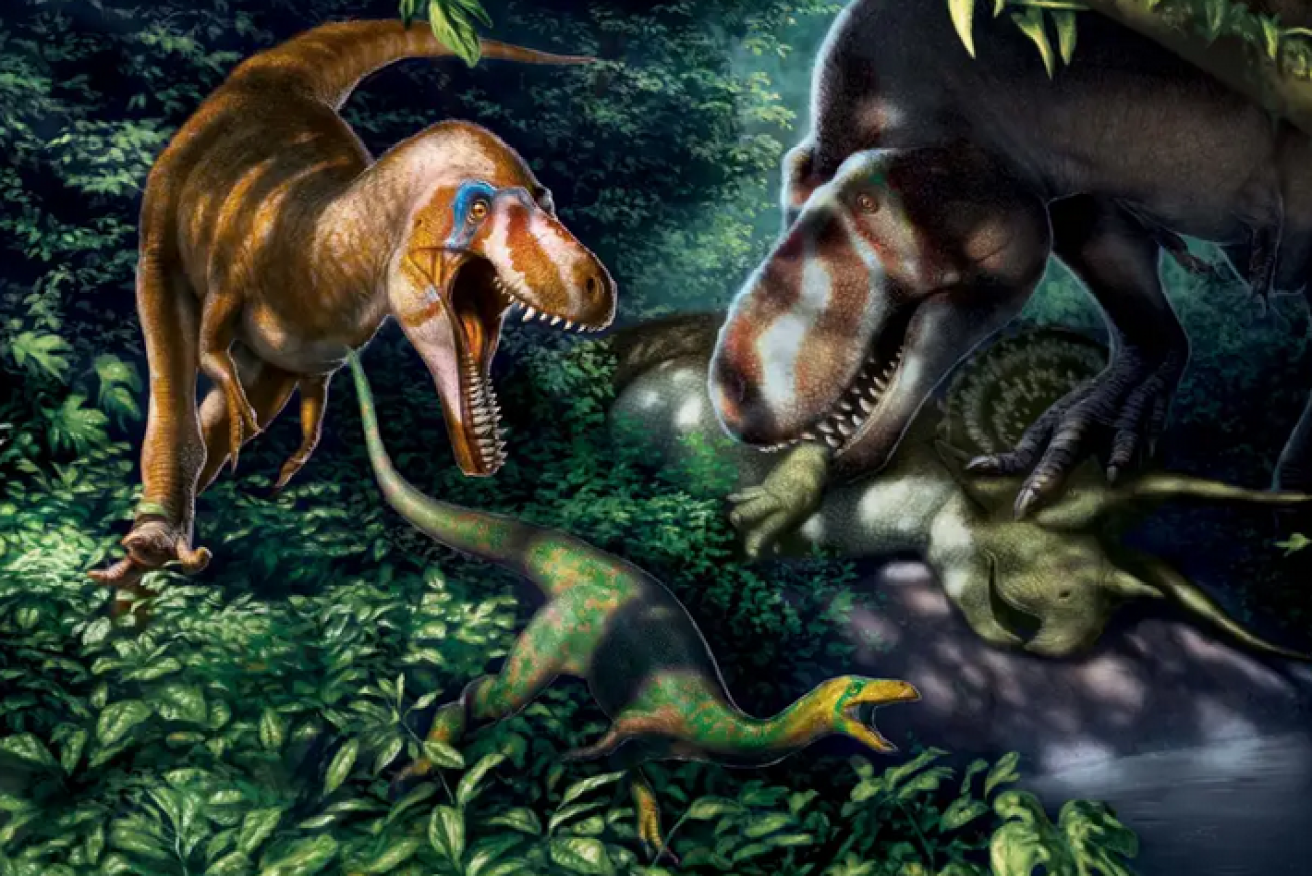
Unlike mum and dad, a baby T rex was a nimble creature. Graphis: Julius T Csotonyi/PA
Bones belonging to two “teenage” Tyrannosaurus rex dinosaurs provide fresh clues as to how these predators grew up to become “plodding, crushing monsters”, according to a new study.
The fossil skeletons indicate the juvenile tyrannosaurs were slender, fleet-footed and had knife-like teeth for cutting food, unlike their lumbering, bone-crushing adult counterparts.
It was previously believed that the bones, which are preserved at the Burpee Museum of Natural History in Illinois, US, belonged to a different dinosaur species, a smaller pygmy relative known as Nanotyrannus.
But an examination of the tissue microstructures within the bones revealed they were part of the T. rex family.
According to the researchers, the juvenile tyrannosaurs would have been “slightly taller than a draft horse and twice as long” and were yet to experience a major growth spurt at the time of their death.
Adult T. rex, on the other hand, would have been around 12m long and up to 6m tall, making them one of the largest meat-eating dinosaurs that ever lived.

The world’s largest known Tyrannosaurus rex skelton on display in Canada.
Study co-author Scott Williams said their findings show these dinosaurs “go through a drastic change when they grow up from these sleek, slender, fleet-footed T. rexes with these wonderful knife-like teeth to these big, monster, plodding, crushing tyrannosaurs that we are familiar with.
“It also tells us these animals probably dominated their ecosystems at all ages.”
To assess the age and growth rate of the T. rex specimens, nicknamed “Jane” and “Petey”, the researchers removed thin slices from the leg bones and examined them at high magnification.
They found that by counting the annual rings within the bone, much like counting tree rings, Jane and Petey were teenagers when they died, aged 13 and 15, respectively.
Based on their analysis of the bones, the researchers believe it took the T. rex up to 20 years to reach adult size, undergoing drastic changes as it matured.
And based on the spacing in the rings, the team believe the T. rex’s growth was dependent on its food source.
For instance, if food was plentiful, the dinosaurs would bulk up and if food was scarce, it would not grow as much.
Dr Woodward said: “The spacing between annual growth rings record how much an individual grows from one year to the next.
“The spacing between the rings within Jane, Petey, and even older individuals is inconsistent – some years the spacing is close together, and other years it’s spread apart.”
The findings are published in the journal Science Advances.
-AAP