Tougher sunscreen rules follow dismal testing failures

Source: Choice
“Sunscreens work. Keep applying it,” a leading public health body has urged Australians after major changes to the rules around sun protection.
It follows testing by consumer advocacy group Choice in 2025, which found 16 of 20 sunscreen products did not meet the SPF claims made on their labels.
On Tuesday, the Therapeutic Goods Administration said it was pushing ahead with reforms to strengthen transparency and make regulatory obligations clearer for manufacturers.
The tightened rules will require brands to test finished products, as opposed to just the base formula, provide results to the TGA before products are listed, and to continuously test products after listing.
Labs conducting tests on products available in Australia will also have to get international accreditation.
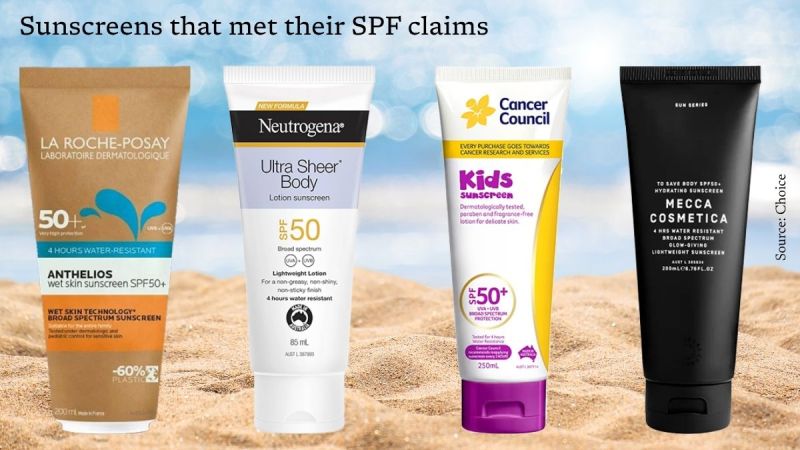
Only four sunscreens in Choice’s testing met their SPF claims. Source: Choice
The Public Health Association of Australia said the changes were welcome.
“The system for testing of sunscreens in Australia has been problematic for some time, which was recently demonstrated by reports that some products did not meet their measured SPF ratings,” PHAA CEO, Adjunct Professor Terry Slevin said.
“The TGA’s proposals are welcome and need to be worked through so that the testing is consistent and of high quality. It’s also important that this testing doesn’t increase the price of sunscreens.
“But the main message is that sunscreens work, they help prevent skin cancer, and people in Australia should not lose faith in them.
“Consistent epidemiological evidence proves they’re vital sun protection products, and are part of a suite of skin cancer prevention measures that have been key public health messages for decades.”
But Slevin said sunscreen alone wasn’t enough protection for Australia, which has the highest rates of skin cancer in the world.
“You also need to seek shade, wear protective clothing and a hat, and slide on sunglasses,” he said.
“Don’t forget to apply the correct amount of sunscreen on exposed skin 20 minutes before you head outside, and reapply it at least every two hours.”
In a 2019 report, the PHAA listed skin cancer prevention as one of the top 10 public health successes of the past 20 years.
“The TGA’s measures today are an important step in rebuilding public confidence in a vital public health tool,” Slevin said.
Choice also welcomed the TGA’s tighter rules – though it said they didn’t go far enough.
“Currently, sunscreen brands are not required to provide any SPF testing data to the TGA unless requested, so this change would greatly improve the transparency around how brands have tested their products,” consumer impact director Andy Kelly said.
“However, the TGA is not proposing to routinely monitor and evaluate test results. Sunscreen brands would also only be required to provide test results confidentially to the TGA.
“In the interest of transparency and public safety, we believe these results should be made available to everyone and that the TGA should routinely monitor test results, as well as conduct its own compliance testing program.”
Choice also backs recommended changes to regulation of labs that test sunscreens.
“In a country where around two in three people will be diagnosed with skin cancer in their lifetime, consumers deserve to trust the claims on sunscreen products are accurate,” Kelly said.
“These proposed reforms are an important step towards ensuring this is the case. We look forward to continuing to work with the TGA to improve the regulation of sunscreens in Australia.”
Other reforms floated include making clearer distinctions between therapeutic and cosmetic sunscreens, by limiting the SPF claims that cosmetic sunscreens could make.
The quality and performance of specific ingredients will also be more closely regulated through the development of quality requirements.
-with AAP