Famously, fiercely non-political, Dolly Parton could teach our politicians a thing or two

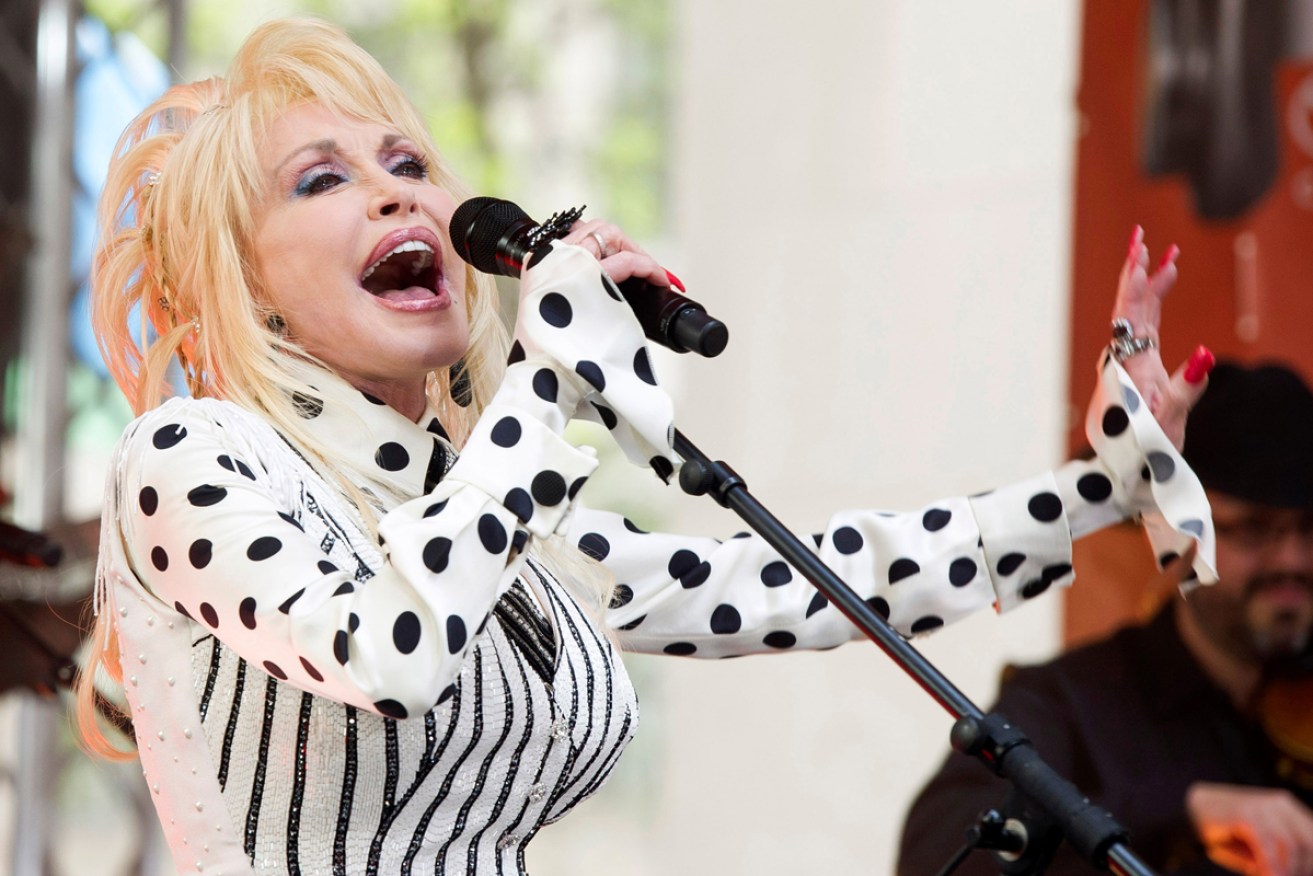
Dolly Parton used her fortune for good – fixing things she knew could be fixed. Photo: AAP
In April 2026, Dolly Parton was found to be the most popular person in America.
Her death, announced on Wednesday, was greeted with global grief, one of the rarest forms of collective expressions we have left.
Parton was famously not-political. It’s how she managed to be so political. She refused to become bogged down in terms or fights over identity politics, while she quietly got on with the work of making change.
Parton could have been a billionaire. She wasn’t because she spent her money where it mattered. Her Imagination Library donated 332 million books to children globally.
She bought a theme park in Pigeon Forge, Tennessee, where she was raised and became one of the county’s biggest employers, generating $1.8 billion for the local economy and employing more than 23,000 people since it’s launch. She used her money to improve the education of Tennessee children, having a marked impact on the school drop out rate.
She funded art and vaccines. She used her Christianity not as a weapon, but as a shield for the vulnerable and less fortunate. She preached, and practised, non-judgment, while lifting up the LGBTIQ community, women, the poor, the working class, and those who would make her a joke.
In refusing to be bogged down in politics, and living a life of meaning, guided by a belief in equal human dignity, Parton was able to sneak politics past those who gate-keep it. She, more than any of the bloviated microphone cravers, practised politics the right way. It’s understandable that the loss of such a human, at a time when they already seem in such short supply, feels personal. For many, it is.
I was raised in a family that made a joke of Dolly. She was reduced, as women often are, to her attributes, natural or not. She was only hair, boobs and rhinestones to many in my community, an object of derision and mirth. It was from watching and learning from Dolly that I learned how to subvert criticism, and how to be unapologetically yourself.
Yes, Dolly would say, call me a dumb blonde. I know I’m not dumb, or really blonde. No one knew how expensive it was to look that cheap.
She didn’t care what people thought of the artifice on the outside, because she was real where it counted. She had based her look on the “town tramp” she said, because she saw a woman who refused to be shut in the box her Smokey Mountain community built for women.
She fought against that future, not just with her music, but with her image.
“I was willing to pay for it,” she said. “I’m very sensitive, I didn’t like being disciplined – it hurt my feelings so bad to be scolded or whipped or whatever. But sometimes there’s just that part of you that’s willing, if you want something bad enough, to go for it.”
She didn’t call herself a feminist, but supported a woman’s right to choose her path in life. She called herself a woman in business while forging her own path, turning down Elvis Presley’s request to record I will always love you because his manager wanted half the publishing rights.
Dolly Parton just did things. If she discovered she had accidentally offended people, she apologised and changed course.
She was brave and bold and brash and wonderful, and the loss of her voice made the world seem a little more dim yesterday, a little less sparkly.
Parton managed to unite people in a way most of our politicians can only dream of. And she didn’t do it by cowing to the loudest and richest voices in the room. She didn’t do it by shapeshifting herself into the most mundane and least offensive person she could manage. She didn’t do it by engaging in pointless debates and culture wars, or by pushing vulnerable people down to win the approval of those who will never truly approve.
She just got on with fixing what she knew could be fixed. She didn’t spend her money on trying to influence corporate politics, or owning space, or subjugating people. She spent it on lifting as many boats as she could, and she did it while wearing sky-high heels and rhinestones.
The juxtaposition on Wednesday, of watching an outpouring of grief from people of all ages, races and creeds for a human most of us only ever saw on a stage or through a screen but felt a real connection with, with Australian politics – where the most recent stupidity is over a GST deal that favours one state at the expense of every other Australian and whether or not it’s fair to talk about that, or worse, which party is more serious about demonising migration – all of it aimed at appeasing the loudest voices, created more whiplash than usual.
“I just want everybody to be treated good,” Parton said in 2023, in response to a ban on gender affirming care in Tennessee.
“I try not to get into the politics of everything. I try to get into the human element. I have some of everybody in my immediate family and in my circle of employees. I’ve got transgender people. I’ve got gays. I’ve got lesbians. I’ve got drunks. I’ve got drug addicts – all within my own family. I know and love them all and I do not judge.”
Parton subverted politics and then did what needed doing. If only our politicians could follow a similar path.
Amy Remeikis is a contributing editor for The New Daily and chief political analyst for The Australia Institute
Not just the economy, stupid – everything else too



Listen, deliver, rebuild trust to quiet the populist right