No bug deal: Turns out, you might actually enjoy eating insects

Source: Bryan Lessard / Instagram
Green ant gin is one thing, but how would you feel about swapping your usual oat or puffed-rice-filled muesli bar with an insect protein bar?
While most people might baulk at the idea or reach for a Tim-Tam instead, a study from Portugal has found that even those hesitant to try insect-based foods might end up enjoying the experience more than they expected.
With edible bugs increasingly being spruiked as a sustainable solution to the world’s food security challenges, researchers at the University of Beira Interior recruited a group of adults who had never tried them before.
The participants were asked to complete a survey gauging their awareness and thoughts on insect-based foods, then sampled a regular cereal/muesli bar and an insect protein bar while their physiological responses were recorded using brain and heart monitors.
“The findings were very surprising,” said lead author Andreia CB Ferreira, explaining that the group was surprisingly receptive to the insect-based bars.
“This was really an unexpected result as literature said to us that consumers tend to reject these novel foods. The results show us the relevance of tasting experiments on promoting this new alternative.”
The study, published in the Journal of Neuroscience, Psychology, and Economics, did not specify what insects were in the bug bars. However, it said some participants were told the truth about which bar they were eating, while others weren’t.
Overall, after tasting both, most participants actually preferred the insect-based bar.
The physiological measurements showed they became “more attentive and engaged” while eating the insect bars, with increases in heart-rate activity also recorded.
Although the relatively small sample size – just 38 adults – was cited as a limitation of the study, Ferreira said the findings revealed a need for better communication and tactics such as tasting samples to help people get more comfortable with the idea of eating foods containing bugs.
“Communication should not only position insect-based food as ‘new’ but also clearly state its potential nutritional and sustainability-related advantages compared to other protein alternatives,” she said.
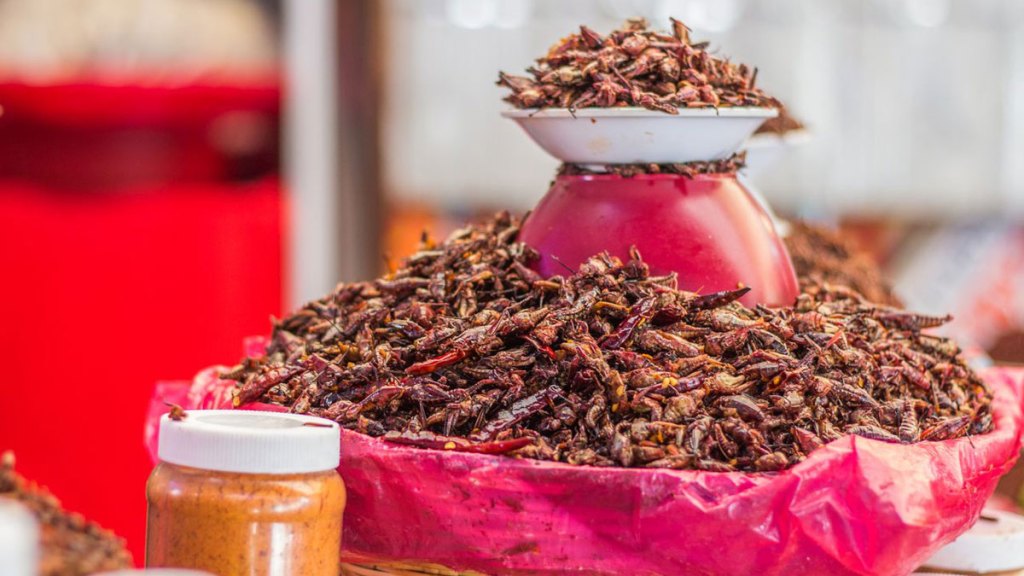
Not everyone prefers their insects hidden in a cereal bar. Photo: Pexels
The European Union officially recognised insects as a “novel” food source in 2018 – including the likes of locusts, crickets and mealworms. In Australia, the CSIRO launched an “Edible Insects Industry Roadmap” in 2021 outlining how this country could become a key player in the global edible insect industry.
Reporting the results of the CSIRO study at the time, Bryan Lessard and Rocio Ponce-Reyes noted that more than two billion people from 130 countries already eat insects, and First Nations Australians have a long history of eating bugs such as green tree ants, witjuti grubs and bogon moths.
Writing in The Conversation, the pair added that farming insects is better for the environment than traditionally farmed animals, and insect-based foods are a good source of high-quality protein, omega-3 fatty acids, iron, zinc, folic acid and vitamins B12, C and E.
Source: CSIRO
The results of the Portuguese research come after a Canadian study published earlier in the year found 44 per cent of participants expressed some openness to trying insect-based foods, but only 27 per cent were keen to include them in their daily diet.
“Many people still associate insects with something that is dirty, dangerous, or inedible,” said researcher Nadezhda Velchovska, an undergraduate at Concordia University in Montreal.
”But even though these reactions are mostly cultural, there are also many concerns related to food safety and a fear of insects, which is also very significant.
“Even when people understand the environmental or nutritional benefits or are curious to try them, there is still an emotional reaction that can remain very strong.”
For her research, Velchovska surveyed 252 visitors at the Montreal Insectarium. She found participants were generally more open to eating insects when they were incorporated into familiar foods such as protein bars or baked goods.
“The less you see the insect, the easier it is to eat.”
For Australians who remain unconvinced, Lessard and Ponce-Reyes pointed out in their 2021 report that many Australians already eat insects “in the form of natural red food colouring made from the cochineal bug, or the 5 per cent of peanut butter that’s legally allowed to contain insect fragments”.
Want to see more stories from The New Daily in your Google search results?
- Click here to set The New Daily as a preferred source.
- Tick the box next to "The New Daily". That's it.





Viral 'sardinemaxxing' craze keeps spreading