Medicare overhaul targets doctor quality and affordability

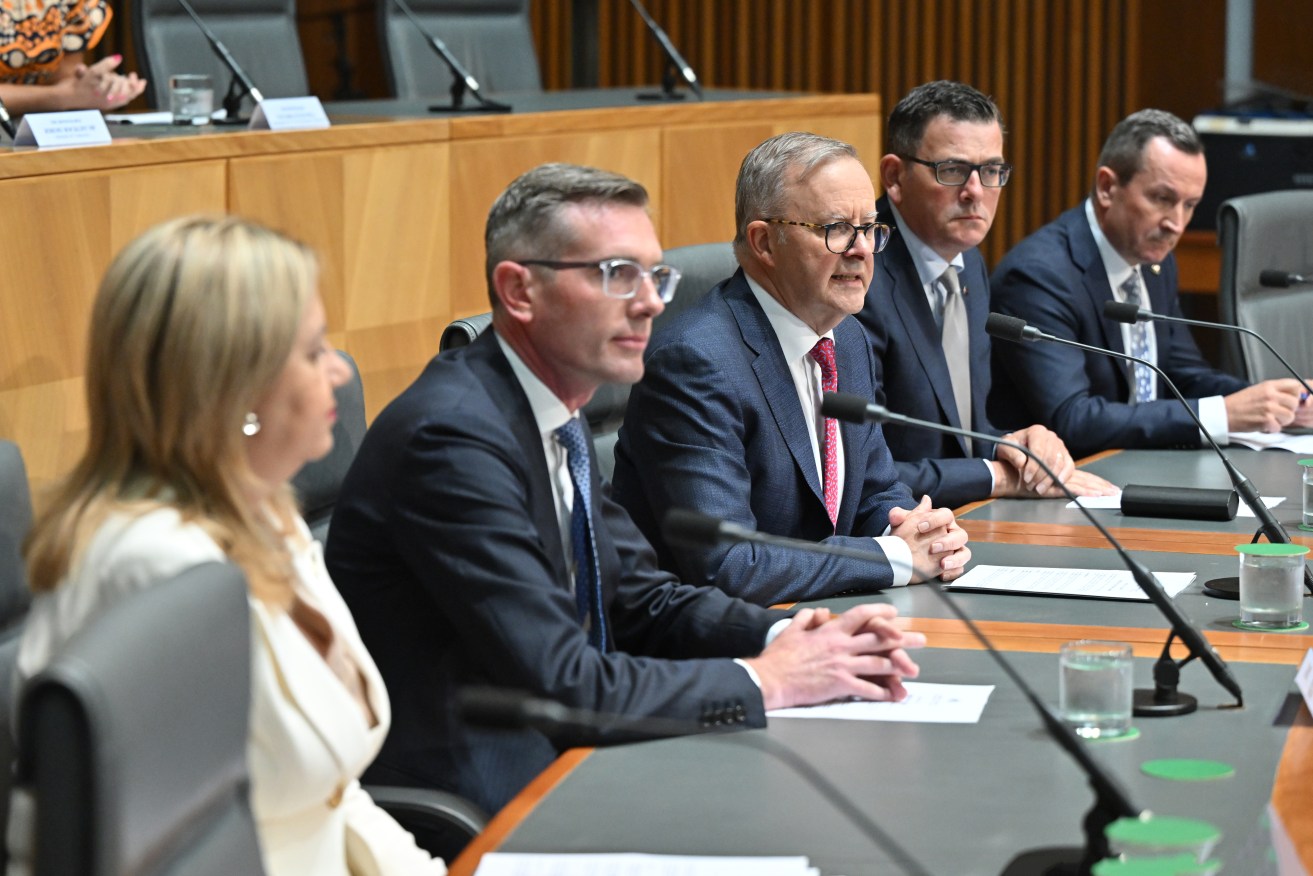
National cabinet will meet in Queensland on Friday – with Chris Minns taking over from Dominic Perrottet as NSW premier. Photo: AAP
GPs will receive government funding for longer appointments and more affordable care under a huge overhaul of Australia’s Medicare system.
Prime Minister Anthony Albanese detailed plans to reform healthcare at national cabinet talks with state and territory leaders on Friday, flagging new funding models to deliver on Labor’s $750 million Medicare commitment.
Under it, Australia’s existing fee-for-service system would be “blended” with public funding, with a renewed focus on primary healthcare services such as GP clinics – which will provide longer, and higher quality, appointments.
Funding for primary healthcare should also be raised to “support more affordable care”, the new strengthening Medicare taskforce report said.
Mr Albanese said healthcare reform was his top priority, and that the way Medicare is funded must change, not just the amount of funding.
“We all understand the challenge … for improving our primary health care networks, how that interacts with the hospital system and there’s absolutely a commitment to work on policy outcomes as the starting point,” Mr Albanese said in Canberra after Friday’s national cabinet meeting.
“The key going forward is to better integrate the systems so that patients [have] better health care and we know that the earlier the care is provided, the cheaper that care will be.”
The strengthening Medicare taskforce report, published Friday, said improved access to GPs, who managing more chronic illness, alongside a renewed focus on “multi-disciplinary care”, must be key priorities.
It came after a Productivity Commission report on Thursday revealed a sharp rise in GP waiting times and a reduction in bulk-billing in 2020-21.
“Since the pandemic began, more people are presenting at emergency departments or delaying care, practices are finding it harder to recruit
GPs and other health workers, and bulk billing rates are falling,” it said.
“Funding arrangements are complex, and the health care system is increasingly difficult for people and their providers to navigate.”
However, while the 12-page report contained broad recommendations for overhauling healthcare systems, it didn’t detail how much funding was needed or how governments would divvy up those responsibilities.
Health Minister Mark Butler said reforms would be outlined in the May budget, under a $750 million strengthening Medicare pledge Labor took to the election and costed in the October budget.
“I know this is not going to fix things, in and of itself, I know this is not a single budget challenge,” Mr Butler said.
“This is not a question of just chucking money at the existing system, the existing system needs to change to reflect the care needs of the Australian population in the 2020s.”
The Royal Australian College of GPs “cautiously welcomed” the report, but said it was silent on key issues such as boosting medicare rebates and increasing incentives for doctors to bulk-bill their appointments.
“Medicare is almost 40 years old, and we need change; however, today’s recommendations will not of themselves go far enough in securing the future of general practice care,” said RACGP president Nicole Higgins.
The strengthening Medicare taskforce also canvassed reforms that will improve healthcare access in regional, rural and remote communities.
This included a call to “develop new funding models” that are “locally relevant” and “do not disadvantage people” who live in places with little or no access to regular GP care.
The taskforce also recommended that governments “grow and invest in Aboriginal Community Controlled Health Organisations to commission primary care services for their communities”.
Australian Medical Association boss Stephen Robson said the $750 million that had been put on the table by the federal government for Medicare wouldn’t deliver any immediate relief to Australians struggling to see a doctor.
“There is absolutely nothing in the report … that will allow Australians struggling to afford to see a GP to see that GP anymore quickly, anymore affordably,” he said.
“While the report is very welcome, and certainly has changes that will strengthen the system as we know, there is absolutely nothing in the report that we know that will provide anything immediate – and that is what we need.”

Raising the rate of JobSeeker would save lives

Pain for borrowers as RBA lifts rates again