Raising the rate of JobSeeker would save lives


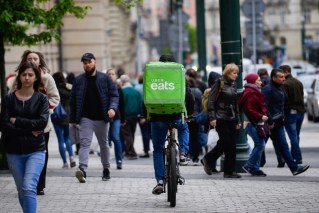
Jobless people in Australia are more likely than the rest of the population to eat poorly and skip medical care. Photo: Pexels
For decades, successive governments have kept unemployment payments in Australia below all accepted measures of adequacy – JobSeeker now sits at just 41 per cent of the minimum wage, and Youth Allowance is even worse at 34 per cent.
The results of this are clear in recent official data on death rates and ACOSS’ latest Raise the Rate survey.
Of the 1560 people who responded to our survey, most of whom receive JobSeeker, about half can’t afford enough fresh vegetables, fruit and meat. Medicine and medical appointments are unaffordable for about three-quarters of respondents.
Beyond food and medicine, inadequate income support left nine in 10 respondents socially isolated, with some describing themselves as not living, but merely existing. Others described the deep shame and stigma they felt of living in poverty.
People receiving income support in Australia are likely to eat poorly and lack medical care or social support because they do not have enough money.
Shocking new data from the Australian Institute of Health and Welfare released this month shows that people are also more likely to die.
The mortality rate for people receiving working-age payments was more than nine times that of the broader population in the 11 years to 2022. Three in five people aged 22-64 who died between 2012 and 2022 received an income support payment such as the Disability Support Pension or JobSeeker.
For people receiving a working-age payment, “deaths of despair” were well above that of others in the community. Accidental poisoning deaths, including overdose and alcohol poisoning, occurred at 22 times the rate in the broader population, while deaths from alcoholic liver disease occurred at 21 times the rate. People receiving income support had a suicide rate five times higher than the general population.
Only some of this disparity may be explained by the circumstances that lead people to rely on a payment. People with a terminal illness, for example, may qualify for the Disability Support Pension, and the highest mortality rate was found among people receiving this payment.
However, the death rate for people receiving unemployment payments was four times that of the broader population, with suicide, accidental poisoning and coronary heart disease the three leading causes of death. More than 36,000 people receiving unemployment payments died in the 11 years to 2022.
Further, the mortality rate for people receiving unemployment payments has been steadily increasing since 2012, rising by 47 per cent; a trend not seen among other populations.
What is going on here?
Between 2012 and 2022, the number of people receiving unemployment payments long-term doubled – from 300,000 to 600,000. In other words, a lot more people are having to live on a totally inadequate income support payment for a long time.
This increase is not simply due to population growth. Government decisions have contributed.
For example, in 2013, eligibility criteria for the Disability Support Pension were tightened, which led to more people ending up on the lower JobSeeker payment. The government also increased the Age Pension age, seeing more older people end up on JobSeeker.
People receiving unemployment payments were also subjected to the harsh Targeted Compliance Framework. Introduced in 2018, it saw one million extra payment suspensions compared with the old scheme in the first year alone. In remote areas, tens of thousands of people receiving unemployment payments had them suspended or cut under the discriminatory Community Development Program.
These are policy choices made by successive governments that have real consequences for people on the lowest incomes in Australia. It is in this context that we should consider the AIHW mortality figures.
People without paid work in Australia are expected not only to survive on an inadequate income, but to navigate harsh compulsory requirements on which that income depends. Missing an appointment or a phone call can result in a payment being suspended or cut, exacerbating insecurity for people already struggling to cover rent, food and energy bills.
Is it any wonder that almost one in two people receiving unemployment payments report severe anxiety or depression?
Surely government must act to stop people who are experiencing poverty and distress from dying at such dramatically high rates.
In 2023, the Albanese government increased JobSeeker by $20 a week in real terms. While welcome – because every dollar counts – the increase still left the payment well below the poverty line.
At the same time, we have seen governments give away billions in tax cuts that overwhelmingly benefit wealthy people. In 2026-27, the stage-three tax cuts are estimated to cost $28 billion, $14 billion of which will go to taxpayers in the top 20 per cent of incomes – more than enough to lift JobSeeker and related payments to two-thirds of the minimum wage.
In 2026, Australia still forces people who lose their jobs and need support to survive on an income that leaves them in poverty. Australia is wealthy enough to ensure that losing your job does not mean losing the means to be a part of the community.
The mortality figures for people receiving income support should be a line in the sand. The government must raise the rate of JobSeeker, Youth Allowance, Parenting Payment and related supports to ensure people do not struggle with severe financial stress. It must also stop the harsh compliance regime that demeans and harasses people into desperation. Otherwise, Australia will continue to see people without paid work condemned to poverty, and we fear these mortality figures will not change.
Charmaine Crowe is the Program Director, Social Security at the Australian Council of Social Service. She has 17 years’ experience in policy and advocacy at state and federal levels covering social security, aged care, health and housing policy
Republished from The Point
Want to see more stories from The New Daily in your Google search results?
- Click here to set The New Daily as a preferred source.
- Tick the box next to "The New Daily". That's it.

Raising the rate of JobSeeker would save lives

Households in pain, but budget crisis can be solved