Inflation warning as Mideast conflict escalates
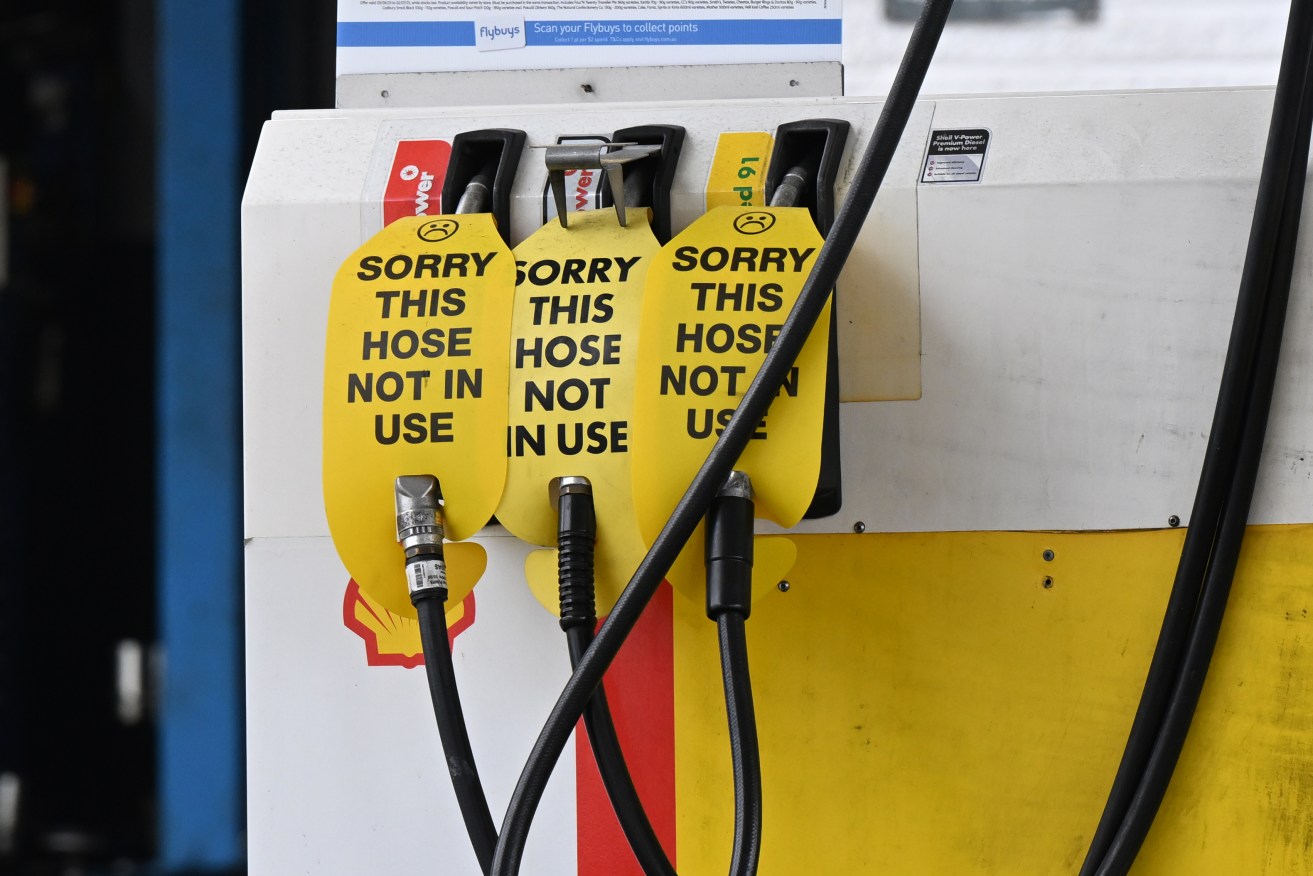
Fuel prices are expected to rise after the US bombed three Iranian nuclear facilities. Photo: AAP
Iran’s response to US military strikes could lead to a surge in the price of fuel and higher inflation in Australia, economists say.
Prime Minister Anthony Albanese has backed America’s intervention in the conflict between Iran and Israel after it sent bombers to drop bunker-busters on Iranian underground nuclear sites over the weekend.
While Iran should not have access to nuclear weapons, Albanese said a de-escalation was needed.
Reacting to news overnight that Iran had retaliated by carrying out a missile attack on the Al-Udeid US air base in Qatar, government frontbencher Mark Butler repeated the government’s call for a diplomatic solution to encourage peace in the Middle East.
Butler also revealed the government was still trying to find ways to evacuate about 3000 Australians registered for assistance to depart Iran, and more than 1,000 in Israel.
“We’ve been trying to do all that we can, particularly in land crossings,” he told Nine’s Today show on Tuesday.
“We had a flight we thought might be able to leave Israel yesterday, but because of the security situation, that wasn’t able to happen again.
“But our foreign affairs staff are working day and night to explore every possible opportunity to help Australians get out of there.”
US President Donald Trump said Iran’s attack was unsuccessful, with no Americans harmed and “hardly any damage done”.
“Most importantly, they’ve gotten it all out of their ‘system,’ and there will, hopefully, be no further HATE,” Trump said in a post on Truth Social.
Australian motorists have already seen a slight rise in the cost of fuel after the US launched strikes against three Iranian nuclear facilities.
While consumers have been told not to panic about the Middle Eastern unrest, escalating conflict in the region could lead to further price hikes, AMP chief economist Shane Oliver says.
“The real risk would be if intervention by the US sets off retaliation by Iran that disrupts oil supplies,” he told AAP.
“If Iran do successfully block the Strait of Hormuz, then you’ll end up with a bigger spike in oil prices and petrol and that will have a severe economic impact.”
Oliver said petrol would rise by 25 cents per litre in the likely event oil prices skyrocketed to more than $100 a barrel.
He said an increase in petrol costs could push up inflation, which would flow on to other parts of the economy.
“If the oil price went to $100 to $150 a barrel and it’s a much bigger boost to inflation, the Reserve Bank of Australia would be inclined to wait before cutting interest rates again,” he said.
“The price of airfares could go up, as well as plastic prices, which affects a lot of household goods.”
Australian Travel Industry Association chief executive Dean Long said airfares were not likely to increase immediately following the escalation in conflict in the Middle East.
However, he said travellers heading through the Middle East on the way to Europe would likely face longer journeys.
“The increase in congestion is causing delays,” he told AAP.
“With the narrowest flight path in recent memory – with Russia, Ukraine, Iran and Israel closed – the airspace is very narrow to get to Europe.
“Beforehand, there were multiple ways to catch up delays and stay on time, but in reality, there is a very narrow window to catch up delays, and there is less room for error by the airlines.”
Long said there had not been any major disruptions for Australian travellers so far and urged passengers not to cancel their flights.
—AAP