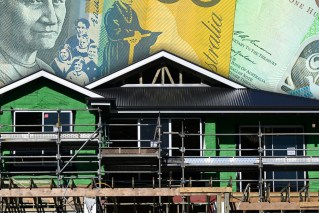
Most Aussies believe rate rises drive inflation, RBA survey finds

Aussie mortgage holders believe interest rate rises drive inflation. Unsplash
The Reserve Bank of Australia has released results of a survey that finds most Australians think higher interest rates increase inflation.
This no doubt led to some tut-tutting from the boffins at the RBA, as they lamented the state of economic literacy in Australia today.
For those not in the know, economists at the RBA and elsewhere assume that higher interest rates will decrease inflation. That is why the RBA has increased interest rates three times this year. They are trying to drive inflation down.
But their survey found about 59 per cent of people thought that higher rates would increase inflation. With about a quarter (27 per cent) thinking it would decrease inflation, and the rest being unsure.
There is an interesting reason for why the majority might think this, and it’s one that the RBA would do well to pay attention to. From their perspective they may be right.
To understand this, we need to look at exactly how higher interest rates affect the economy and inflation.
Economics textbooks will tell you that higher interest rates bring down inflation in several ways, but the one that affects most people is through mortgage repayments. Higher interest rates mean those with mortgages, which is more than a third of households, must pay more in interest. Basically, their mortgage repayments go up.
Because they’re spending more on repayments, they have less to spend on everything else. Their cuts in spending mean businesses see less demand for their stuff. Consumers cut back and businesses struggle to sell everything they have made.
In times like these, businesses are less likely to increase prices and more likely to cut them to try and maintain their sales.
At the same time, because businesses are not selling as much stuff, they cut back how much they produce. Producing less stuff means they need fewer people to produce it. Unemployment starts rising.
Higher unemployment reduces workers’ power to demand higher wages, which reduces businesses costs.
Put simply, the RBA fights inflation by making people poorer.
A Reserve Bank of Australia has found most Australians think higher interest rates increase inflation.
But right now, inflation is being driven by higher fuel costs caused by the US and Israel’s attack on Iran.
And higher fuel costs mean most people are spending more filling up. This means they have less to spend on everything else. This sounds very similar to when interest rates rise.
So, what’s the difference? Why do higher fuel costs increase inflation, but higher interest rates decrease inflation?
The answer is all in how we measure inflation. The RBA’s preferred measure of inflation is the Consumer Price Index (CPI). It measures the change in the prices faced by an average household.
This is probably a good moment to explain that “the inflation rate” is just an average that doesn’t really exist for anyone. Rather how much prices rising affects you depends on what you buy.
Take for example the increase in petrol prices. For people who live close to where they work and shop and have excellent access to public transport, the impact is going to be much smaller. The same is true for those who own electric vehicles.
But those who live a long way from work, shops, family, and friends, and have little or no access to public transport, they’re going to be heavily impacted by the increase in price.
Because everyone consumes different stuff in different amounts, we each have our own inflation rate. The CPI is just the inflation rate faced by someone who consumes the average amount of stuff – and only people in capital cities – the Australian Bureau of Statistics do not include prices in regional areas.
Importantly for us, the CPI doesn’t include everything we spend money on. It doesn’t include mortgage repayments. This means higher interest rates don’t add to inflation because mortgage repayments aren’t measured by the CPI.
The ABS used to include mortgage repayments in the CPI. But the RBA wanted them removed, so the ABS took them out in 1998.
But the CPI is not the only measure of inflation that the ABS produces. They produce lots of different figures including one known as the “cost of living index” that shows the inflation faced by an average household that gets most of its income from working – rather than from super, the pension, or other government benefits. For these employee households, an important part of their spending is mortgage repayments, which are included in this measure
So, let’s look at the difference between the inflation rates measured by the CPI and employee households. And let’s look at it over the period when inflation when up rapidly in 2022.
CPI peaked at the end of 2022 at just under 8 per cent, but for employee households the peak came later in the middle of 2023 and went higher, almost to 10 per cent, and stayed higher for longer. It wasn’t until after the RBA stopped increasing interest rates that employee inflation began to fall.
More recently, while CPI inflation has increased, driven by higher fuel costs, employee inflation has not increased, helped in part by three interest rate cuts last year. But the three interest rate increases we have seen this year will almost certainly see it go back up.
The experience of many households facing higher mortgage repayments helps explain why 59 per cent of respondents to the RBA’s survey said that higher interest rates increased inflation.
For them that is exactly what happens.
But this survey also highlights a serious problem with the RBA’s recent decisions to increase interest rates.
The current spike in inflation caused by the increase in oil prices can’t be brought down by increasing interest rates. Higher interest rates reduce demand, but this inflation has not been caused by higher demand.
The RBA Governor, Michele Bullock, said exactly this in a recent press conference. She said “these interest rate rises are not going to do anything for inflation in the next six months. That’s done and dusted. We know those prices are coming through.”

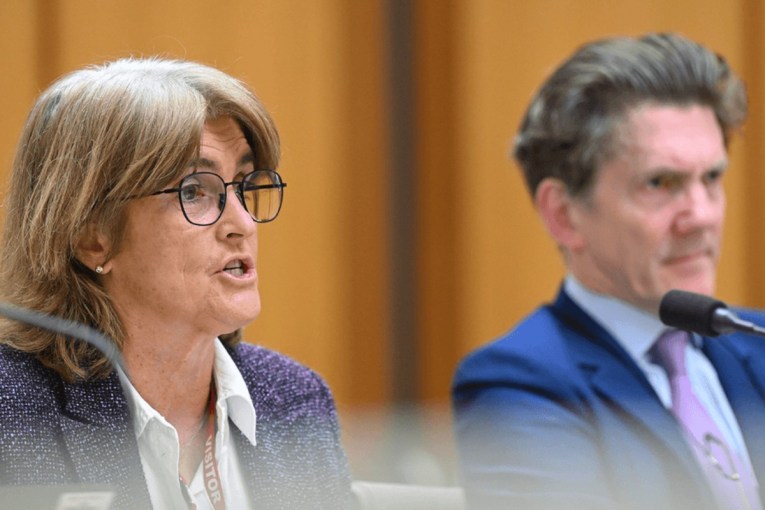
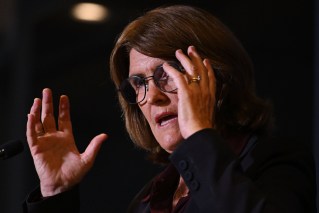
RBA Governor Michelle Bullock says interest rates must increase to stop inflationary expectations increasing.
Instead, she is claiming that the RBA must increase interest rates to try and stop inflationary expectations increasing.
This is the idea that if everyone thinks inflation is going to stay high, then workers will demand higher wages to compensate for the higher inflation and businesses will assume they can just keep increasing their prices.
The RBA’s logic is that they must convince everyone that inflation will come down, and they will do that by increasing interest rates, even if that has no effect on this type of inflation.
People will see them increasing interest rates and think, “Wow, the RBA is really serious. These higher interest rates must mean inflation is about to fall.”
But the RBA’s survey has revealed the flaw in this plan. They have shown that people don’t think higher interest rates decrease inflation. The majority of them think the opposite.
This means that not only are higher interest rates useless at lowering inflation caused by higher oil prices, but they might actually increase inflationary expectations.
I wonder if Michele Bullock realises what she’s doing.
Want to see more stories from The New Daily in your Google search results?
- Click here to set The New Daily as a preferred source.
- Tick the box next to "The New Daily". That's it.
RBA’s inflation warning stokes rate rise fears