‘Seamless’ arrival upgrade as all Aussie airports go digital
Source: Australian Border Force
Australia is finally within cooee of ditching an “outdated” system for the millions of incoming international arrivals – to the joy of airport operators.
Handwritten passenger arrival cards will finally be replaced by a digital option at all Australian airports within the next 18 months, in a move hoped to make touching down a much smoother process.
The federal government will provide $56.1 million over four years to roll out the digital passenger cards to modernise airport operations to match similar systems that have been available in some popular overseas destinations for some years.
The change follows successful trials involving more than 450,000 passengers on inbound Qantas flights into Brisbane, Sydney and Melbourne since October 2024 – and is being welcomed by the travel industry.
“This is such an important move and we thank the federal goovernment for taking action to modernise a process that has remained largely unchanged for decades,” Australian Airports Association chief executive Simon Westaway said.
“Many of us have experienced the outdated method of filling in a paper card when arriving in Australia, often tired after a long-haul flight and caught out searching for a pen.
“Once fully rolled out, eligible travellers will simply fill in their declaration online, saving time and hassle for themselves as well as border officials.”
Westaway said Australians had tired of filling out the old yellow paper forms and, with airports across the country expecting to welcome more than 86 million travellers by 2040, the change was well due.
“International travel has been the primary driver of aviation growth in the past few years, so it’s vital that we make the border processes as smooth as possible,” he said.
“Seamless travel upgrades like this help ensure that Australia keeps pace with leading international border systems and add to the positive experience for both tourists and residents.
“If we’re going to accommodate all of these travellers, we really need to think outside the box with better technology and better use of airport infrastructure.”
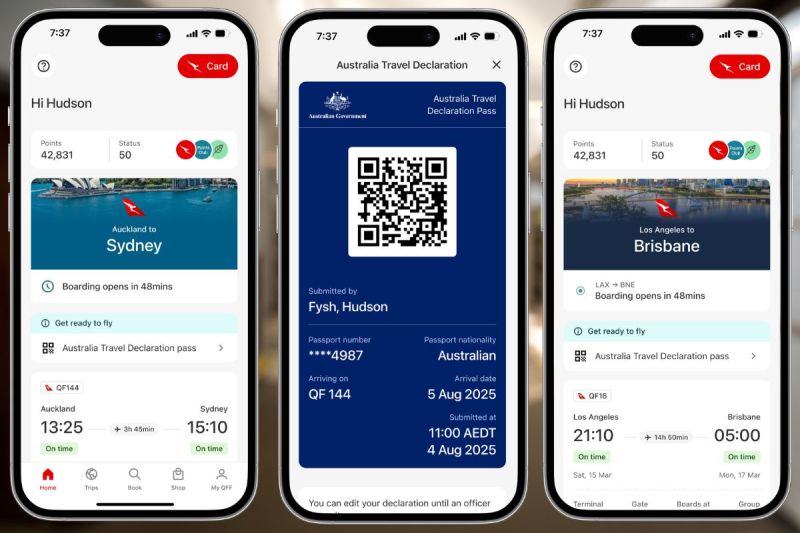
The system will be operating at airports across Australia within 18 months. Photos: Australian Border Force
Home Affairs Minister Tony Burke said the end was in sight for the days of scrambling for a pen after a long international flight.
“A lot of us have been in the situation at the end of a flight when the cards get handed out, and you’re you’re not always at your best at the end of a flight,” he told ABC News Breakfast.
“People are scrambling around, ‘Who’s got a pen? What’s the name of this flight again? What’s the address of the hotel that I’m meant to be staying at?’.
“Then the fact that you’re dealing with pieces of cardboard just slows the process down.”
Incoming passenger cards have to be completed by arriving travellers and returning Australian citizens, and include questions about imported goods, criminal convictions and other personal information.
The digital version will initially be accessible via a web form as the government collaborates with industry to co-design alternatives.
The change is aimed at streamlining processes for arriving passengers ahead of an expected influx of tourists for the 2032 Brisbane Olympic Games.
It will also improve data quality and speed up collection in the case of global disease outbreaks or biosecurity hazards.
It comes as Melbourne Airport recorded its busiest 12-month period ever for international travel, with close to 37 million passengers passing through over the latest financial year, around 12 million of which were international.
Sydney Airport, which is Australia’s business, welcomes more than 17 million international passengers each year. Chief executive Scott Charlton said digital declaration cards would help make international arrivals faster and easier for travellers.
“For many visitors, Sydney Airport is their first impression of Australia. A digital declaration card is a simple, practical change that will help deliver a faster welcome while maintaining strong border security,” he said.
“This is an important step towards a more seamless border experience that keeps Australia competitive, supports tourism and economic growth, and helps prepare Sydney Airport to welcome 72 million passengers a year by 2045.”
Tourism Minister Don Farrell said the change meant arrivals arrivals would become quicker and simpler.
“This is a win for tourists and a win for our tourism operators, helping make Australia an even easier and more welcoming place to visit,” he said.
Agriculture Minister Julie Collins said the digital option would strengthen biosecurity measures by helping authorities identify and respond to potential risks before they reached the nation’s shores.
-with AAP