Beyond the Acropolis: The fascinating hills of Athens


Athens Observatory on Hill of The Nymphs. Photo: GNTO/StianRekdal
From Monastiraki Square in central Athens you can see a crowd gathered on Areopagus Hill just beneath the Acropolis. With a touch of imagination, they look like they are waiting for an alien visitation. Or is it the sunset they are anticipating?
Or some sermon on this mount? That’s an appropriate analogy I guess considering that in 51 CE St Paul delivered his famous Areopagus Sermon here and gained his first Athenian convert, Dionysos, who became the city’s patron saint. Apparently, any sitting pope visits this spot when he comes to Athens.
This rocky outcrop, also known as Hill of Ares or Mars Hill, is just north-west of the Acropolis of Athens and it’s just a 10-15-minute walk from Monastiraki Square. From this hill you get a brilliant view of the Acropolis, and it also overlooks the sprawling archeological site of the Ancient Agora.
It’s one of a handful of hills near the Acropolis, each loaded with ancient history, each alluring, easily accessible but requiring different levels of exertion. Ascending the hills of Athens is a must though, and a good way to saturate yourself in the history of this amazing city.
Of course, the Greek capital is a city predicated on a hill, the Acropolis of Athens, the focal point for tourists and Athenians alike. Building codes stipulate that no one can impede the view of the Acropolis and the city fans out around it.
We have been to Athens twice in the past 18 months and have started both visits with a morning ascent of the Acropolis with Athens Walks. This is a must, and best to have a guided tour. Go early if you can because even at 8.30am the crowds throng the pathway to the top.
The Acropolis and its attendant hills are all well-known landmarks and have been for millennia. Australian authors Tim Winton and George Johnston both mention them in novels. In Winton’s The Riders, partly set in Greece (Athens and the island of Hydra), he describes the main character, Scully, approaching the city. “He saw Lykivitos and the Akropolis clear against the sky.” (Lykivitos is also Lykivittos or Lycabettus)
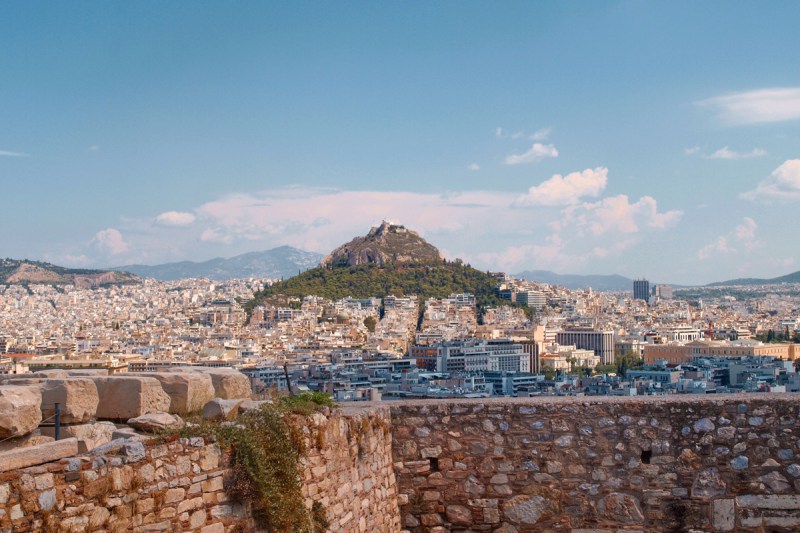
Athens’ famous Lycabettus Hill. Photo: Pexels
In Clean Straw for Nothing, the sequel to Johnston’s classic Australian novel My Brother Jack, we get travelogue descriptions of Hydra, where Johnston lived a couple of decades before Winton’s stint. He also gives us wonderful descriptions of Athens, through the eyes of his jaded, tubercular protagonist David Meredith.
He describes Athens as “spread like a magic carpet between the dark, timbered peak of Lycabettus and the bare nobility of the Acropolis and the Hill of the Muses beyond”. The Hill of Muses is best known as Philopappos Hill, a pine-covered green space south-west of the Acropolis with the Philopappos Monument and walking trails.
We climbed this hill on our trip to Athens in May. It’s a leisurely walk and remarkably quiet compared to the stadium crowds of the Acropolis. As you ascend, you get the most gorgeous views of the Parthenon framed by the trees with no modernity to spoil your imagination. You could be in ancient Greece … At least I like to imagine that.
On our most recent visit, my wife Sandra and I tackled Lycabettus Hill, although we did not tackle it as some do by hiking to the top. That’s a 30-45-minute slog. We chose the funicular railway that takes you to the top, where you get sweeping views of the city with the blue fringe of the Aegean Sea beyond.
After our visit to Lycabettus, we walked back to our hotel through fashionable Kolonaki, a quiet, swish suburb where the back streets are largely deserted until you get lower onto thoroughfares with busy cafes and tavernas.
Back at our hotel, the Electra Metropolis, it was time to recline by the pool, our view dominated by the Acropolis. So Athenian.
Acropolis Hill
If you visit Athens without ascending the Acropolis, you have missed the point. This most iconic sacred rock of Athens rises 156 metres and is home to ancient masterpieces the Parthenon and Erechtheion. The great marble masterpieces here were built during the late fifth century BCE during the reign of Perikles. This was the Golden Age of Athens. Most of the temples here were built to honour Athena, the city’s patron.
Despite the ravages of time and war, these constructions are still breathtaking. The hill itself has been used continuously since Neolithic times. We have visited it twice and, on both occasions, we took a two-hour tour with Athens Walks. (It is best to have a guide). This is the perfect length of time for a visit but prepare to jostle and be jostled and do wear sensible shoes. I did see some English tourists struggling in flimsy sandals.
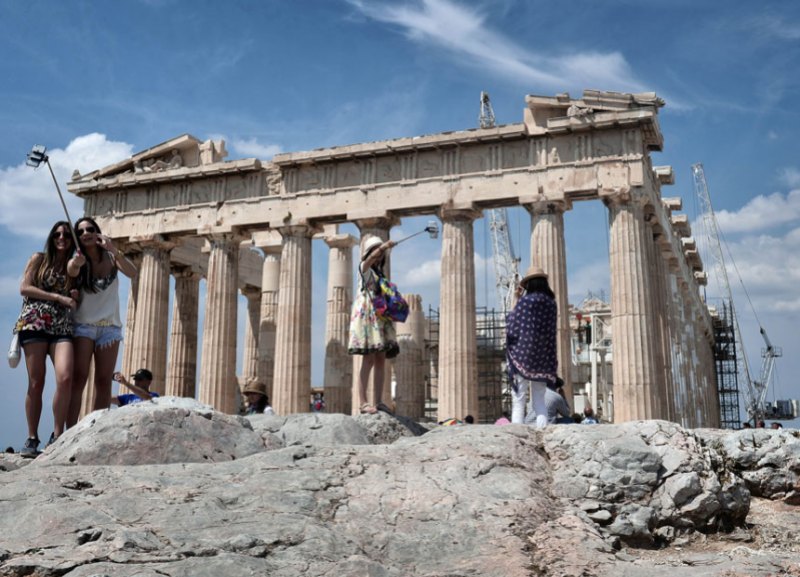
Don’t leave Athens without visiting the Acropolis – or without looking further afield. Photo: AAP
Areopagus Hill (Hill of Ares or Mars Hill)
This rugged rocky outcropping directly adjacent to the Acropolis was an ancient judicial council site. It juts over the Ancient Agora where, for centuries Athens Ruling Council met. The war god Ares (Mars in the Roman) was supposed to have been tried by the other gods on the Areopagus for the murder of Poseidon’s son Halirrothius. That is mythology of course, but in Greece mythology seems all too real.
This rocky outcrop can be a bit slippery but is one of the best places in Athens to see the sunset … or those approaching flying saucers!
Lycabettus (or Lykavittos) Hill
The highest point in the city at 277 metres, this steep hill is capped with a mountaintop chapel and below it a café offering panoramic views. You could walk up but I recommend the funicular railway (think Hong Kong’s Peak Tram) operating from Aristippou Street in Kolonaki. The ride takes about three minutes, running daily from 9am-2.30pm, with tickets costing around €10 ($16) one-way or €13 ($A21) for a round trip.
Seeing the state of people who had walked up, this is my preferred mode of travel to the top of this hill with the lower altitudes covered in pine trees.
Philopappos Hill (Hill of the Muses)
This pine-covered green space south-west of the Acropolis features the Philopappos Monument, an ancient Roman mausoleum and monument dedicated to Roman Consul, Gaius Julius Antiochus Epiphanes Philopappos, a man who was very fond of Athens.
This hill has easily accessible walking trails. On the walk up, you will pass a fortified cave known as The Prison of Socrates, a series of rock-cut chambers carved into the bedrock that popular tradition links to the final days of the philosopher Socrates. There is no queueing here, no ticket required and the views of the Parthenon are so special. Also, it’s a wonderful place to experience sunrise or sunset in Athens.
The Pnyx
This hill is less than a kilometre west of the Acropolis and about two kilometres south-west of Syntagma Square in the centre of Athens. It is an historic semicircular hill where the democratic assembly of ancient Athens gathered to vote and debate. Beginning as early as 507 BC, the Athenians met on the Pnyx to host their popular assemblies, making the hill one of the earliest and most important sites in the creation of democracy.
The hill had altars dedicated to Zeus and was used by the astronomer Meton for early solar and calendrical observations. From Monastiraki, it’s a 20-minute walk heading west via Apostolou Pavlou Street, while from the Acropolis Museum it is a 15-minute walk heading west via the paths of Philopappos Hill.
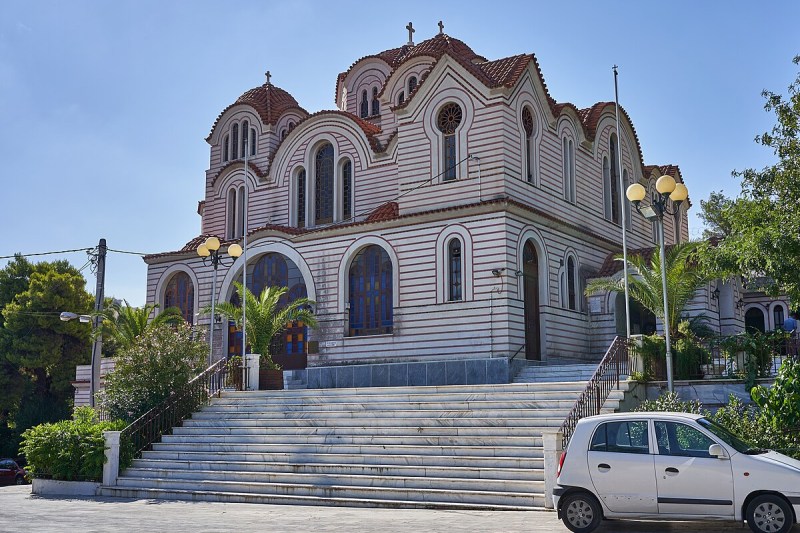
The delightful Church of St Marina on the Hill of the Nymphs. Photo: Wikimedia Commons
The Hill of the Nymphs
What a wonderful name for a hill! Located north-west of the Pnyx, this 100-metre-high hill is south-west of the Acropolis. It is named after the nymphs, who were minor female divinities in Greek mythology associated with nature, such as trees and water and is now home to the Athens Observatory. It forms a continuous green, forested space with the neighbouring hills of the Pnyx and Philopappos, yet it remains much quieter and less crowded than nearby tourist spots.
The peak offers sweeping, unobstructed panoramic views of the Acropolis, the Parthenon, and the sprawling historic centre of Athens. Access to the outdoor areas and walking paths of the hill is free.
More information: Visit Greece
Recommended reading: Lonely Planet Greece; DK Eyewitness Top 10 Athens; Lonely Planet Pocket Athens by Alexis Averbuck

Celebrate Halloween with 10 spooky destinations