 Subscribe

Death of an icon? What’s next for David Jones
After 188 years in business, having traded through two World Wars and The Great Depression, retailer David Jones collapsed into administration. Here's what could happen next.


- The news of David Jones’ collapse into voluntary administration surprised few in the retail industry, but the pain for the iconic brand is just beginning.
- From employees to suppliers to gift card holders, anyone who has debt to be paid by the retailer may have to make a claim on their stake.
- Some brands are already pulling their stock from the retail floor, so the peak Black Friday and Christmas sale period may not be enough to keep the brand afloat.
After 188 years in business, having traded through two World Wars and The Great Depression, retailer David Jones collapsed into administration.
To many households, the downfall of such an iconic brand that was so intrinsically linked to Australian culture came as a shock.
But to industry insiders, the news had been a long time coming.
A combination of high overheads thanks to stores in flagship locations, and a fundamental shift in retail to low-end “big box” stores — or high-end shops having their own storefronts — meant David Jones found itself in retail no-man’s land.
Here’s what happens next for the brand:
What does going into administration mean?
In simple terms, a business enters voluntary administration when the owners and operators find it has become insolvent (either it has run out of money or can no longer pay its debts).
With declining sales and increasing rents, David Jones had found itself in a place where its forecasts (and its reality) meant it was not selling enough products to cover its expenses.
By appointing administrators, David Jones has effectively handed over the keys to the business for someone else to run.
In this case, the administrators are McGrathNicol, who will handle the day-to-day running of the business and the receivers are FTI Consulting, who will control David Jones’ assets and make a decision based on its books.
Between them, these insolvency experts will look at the business and make a decision that produce the best possible benefit for creditors.
This may be restructuring the business to make it profitable again (closing stores and sacking staff), selling it to a new owner, or liquidating the entire business and paying creditors with what can be sold.
Will the brand continue?
It’s not yet certain.
It is conceivable that the receivers find a way to make the business profitable, either in a smaller format or with a reduced presence in Australian retail.
Sometimes investors, such as private equity, will snap up a struggling business that still has good household brand impact.
Only those going through David Jones’ books can know the true financial situation it is in, and whether the brand should continue.
Will all the stores close?
Impossible to say at this stage. David Jones currently operates 38 stores across Australia and New Zealand.
If the brand continues, some David Jones stores may remain open, or it could survive as an online-only proposition.
Which stores survive, if any, depends on sales.
Flagship city stores (such as Elizabeth Street in Sydney and Bourke St in Melbourne) could remain open, thanks to higher sales, while more suburban stores may not.

How many jobs will be lost?
David Jones currently employs around 6000 staff. In some cases, a business is placed into administration and then emerges without any loss of headcount.
However, that is unlikely in this case.
Gerard Dwyer, National Secretary of the SDA union, says the best outcome is for every worker to receive their full entitlements.
“Their jobs are at risk through no fault of their own; the administrators and executives must leave no stone unturned to ensure as many jobs as possible are retained and that affected workers receive their full financial and legal entitlements without delay,” he said.
Dr Tamara Wilkinson, from the Faculty of Law at Monash University, says employees will only get paid after Hilco Global, who is David Jones’ secured creditor.
“Because a receiver has been appointed over David Jones’ holding company by the corporate group’s secured creditor, it is likely that the secured creditor will receive some payment before employees or other creditors,” Dr Wilkinson explains.
“Whether employees get paid, and how much they receive, depends in part on which company assets are available and whether those assets are covered by the lender’s security.”
What if you’ve got a gift card?
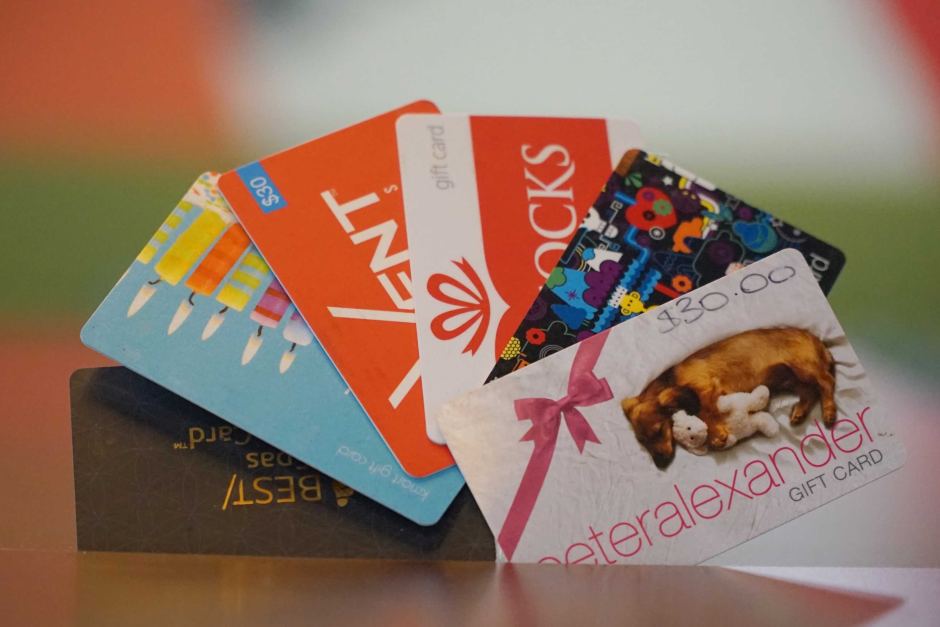
Consumers with an unused David Jones gift card are being urged to use it as soon as possible, as a business in administration cannot guarantee it can be fulfilled.
Angus Kidman, shopping expert at comparison site Finder, says it’s best to get your gift card off your own books as soon as possible.
“If you’ve got a David Jones gift card, use it as soon as you can. If the business doesn’t find a buyer, that gift card will almost certainly be worthless,” he said.
“Stores appear to be accepting gift cards for now, so don’t delay. That also applies to any discounts you’ve earned through David Jones Rewards.”
Why are luxury brands pulling their stock out of stores?
David Jones sets up contracts with luxury brands known as “concession deals”.
These brands effectively rent a section of the store, known as a “pad,” and pay David Jones a commission on every product sold.
The brands own the stock themselves, and pay the employees directly.
If administrators decided to shutter all of David Jones’ stores immediately, it is conceivable that every piece of stock behind the doors could be sold off to pay creditors.
That doesn’t sound like a big deal, but if you have a Louis Vuitton stand with possibly $300,000 worth of handbags on display, you’d likely want to reduce your exposure to losing that.

What are the next steps?
The first creditors’ meeting will be held on Tuesday, where they will vote on keeping McGrathNicol as the administrator or appointing another.
Creditors will also vote on whether to appoint a committee of inspection to oversee the administration process.
Until then, it’s likely you’ll see David Jones trading as normal — albeit with some brands leaving empty shelves.
Topics: Business, David Jones, Retail