 Subscribe
‘Tight economic climate’: Crucial data to reveal likely future of rate hike cycle
All eyes this week are awaiting two crucial sets of data - minutes from the last RBA meeting and a fresh unemployment figure.
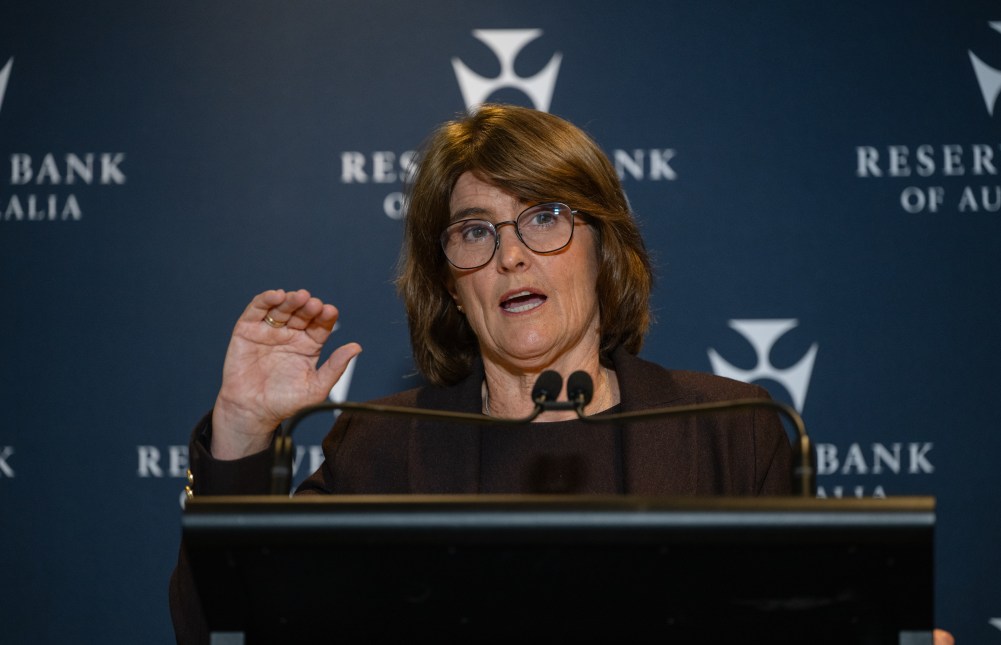
- Major data releases this week will paint a clearer picture of how a year full of interest rate rises are impacting the economy.
- On Tuesday, the minutes from the RBA’s last meeting are to be released, while on Thursday new unemployment data will be released.
- Both sets of data will reveal if borrowers are likely to face another interest rate hike before Christmas.
Unemployment data will give the Reserve Bank an idea of how its interest rate hikes are affecting Australia’s economy, as a readout of its last meeting informs economists of its thinking.
The Reserve Bank’s decision to raise the cash rate to 4.6 per cent in September was more emphatic than many expected, with all nine board members voting unanimously in favour of a hike.
In previous meetings, minutes showed some members were concerned about higher interest rates and the Middle East conflict’s impact on demand and the jobs market.
When the board lifted the cash rate to 4.35 per cent in May, one member broke away and voted to hold, citing concerns about the strength of the economy.
The minutes from the September meeting, to be released on Tuesday, should provide more detail about what influences the decision to hike or hold.
Although Reserve Bank governor Michele Bullock said she still believed the labour market was a little tight following the September meeting, the jobless rate has risen faster than the central bank forecast.
In August, the unemployment rate climbed to 4.6 per cent – the highest level since November 2021 and above the Reserve Bank’s forecast 4.5 per cent in the December quarter.
But the labour market has been sending mixed signals, Westpac economist Ryan Wells said.
While the unemployment rate has been rising, that’s largely because more people are looking for work.
Labour supply has increased, with the participation rate hitting an almost-record-high of 67.1 per cent in August.
On some measures, such as job growth figures and job ads, demand for labour has remained solid.
But other signs point to a weakening of business hiring intentions.
Mr Wells expects Thursday’s labour force survey to show employment rose by 20,000 in September – down from the 40,000-odd increase in August – but a subtle fall in the participation rate should keep unemployment at 4.6 per cent.
“While a softer economy and sub-par employment growth would typically discourage some individuals in their search for work, cost-of-living pressures and interest rate rises are more than outweighing this effect, encouraging more people into the labour market,” he said.
“This tells us that slack is continuing to build in the labour market even as headline employment growth remains relatively resilient.”
James Keene, managing director of payroll platform Employment Hero, said small and medium businesses were trying to hold onto their headcount, despite thinning margins.
Payroll data from more than 23,000 small businesses that use Employment Hero showed hiring rebounded 0.8 per cent in September, but overall hiring momentum has eased since March.
Annual wage growth also fell from 4.5 per cent in August to 2.2 per cent in September.
“Holding onto those teams in a tight economic climate comes with clear trade-offs, which is why September saw such a drop-off in wage growth,” Mr Keene said.
NAB’s business confidence survey, due to be released on Tuesday, should provide further evidence of employers’ hiring intentions.
Wall Street investors are meanwhile looking to the opening of third quarter earnings season this week, along with inflation data expected to shed light on Federal Reserve intentions.
The Dow Jones Industrial Average rose 0.83 per cent to close Friday at 51,654.95, the S&P 500 gained 0.59 per cent to 7,811.51 and the Nasdaq Composite gained 0.64 per cent to 27,366.17.
Australian share futures edged up 37 points, or 0.42 per cent, to 10,072.
The S&P/ASX200 rose 0.64 per cent on Friday to 8716.6, as the broader All Ordinaries advanced 0.62 per cent, to 8877.7.
Topics: Australian economy, Interest Rates, RBA