We gave our gas away. Let’s not do the same with our sun, land and water

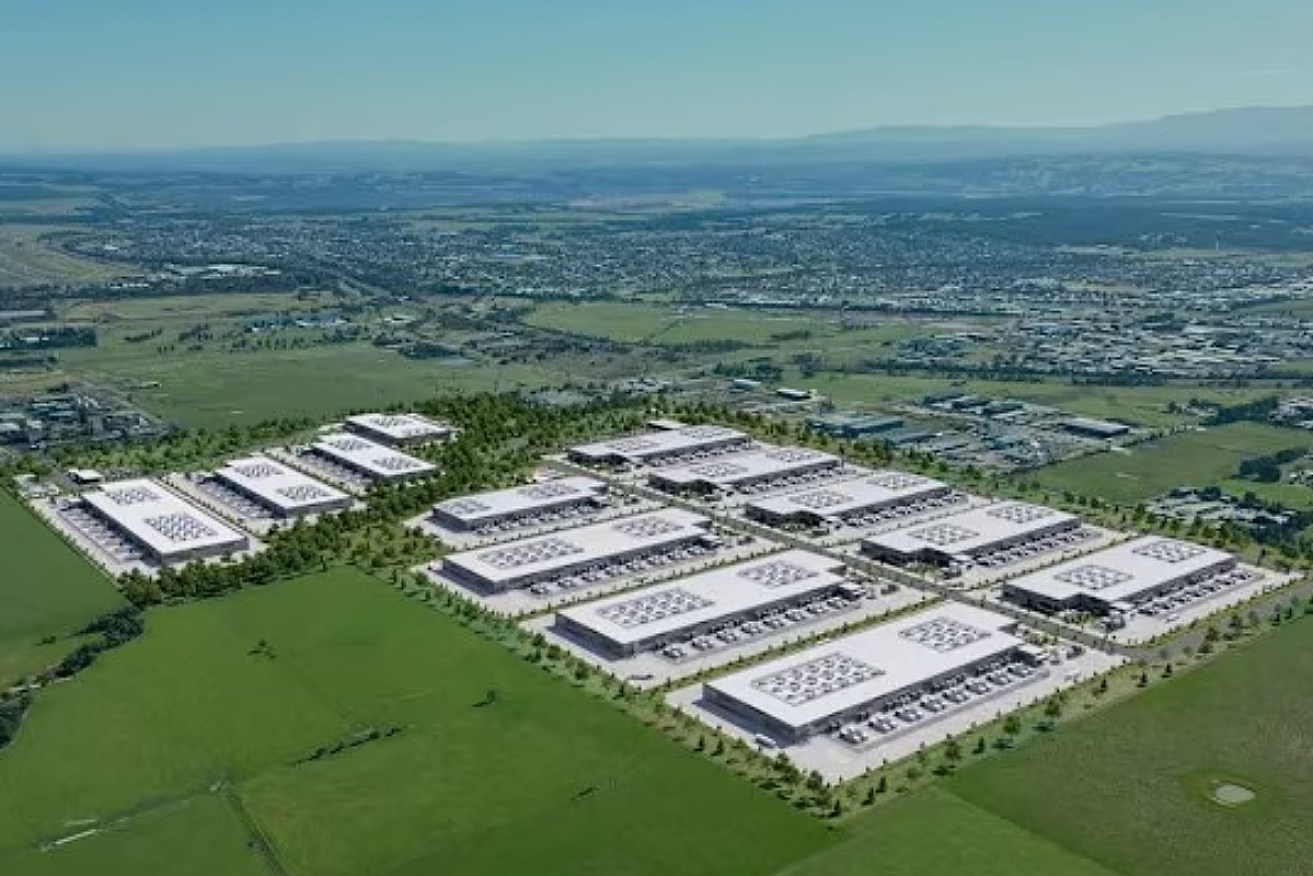
The parties are split on how data centres should be powered and on new approvals. Photo: Keppel Ltd
Australia has been here before – first with gas exports, now we’re making the same mistake with data centres.
Fifteen years ago, we allowed multinational companies to invest more than $70 billion in liquid natural gas plants in Queensland. We were promised jobs, revenue, and prosperity.
Investment came in and our gas went offshore.
Cumulatively, those three plants have exported more than $125 billion worth of LNG. But in the eight years to 2023 the companies behind those plants – Shell, Santos, ConocoPhillips, Petronas and others – paid less than $1 billion in company tax. None of the three plants has paid petroleum resource rent tax.
It’s a catastrophic failure of public policy.
Qatar exports about as much LNG as us and collects roughly five times more government revenue. Norway used its oil and gas reserve to build one of the largest sovereign wealth funds globally.
We have nothing comparable, but our east-coast households and manufacturers got higher gas bills once our domestic market was tied to the export price.
Public policy 101: Don’t approve an export industry and then try to sort out a fair return.
We’re about to make the same mistake with data centres.
Global technology companies are proposing to spend as much as $150 billion on Australian data centres by 2030. Their electricity usage has increased by almost half in the last 12 months.
Sydney Water has warned that data centres could use as much as a quarter of the city’s drinking water by 2035, while Melbourne Water has admitted that requirements of hyperscale new developments have not been accounted for in its demand forecasts.
Data centres don’t generate many jobs once they’re built, and the companies responsible don’t pay much tax.
In 2024- 2025, Microsoft Datacenter earned $2.3 billion in Australia and paid no tax. Air Trunk, NEXTDC, Canberra Data Centres – no tax. Google – $132 million on total income of over $2 billion.
We don’t yet have legislated, regulatory frameworks for data centres. In March, the Albanese government released a set of “expectations” around new data centres – developers are to support the energy transition, prioritise national interest, and use water sustainably and responsibly.
Subsequent government statements have put limitations around where data centres can go but watered down the mandate that they be powered by new renewable energy.
Queensland and the Northern Territory are keen to approve centres powered by coal, gas and diesel.
Meanwhile in a severe, continuing cost-of-living crisis, we need to acknowledge that the data centre building boom is inflationary. The demand for tradies, building materials and land impacts wages and housing construction.
RBA governor Michele Bullock has acknowledged that the AI boom is adding demand to our economy at a time of capacity pressures.
The Climate Council suggested that increased wholesale prices and grid upgrades could increase the price of electricity by 26 per cent over the next decade.
AI-related demand is increasing the price of imported chips and servers. These effects could be front-loaded – higher productivity from increased AI capacity might drive disinflation once centres are built – but only if the Australian economy reaps that benefit, rather than allowing profits and capacity to flow offshore.
The parties are split on how data centres should be powered and on new approvals.
The government has foreshadowed draft binding standards by the end of this year with a plan to legislate in early 2027.
The Coalition agrees data centres should supply their own energy, but is happy for this to be from gas, coal or even nuclear.
The Greens want a moratorium on new centres. One Nation has no stated position.
Meanwhile, new approvals continue apace.
I propose a pause on approvals for large data centres until Parliament legislates binding protections. Projects already approved or under construction can continue, and sovereign and research computing would be exempt.
That legislation must do five things:
- First, require all new data centres to bring their own new renewable generation and pay their fair share of the costs associated with energy infrastructure – poles, wires, and the grid – so they’re not subsided by Australian households.
- Second, disallow the use of drinking water for cooling wherever recycled water is available, and require transparent public reporting of water use.
- Third, ensure protection of our data sovereignty and national security.
- Fourth, mandate that Australian researchers, businesses and public institutions have adequate sovereign computing capacity.
- Fifth, make sure Australians receive a fair financial return for the resources these companies need – our land, our grid, our water, and our renewable energy. The proceeds from this infrastructure should be invested in a sovereign fund for Australian capability.
Senator David Pocock has suggested a 5 per cent levy on large data centres for affordable housing. The Australian Academy of Science has pushed for a 2.5 per cent levy to fund national computing infrastructure and AI research.
The funding crisis in the science and technology sectors is real, this is our chance to fund a reset of those vital parts of our economy.
Australia has extraordinary national advantages – political stability, strong institutions, proximity to Asia, enormous land mass and the best renewable energy resources on earth.
Those advantages will not disappear in six months. Investors want certainty, if we give them that, they will build here.
We must demonstrate the capacity to learn from our mistakes. We’ve sold our gas too cheaply – the next generation is already paying for that. We have another great opportunity, we can’t waste it.
Dr Monique Ryan is the independent federal member for Kooyong