How we can move beyond our ineffective, obsolete approach to youth detention


Spit hoods, despite all their problems, have returned to use in the Northern Territory. Photo: AAP
In literature, imagination enables new ways of thinking, seeing and interpreting the world.
When it comes to the law, particularly Australia’s legal approach to youth justice, we seem to be stuck in the same old patterns of the past.
Recently, while flagging additional changes including the reintroduction of spit hoods to further muscle up an already draconian youth justice regime, Chief Minister Lia Finocchiaro lambasted critics opposed to her plans to inflict further trauma and cruelty on young offenders in the Northern Territory (the majority of whom are First Nations youth).
More of the same tired tropes, politicians being “tough on crime” to leverage community fear. More political football with complex socio-legal issues historically entangled with our brutal colonial past.
The adage of “insanity” being doing the same thing over and over and expecting different results comes to mind, not least because, regardless of your ideological views on youth crime, the evidence shows that Australia’s outdated approach to young offenders is utterly ineffective. If anything, it does the opposite, serving as a “school for crime” in lieu of a real education behind the walls.
It’s no wonder recidivism rates are through the roof, with research demonstrating that the younger that a child is first imprisoned, the more likely that they will be again, potentially leading to a lifetime of contact with the justice system.
One has to wonder how a key purpose of incarceration – rehabilitation of the individual to prevent reoffending and thus make the community safer – has been so overlooked?
Of course young offenders should face consequences for their bad decisions, no one is suggesting otherwise. But the how matters.
Many young people entering detention may already have experienced significant trauma or been let down by the very systems meant to keep them safe. It is well-documented that children under 14 have not reached cognitive maturity and can “age out” of crime, so why the continued refusal of states and territories (excepting the ACT) to raise the age of criminal responsibility?
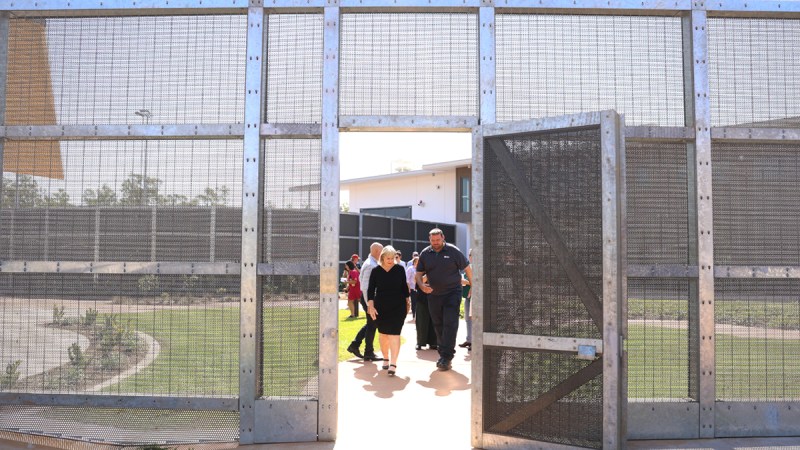
NT government ministers tour a new youth detention facility in Darwin in 2024. Photo: AAP
What’s the point of an overly punitive approach that further dehumanises and re-traumatises children at a cost of over $1 billion a year without delivering positive outcomes that make the community safer?
Australia’s current youth justice system doesn’t just lack empathy and humanity, it lacks logic and sense. It is structurally dysfunctional and racially discriminatory, as outlined in a recent complaint to the UN. It doesn’t address the complex causes of youth crime and has failed over and over again to implement recommendations from a suite of reviews and royal commissions, including the 1991 Royal Commission into Aboriginal Deaths in Custody and the Bringing Them Home Report (1997) that might actually deliver change.
Why can’t the state find a way to reimagine a more humane and effective youth justice system? Perhaps it’s easier to use punishment to shut down the symptoms of our current crisis, lest they should point to the origins of these issues: The ongoing colonial harm, disadvantage and intergenerational over-incarceration of First Nations communities that have contributed to the crisis in our contemporary youth justice system. The lingering impact of Stolen Generations policies on the ongoing overrepresentation of First Nations children in an out-of-care system that “criminalises care” as noted in the Family is Culture Report (2019) and serves as a pipeline to “juvie”.
Acknowledging the ongoing impact of centuries of institutional practices of forced cultural assimilation, ongoing child removal practices, structural injustice and racial inequality for First Nations communities would mean that the state might just have to look in the mirror.
Addressing the root causes of overrepresentation in the present youth justice system in a way that can enable holistic structural reform requires a recalibrating with our entire colonial past. The kind of moral accounting that failed with the Indigenous Voice referendum and has since descended into a regressive political silence.
But the kinds of problems that the Voice was intended to address have not gone away. Overrepresentation in the out-of-home care system and youth detention systems have worsened. Tragically there have been at least 600 Indigenous deaths in custody since the 1991 royal commission and this number, as we have seen recently, will likely continue to rise until there is genuine structural reform.
Taking a more historically-contextualised, trauma-informed and First Nations-led approach to youth justice could shift the focus to rehabilitation and how we rehabilitate rather than just punishing young people. The Help Way Earlier Report (2024) provides recent recommendations that the government will hopefully pay attention to. There are also a range of restorative models that Australia can draw from that take a more diversionary, therapeutic and learning-focused approach to youth justice.
For our maturity as a nation and to break these cycles of institutional harm, surely it’s time to begin coming to terms with the past so we can think outside of the box?
Dr Jacqueline Rule is an Australian novelist with a background in ‘Law and Literature’ scholarship. Her debut novel, The Leaves, explores historical trauma, injustice and the cruelty and dysfunction of Australia’s out-of-home care and youth detention systems. She is admitted as a solicitor in NSW and spent several years supporting a specialist legal committee on youth detention in the criminal justice system
Want to see more stories from The New Daily in your Google search results?
- Click here to set The New Daily as a preferred source.
- Tick the box next to "The New Daily". That's it.