Exit polls show deadlock in pivotal Israeli election
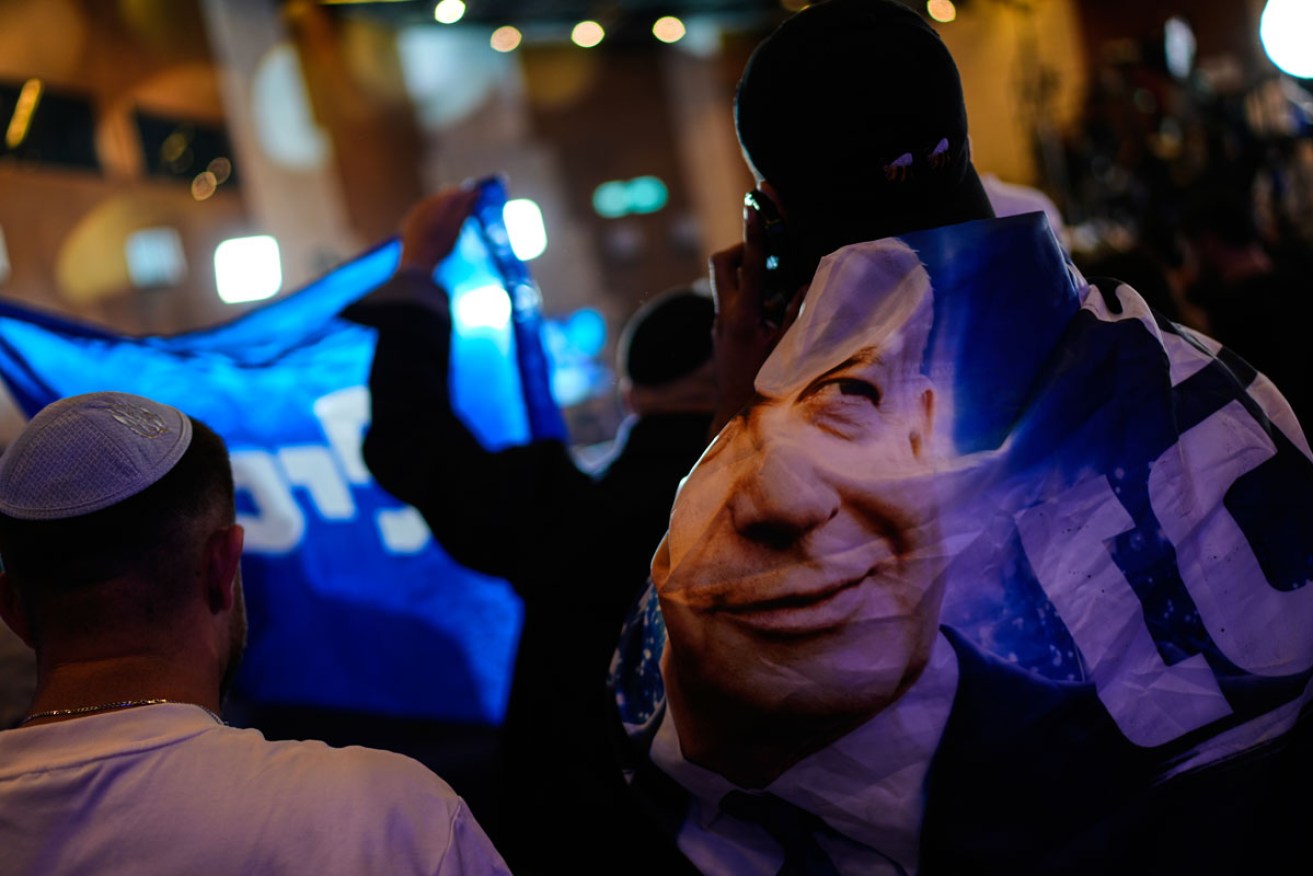
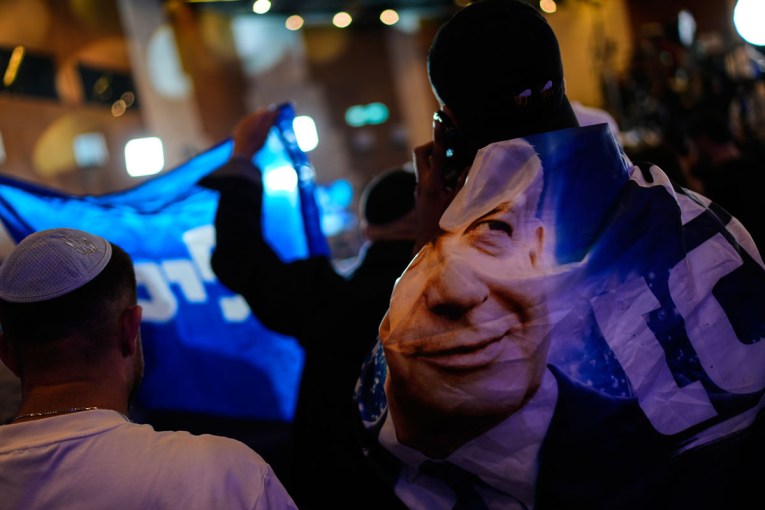
Netanyahu's supporters have celebrated the exit poll results. Photo: AP
Israel’s election has ended with no clear winner with two major TV networks giving Gadi Eisenkot’s opposition bloc a narrow lead over Prime Minister Benjamin Netanyahu’s camp and a third showing them tied.
If the projections hold, the result would mark a major setback for Netanyahu’s coalition, which entered the election with 68 seats, though the deadlock could allow Israel’s longest-serving prime minister to remain in power as caretaker during coalition negotiations.
Turnout was 77.7 per cent, Israel’s Central Elections Committee said, the highest in more than two decades and around seven percentage points higher than in 2022.
Two of Israel’s three major television networks gave Eisenkot’s bloc a narrow edge over Netanyahu’s Likud-led camp in updated exit polls, while Channel 13 put the two blocs level at 51 seats each.
None of the projections gave either camp the 61 seats needed for a majority in the 120-seat Knesset. Far-right religious parties led by Itamar Ben-Gvir and Bezalel Smotrich were projected to take a combined 13 seats within Netanyahu’s bloc.
Arab parties outside the two main blocs could hold the balance of power. But Eisenkot, leader of the Yashar party and a former military chief, has all but ruled out forming a government with them, complicating his path to power even in projections where his bloc finishes ahead.
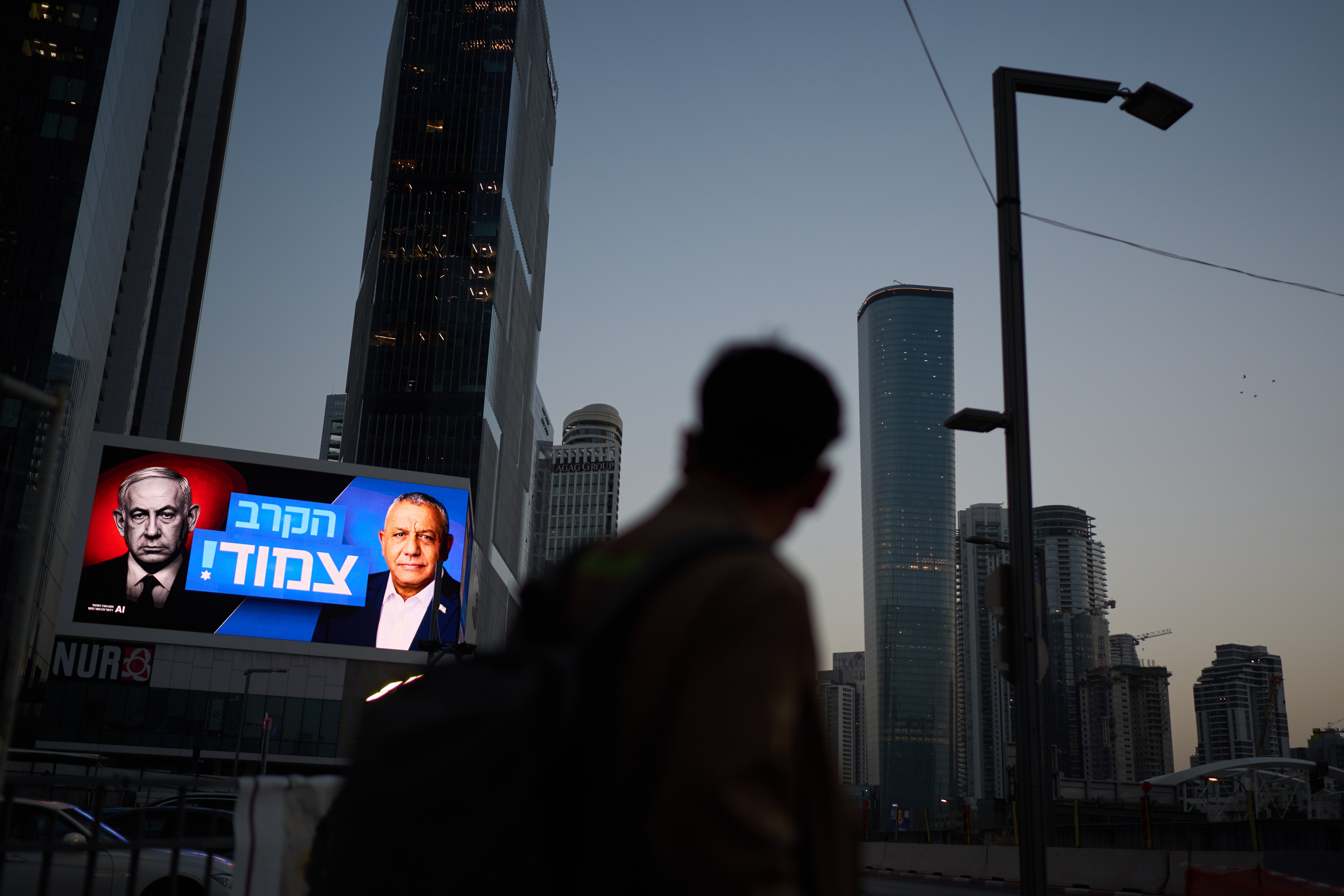
PM Benjamin Netanyahu’s main rival is opposition candidate Gadi Eisenkot. Photo: AP
Yohanan Plesner, president of the Israel Democracy Institute, called the exit polls a major defeat for Netanyahu’s coalition, which was projected far below its 68 seats in the outgoing Knesset, while cautioning that Eisenkot had not emerged as a clear winner and much could change as votes were counted.
Netanyahu, 77, has served as prime minister for nearly 19 of the past 30 years and has repeatedly survived political crises.
He entered the election facing longstanding corruption charges, which he denies, and criticism over intelligence failures that allowed Hamas-led militants to kill 1200 people and take 251 hostages.
His main rival Gadi isenkot, 66, a hawkish former military chief who lost a son and two nephews in the Gaza war, emerged as Netanyahu’s strongest challenger, stressing his security credentials while positioning himself as a centrist domestically.
Earlier Netanyahu told supporters they needed to come out to vote to balance high turnout among his progressive opponents and Israelis of Arab heritage.
“You all need to stream to the polls,” he said.
“This is a fateful moment.”
Netanyahu’s opponents have managed to wrest him from the premiership only once since 2009, and that took four inconclusive elections in two years.
He was back 18 months later.
For many of Netanyahu’s opponents, the election turns on accountability for the security failures of October 7.
Opposition groups have promised to hold an inquiry, which Netanyahu’s government has resisted.
“I am convinced that by the end of today, we will see a change – a new spirit for the state of Israel – that will serve as a rectification for the past three years and for that terrible day,” Eisenkot said during a visit to kibbutz Nir Oz in southern Israel, targeted in the October 7 attacks.
He walked to the polls with Gadi Mozes, one of 251 people kidnapped by Hamas and taken to the Gaza Strip during the attack that killed 1200 people.
Eisenkot says Israel’s response – a war which health authorities say killed more than 74,000 Palestinians – was a failure because Hamas remains in charge.
He repeated his commitment to dismantle or destroy Hamas’ military and governing power in the Gaza Strip within 18 months of forming a government.
Itamar Ben-Gvir, leader of an ultranationalist party in the governing coalition, cast his vote in the Kiryat Arba settlement in the occupied West Bank.
He predicted Netanyahu would return as prime minister.
Ahmed Tibi, a candidate from an Arab party, said a record turnout from Israel’s Arab minority would “pave the way for an alternative government and change the grave reality”.
–with DPA and AP