‘Second holocaust’: Netanyahu plays on fears in seismic election

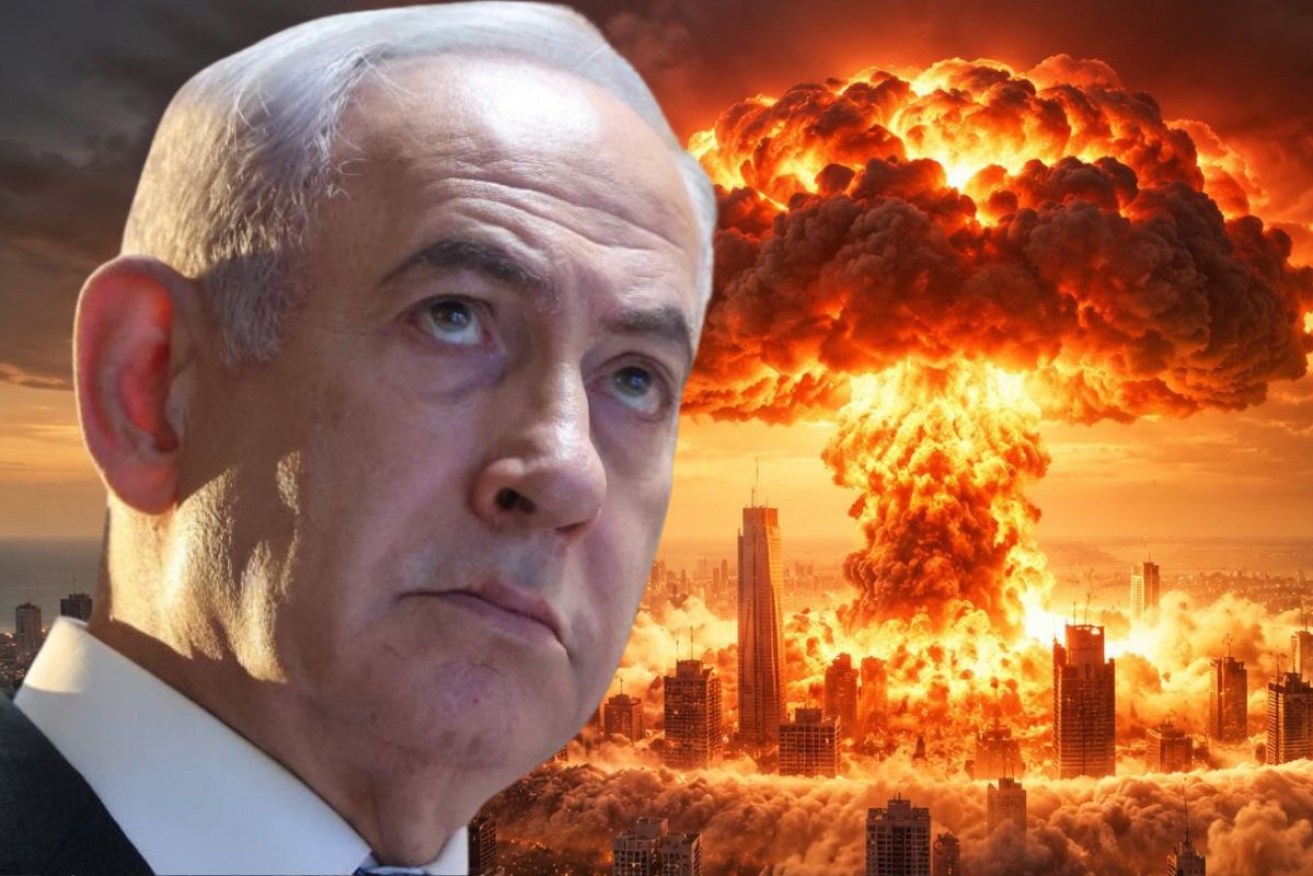
Benjamin Netanyahu warned of Israel's 'existential danger' alongside a photo of a mushroom cloud. Photo: AAP/X
Israel’s Prime Minister Benjamin Netanyahu has warned voters they face a “second holocaust” unless his Likud party retains power in this week’s tight elections.
Netanyahu posted an AI image of a nuclear explosion in Tel Aviv with a warning about the “existential threats” against the state of Israel.
In the last days of campaigning, Netanyahu has escalated his rhetoric about the dangers of Iran, as polls show his party heading to potential defeat on Tuesday (October 27 local time).
Israel’s general election is the first poll since the Hamas terrorist attacks on October 7, 2023, and is considered a referendum on Netanyahu’s leadership.
It comes as the UN Independent International Commission of Inquiry on Tuesday (AEDT) said Israeli forces had committed the crime of “extermination” in the West Bank while continuing to commit genocide in the Gaza Strip.
The latest opinion polls show Netanyahu’s main rival Gadi Eisenkot, the leader of Yashar! (Straight!), could defeat Netanyahu by a margin of two to three seats.
But Netanyahu claimed Israel would face a “real and tangible existential danger”.
“If the Iranians acquire nuclear weapons, nothing will ever be the same again,” he warned on X on Sunday.
“This is the window of time we have left to complete the necessary work to ensure our physical existence for the coming years. All the required resources of the state must be invested in this mission.”
Eisenkot reacted to the alarmist nuclear post, accusing Netanyahu of being “hysterical”.
“Netanyahu, you’re hysterical,” Eisenkot wrote on X.
“As in every election campaign, it’s the same method of lies and scare tactics. This time, threatening Israeli citizens with mass destruction.
“And this is after you failed to achieve the objectives of the war in Iran.”
On Sunday, Eisenkot told a campaign rally that Netanyahu would “not hesitate to resort to lies or extreme measures to remain in power”.
Some in Israel raised concerns the nation’s longest-serving prime minister might be keen to attack Iran ahead of the vote in an effort to remain in office.
Netanyahu warned that Iran or its proxies could attack ahead of the elections to disrupt the vote.
“The [military] is ready both to defend and to strike,” he said in a video statement, citing intelligence.
“You will suffer disproportionate blows far greater than you can imagine.”
On Sunday, thousands of people rallied against the Netanyahu’s government.
Tens of thousands of people demonstrated in Tel Aviv, including former hostages and bereaved relatives who want an independent state commission of inquiry into the Hamas terror attack of October 7, 2023.

Anti-government protesters took to the streets ahead of Israel’s general election. Photo: AAP
According to official Israeli figures, fighters from Hamas and other extremist Palestinian groups killed about 1200 people in Israel. They also abducted more than 250 others into the Gaza Strip.
Protesters directed their criticism directly at the government leadership and chanted, among other things, the slogan: “We do not forget, we do not forgive”.
Meanwhile, Netanyahu has drawn a rare rebuke from the Bank of Israel for suggesting Israel could use cryptocurrency to help shield its economy from any sanctions.
The Bank of Israel said cryptocurrencies could not be a way to bypass sanctions and political leaders should focus on policy that would render such measures unnecessary.
“The right course for Israel’s economy is to preserve our economic relations with our main trading partners, and to focus on preventing sanctions and their negative impact on the economy,” it said.
More than 100 economists, including former Bank of Israel officials, ex-central bank governor Jacob Frenkel and several Nobel laureates, signed a letter expressing alarm over the proposal.
“Netanyahu is knowingly leading the State of Israel toward boycott and international economic isolation, and all he has to offer the Israeli economy is a puzzling solution, one accepted in criminal organisations, that will not help in the slightest,” they wrote.
Eisenkot called the crypto plan “madness” and said he feared that the “BibiCoin policy” would drive companies abroad and undermine national security.
Opposition leader Yair Lapid also dismissed the idea.
“Netanyahu has gone off the rails … He promises the citizens of Israel before these elections that they’ll be standing in line for an hour and a half for bread, like in Russia and Iran,” Lapid said.
Britain, France and Canada — some of Israel’s traditional allies — last month said they would block imports from Israeli settlements in the West Bank in reaction to the Netanyahu government’s settlement policy.
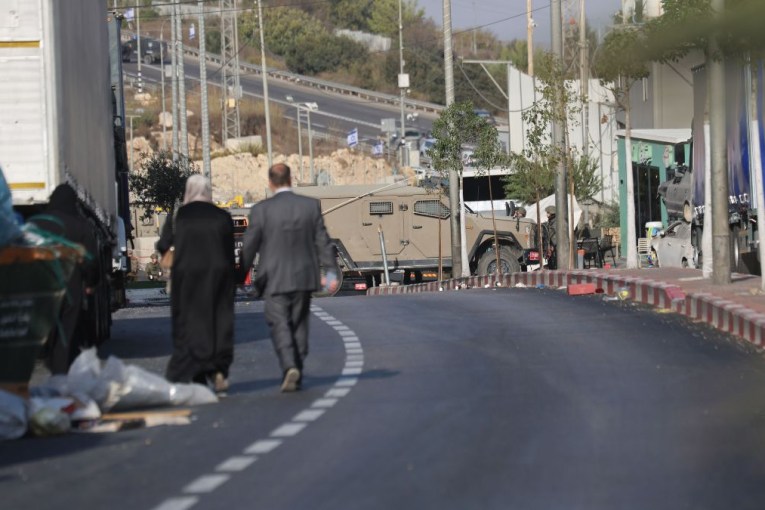
On Saturday, the Israeli military forced about 1200 Palestinians to leave their homes in Hebron, in the occupied West Bank, after a Palestinian gunmen killed two Israeli soldiers at a military checkpoint near the city.
-with AAP, AP and EFE