Iran stays diplomatic as Trump threatens more attacks
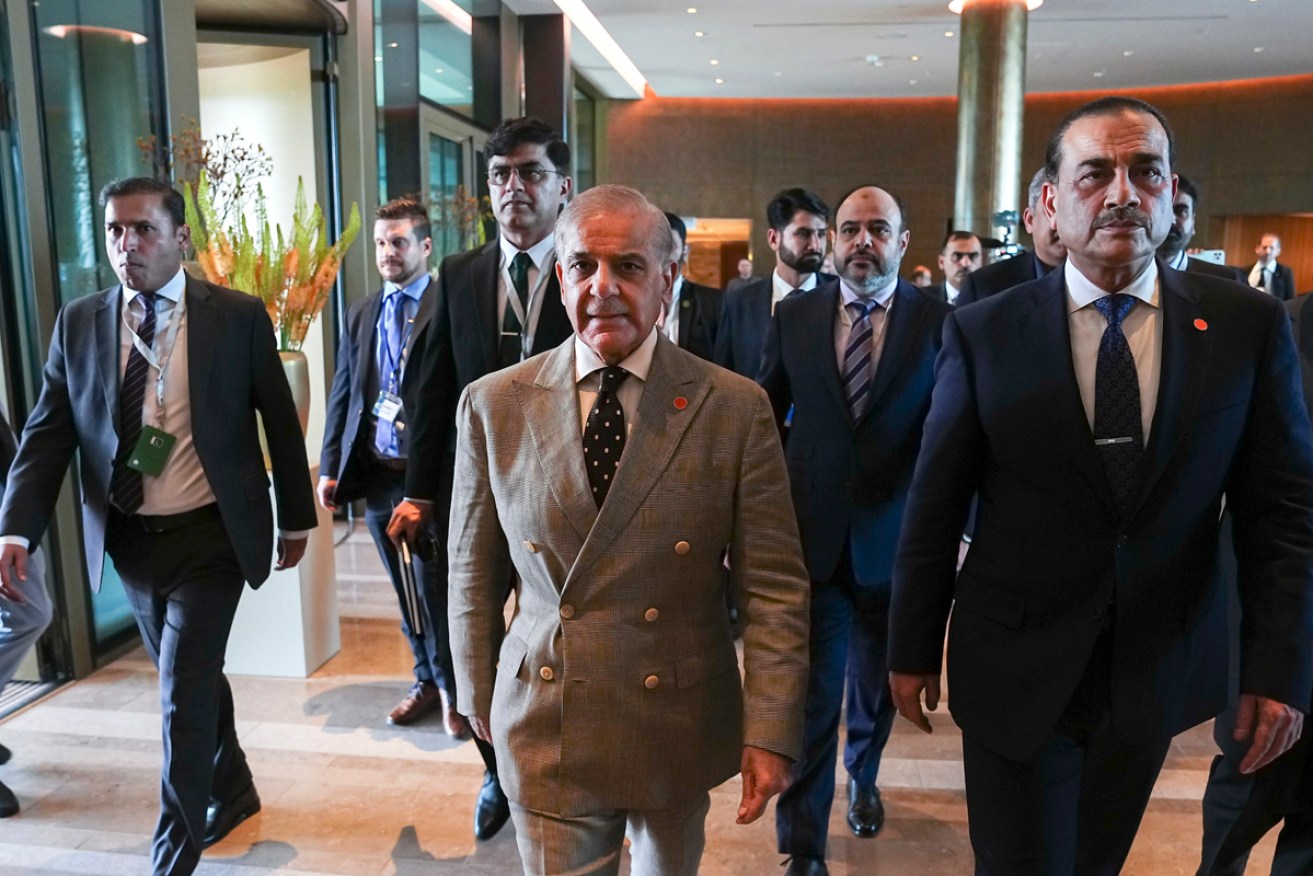
Pakistan's Prime Minister Shehbaz Sharif arrives for the Swiss talks. Photo: AAP
The Iranian delegation involved in talks with the US has voiced its protest at threats by US President Donald Trump of further attacks if Hezbollah in Lebanon continues to “cause trouble”, Iran’s state news agency IRNA reports.
Trump’s statements came shortly after high-level talks between the US and Iran began earlier on Sunday (local time) in the Swiss mountain resort of Bürgenstock.
Both sides had previously pledged to refrain from further attacks and threats under a memorandum of understanding signed last week. It paved the way for the Swiss talks, which are aimed at hammering out a long-term peace deal.
Iran responded to Trump’s threats in a less bellicose tone, with the chief negotiator telling US officials they would not find themselves in their current hopeless situation if such threats were actually effective.
“We do not take these statements seriously, but it would nevertheless be advisable for them to show more restraint,” Iran’s parliamentary Speaker Mohammad Bagher Ghalibaf wrote on X, adding that the Iranian armed forces remained ready to respond in other ways.
“No matter how much they talk, we are the ones who take action.”
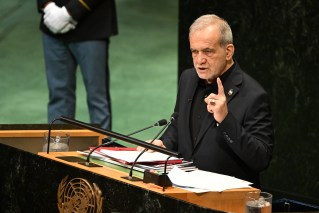
Iranian President Masoud Pezeshkian also made it clear during a cabinet meeting in Tehran that he preferred the diplomatic approach.
“We must choose dialogue and not remain in a state of war – especially as the country’s economic security is the government’s top priority,” Pezeshkian said, according to his office.
In light of the massive economic crisis in the country, Iran also hopes the negotiations will lead to an easing of sanctions.
Iranian state news agency ISNA reported shortly after Trump’s threat that the talks in Bürgenstock, which also involved representatives of mediators Pakistan and Qatar, had been suspended for 80 minutes for internal consultations.
Trump called on Iran to “immediately stop their highly paid PROXIES in Lebanon from causing trouble”, as ongoing fighting between Israel and the Iran-backed Hezbollah militia continues to threaten negotiations between Washington and Tehran.
“If they don’t, we’ll hit Iran very hard again, just like we did last week, only harder!!!” Trump wrote on his Truth Social platform, referring to a flare-up in fighting with Iran the week before the memorandum was signed.
Trump also told Fox News that he had issued a warning to Iran, after Tehran said on Saturday it would not open the Strait of Hormuz as foreseen by the memorandum, citing ongoing Israeli attacks on Lebanon.
“You close it and you won’t have a country,” Trump was quoted as saying.
“You won’t even make it back to your f—ing country.”
Meanwhile, Axios correspondent Barak Ravid, citing a diplomat participating in the Swiss talks, said on X that “the Iranians haven’t left” and that the talks continued.
Meanwhile, the Director General of the International Atomic Energy Agency, Rafael Grossi, won’t be taking part in the negotiations in Switzerland for the time being.
The US had asked for him to be there. But the Iranian team categorically rejected his participation, according to the Iranian news agency Tasnim, citing a source close to the negotiating team.
It said Iran had no intention of holding talks with the IAEA chief.
Under the terms of the memorandum, a final deal is to be reached within 60 days on Iran’s nuclear program, a major sticking point in negotiations so far.
On the sidelines of the negotiations, Swiss Foreign Minister Ignazio Cassis met his Iranian counterpart Abbas Araghchi.
The mere fact that the parties were present, were talking to each other and were continuing this dialogue was an important contribution to implementing the framework agreement, he said.
Alongside US Vice President JD Vance, Trump’s son-in-law Jared Kushner and US special envoy Steve Witkoff are also in Switzerland. Vance said they were handling technical aspects of the talks.
Vance said before his departure that he would be in Switzerland only for a day or two.
On the Iranian side, Ghalibaf is leading the delegation, with top diplomat Araghchi also taking part.
Pakistani Prime Minister Shehbaz Sharif travelled to Switzerland as part of the mediating country’s delegation.
It was initially unclear how long the talks at the level of lead negotiators would last.
One possibility was that working groups could be formed on specific topics after an opening session, with negotiations then continuing at a lower level.
A first round of talks had originally been scheduled for Friday in Switzerland. It did not go ahead due to mutual strikes between the Israeli military and the pro-Iranian Hezbollah.