South Australia on alert after second cane toad discovered

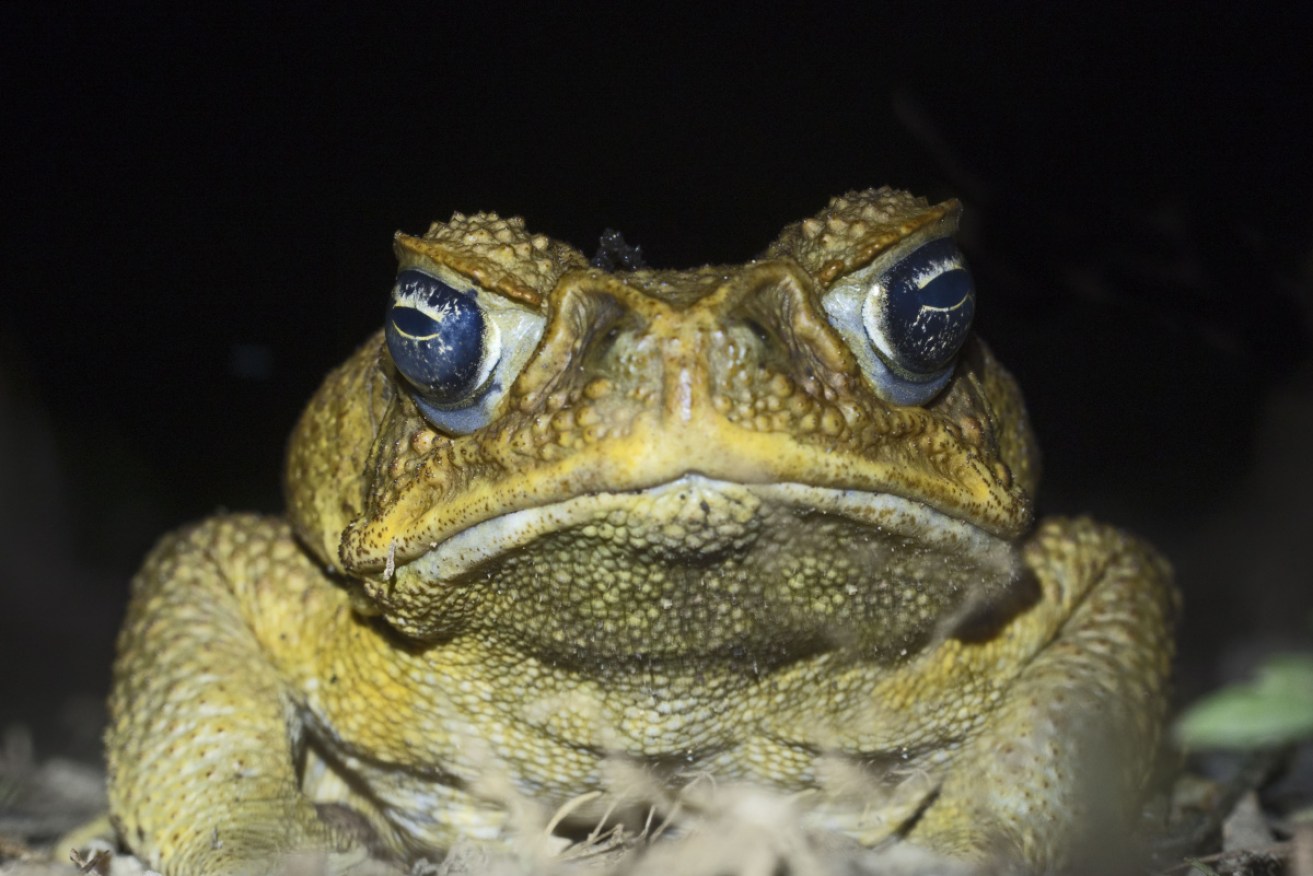
The southern state says the toads are most likely hitch hikers. Photo: Getty
South Australian drivers are being asked to check their cars for “unwanted hitchhikers” and report any suspected sightings after a second cane toad discovery in just weeks.
A member of the public reported a cane toad hopping along a road in the coastal Adelaide suburb of Grange this week.
The toad was found and removed on Thursday night by biosecurity teams, who searched the area with spotlights.
However, it was the second instance of a cane toad spotted in South Australia in just weeks after an earlier sighting in regional Whyalla. That animal was also found and removed.
State Primary Industries Minister Clare Scriven said it was a “huge relief” that it toads been removed.
“Cane toads have been causing problems for Australia’s environment, wildlife and pets for many years, particularly in northern Australia,” Scriven said.

The cane toad spotted in Grange. Photo: Supplied
Scriven said she did not want cane toads to become established in South Australia, and while a handful were detected each year, she said SA had no wild populations.
The sightings come as Queensland non-profit environmental organisation Watergum encourages the public to help with efforts to control the invasive species.
“With rain and warmer weather creating the perfect conditions, now is the time to start checking your local waterways for cane toad eggs,” it said in a call to action on social media.
Described as being laid in “long, jelly-like strings that usually sink just below the water’s surface”, cane toad eggs can hatch in as little as two to three days. That made removing them early key to stopping the spread of the pest, the organisation said.
Cane toads were introduced to Queensland from Hawaii in 1935 to help control cane beetles.
Not only did they fail to control the beetles, they have since spread across much of northern and eastern Australia, wreaking havoc on the environment with population estimates as high as 200 million, according to the World Wildlife Fund.
Today, cane toads have conquered more than 1.3 million square kilometres of Australia, according to the Invasive Species Council, spreading through Queensland, the Northern Territory, NSW and Western Australia.
“If you’re travelling to the Northern Territory, Queensland or other areas where this pest species is known to be established, make sure you check your vehicle and luggage before the return trip and double-check when you arrive,” Scriven said.
Cane toads produce toxins that can be fatal to animals that try to eat them. The pest could also be mistaken for native frogs, including the harmless eastern banjo frog, Scriven said.
As a result, official advice from the SA government for if you see a suspected cane toad is “do not kill it”.
Instead, people are urged to take a picture and report the find to the SA pest alert hotline or the Department of Primary Industries’ Invasive Species Unit. They are monitored by biosecurity officers who can confirm if it is a cane toad and advise what to do next.
The advice is to contain the toad in a plastic container if possible with about one centimetre of water. Authorities said people who touched the toad should wash their hands afterwards.
If a cane toad is spotted in SA, the Pest Alert Hotline can be contacted on 1800 084 881.