Qld Museum faces backlash over $10m Shell deal
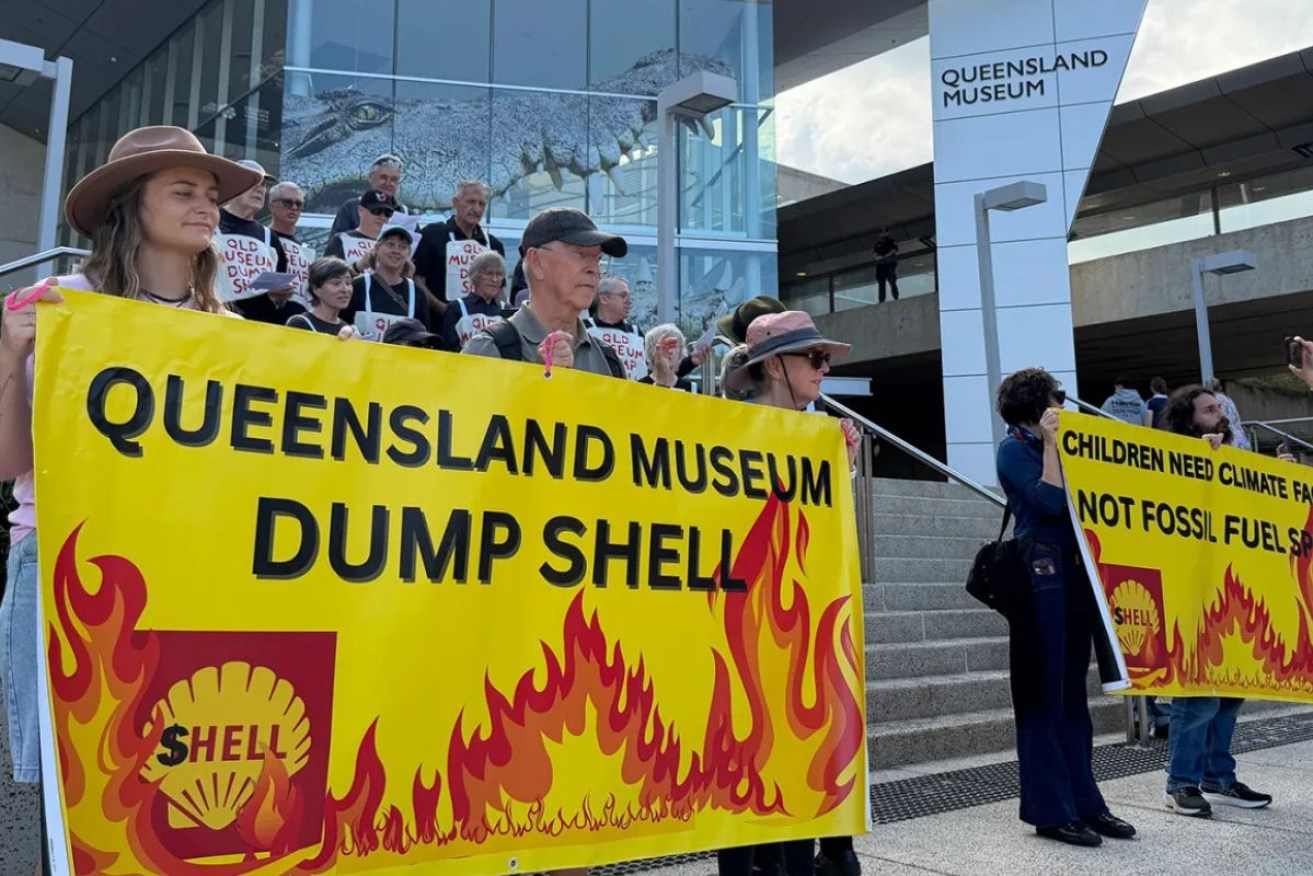
End Fossil Fuel Sponsorships group presented the Open Letter to Queensland Museum. Photo: End Fossil Fuel Sponsorships Group
Queensland Museum has been slammed after signing a $10 million children’s education program with oil and gas giant Shell.
Signatories to an open letter protesting the deal include authors Tim Winton and Natalie Kyriacou, Professors Lesley Hughes and Ian Lowe, former fire chief Greg Mullins, Parents for Climate Change, the Australian Conversation Foundation, Doctors for the Environment Australia, the Wilderness Society and the Australian Youth Climate Coalition.
The letter, which has also been signed by millions of Australians, was handed to Queensland Museum on Wednesday by a representative from the Queensland Conservation Council on behalf of the End Fossil Fuels Sponsorship group.
One of End Fossil Fuel Sponsorship group’s founders, Jo Fraser, said the museum would not accept the letter.
“What is the harm in the Queensland Museum reading an open letter signed by prominent Australians and over 50 organisations around the country and overseas?” she said.
“It’s especially concerning as we believe the museum’s sponsorship decisions are harming our kids.”
It comes as a report by climate advocacy group Comms Declare claimed that Shell and other major fossil fuel companies are sending misleading climate change material to schoolchildren.
The report, titled From Cradle to Career: Fossil Fuel Industry Presence in Australian Childhood Settings, claimed the companies were reaching schoolchildren through more than 260 programs at schools, museums, science centres, sporting clubs, early learning programs, scholarships and career pathways.
Comms Declare researchers said children aged 0-18 had been targeted.
Founder Belinda Noble said it was important that children received accurate, independent education free from corporate influence.
“Big coal, oil and gas companies are helping drive climate change, yet simultaneously funding educational programs that shape how young Australians understand energy, resources and climate issues,” Noble said.
In April, Comms Declare commissioned PureProfile polling that found 87 per cent of parents and grandparents believed educational programs should be funded by government rather than companies, while 58 per cent supported fossil fuel advertising bans.
“Six years ago an ASIC investigation forced banking programs, like Dollarmites, out of schools,” Noble said.
“Now big polluters are using the same loopholes to reach children, proving we need to find different ways to fund children’s programs once and for all.”
Comms Declare has called for a Senate inquiry into the impact of fossil fuel industry engagement with schoolchildren, as well as a national ban on fossil fuel advertising and sponsorships.
It said an inquiry should examine agreements and arrangements, identify options for strengthening governance, transparency and accountability, and possible pathways for alternative funding.
A Shell spokesperson said the company would not apologise for helping to equip young people in local communities by supporting programs and organisations that provided opportunities for study and work and exposure to science, technology, engineering and maths.
“No community partner is obligated to promote Shell or the energy industry, and we do not review or seek to approve their educational materials. To suggest otherwise is simply wrong,” they said.
“Shell has a long and valued relationship with Queensland Museum, supporting the Future Makers program, which encourages school-aged students to take an interest in STEM through fun and engaging activations.”
Earlier this year, the ACT banned fossil fuel partnerships in schools.
Across the world, more than 60 jurisdictions have enacted or voted for fossil fuel marketing restrictions.
Including Shell, the report highlighted that Santos, BHP, Woodside, Glencore and Chevron also funded learning programs, with 105 found in Queensland
Queensland Museum was approached for comment but did not respond by the time of publication.
Republished from InQueensland
Want to see more stories from The New Daily in your Google search results?
- Click here to set The New Daily as a preferred source.
- Tick the box next to "The New Daily". That's it.