Prisoner wins landmark court bid to freeze eggs
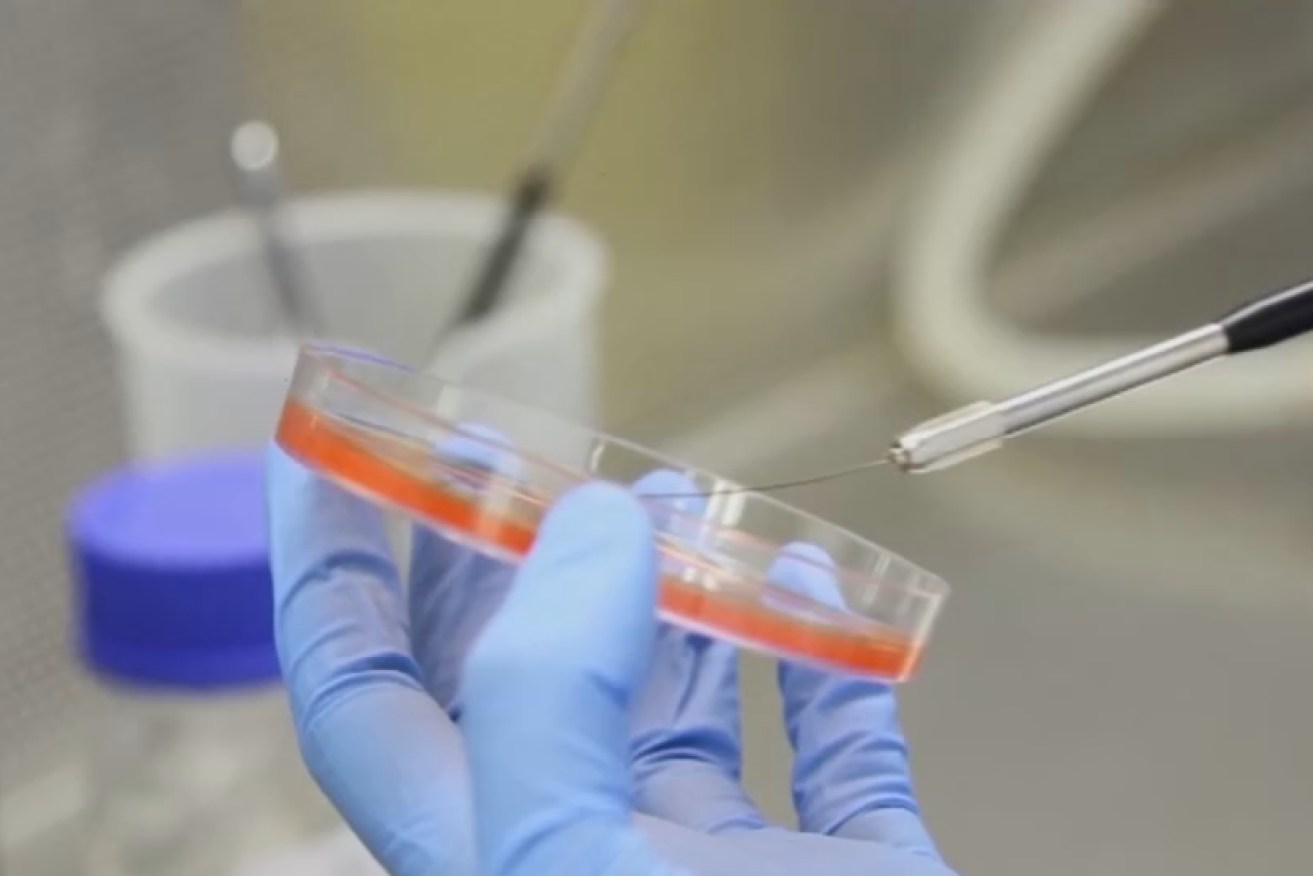
Each state has its own corrections legislation covering egg freezing and other fertility procedures. Photo: supplied
A prison chief has been warned against making “value judgments” about women’s fertility rights after a woman won a High Court challenge to freeze her eggs from behind bars.
Rachel Smith is currently serving a 10-year prison term in Queensland for trafficking in a dangerous drug.
She will be 39 when she’s eligible for parole and 41 when her full sentence ends.
To reduce her risk of age-related infertility, Smith applied to the state’s prison authority to undergo egg freezing at her own cost.
However, Queensland Corrective Services (QCS) argued egg extraction and freezing were prohibited as they would be classified as “assisted reproductive technology”, which is banned under the state’s Corrective Services Act 2006.
Smith challenged this, arguing against the state’s interpretation of the law’s wording and said her human rights were being breached.
While she couldn’t convince the Supreme Court or the state’s appeal court, the High Court accepted her appeal and on Wednesday found in Smith’s favour.
It concluded the Queensland courts had “misconstrued” the Corrective Services Act.
“Ms Smith was entitled to apply to participate in egg extraction and freezing to be undertaken by her nominated health practitioner, which is not ‘assisted reproductive technology’,” Justice Jayne Jagot said, in a judgement supported by the other four judges hearing the appeal.
The judges found Smith was “likely to experience a material reduction in her fertility prior to her release on parole” due to her age, and set aside the lower courts’ orders.
The High Court ordered the prison authority to determine the application for egg freezing again according to law.
“The (QCS) chief executive is not to make ‘value judgments’ about prisoners’ decisions to preserve their fertility, much less whether they should be allowed to procreate after they have ceased to be imprisoned,” Acting Chief Justice Michelle Gordon and Justice Robert Beech-Jones noted.
Smith is now 36, and had to await a lengthy legal process for the decision after applying to freeze her eggs three years ago.
Jagot urged Queensland’s prison chief to “decide her application as soon as reasonably possible” and ordered QCS to pay Smith’s legal costs.
The decision could pave the way for other prisoners in Queensland to freeze their eggs while in jail.
Each state has its own corrections legislation, with egg freezing and other fertility procedures permitted in Victoria by a landmark 2010 Supreme Court decision about IVF.
Advocate for women prisoners Tahlia Isaac questioned why Smith had to pursue the matter through various courts in the first place.
“Prison is used as a form of punishment – being removed from your community, having your liberty taken away, that is the punishment,” she told AAP.
“To deny her the right to have children is not part of her sentence. We don’t have to further punish people because they are in prison.”
Isaac, the founder and chief executive of Project:herSELF, has been raising awareness around the lack of support available for women while behind bars.
Women are forced to give birth in handcuffs, receive poor pain management for reproductive conditions and receive no antenatal or postnatal care, she said.
“Prisons aren’t designed for women, or around women’s health, women’s reproductive health,” she said.
“It’s a system designed for men.”
The decision comes as Queensland’s Liberal-National government proposes a law which has been criticised for attacking prisoners’ human rights.
The bill, framed around protecting the community from dangerous prisoners, would exempt authorities from obligations to properly consider and act compatibly with human rights.
“Human rights do not stop at prison walls,” Human Rights Law Centre director of First Nations Justice Maggie Munn said.
“The Crisafulli Government’s plan to strip away human rights protections for people in prison is an unjustified, discriminatory and dehumanising attack on essential, universal freedoms.”
–AAP






One Nation in hot water with Queensland watchdog