The government’s health insurance rebate cut doesn’t add up

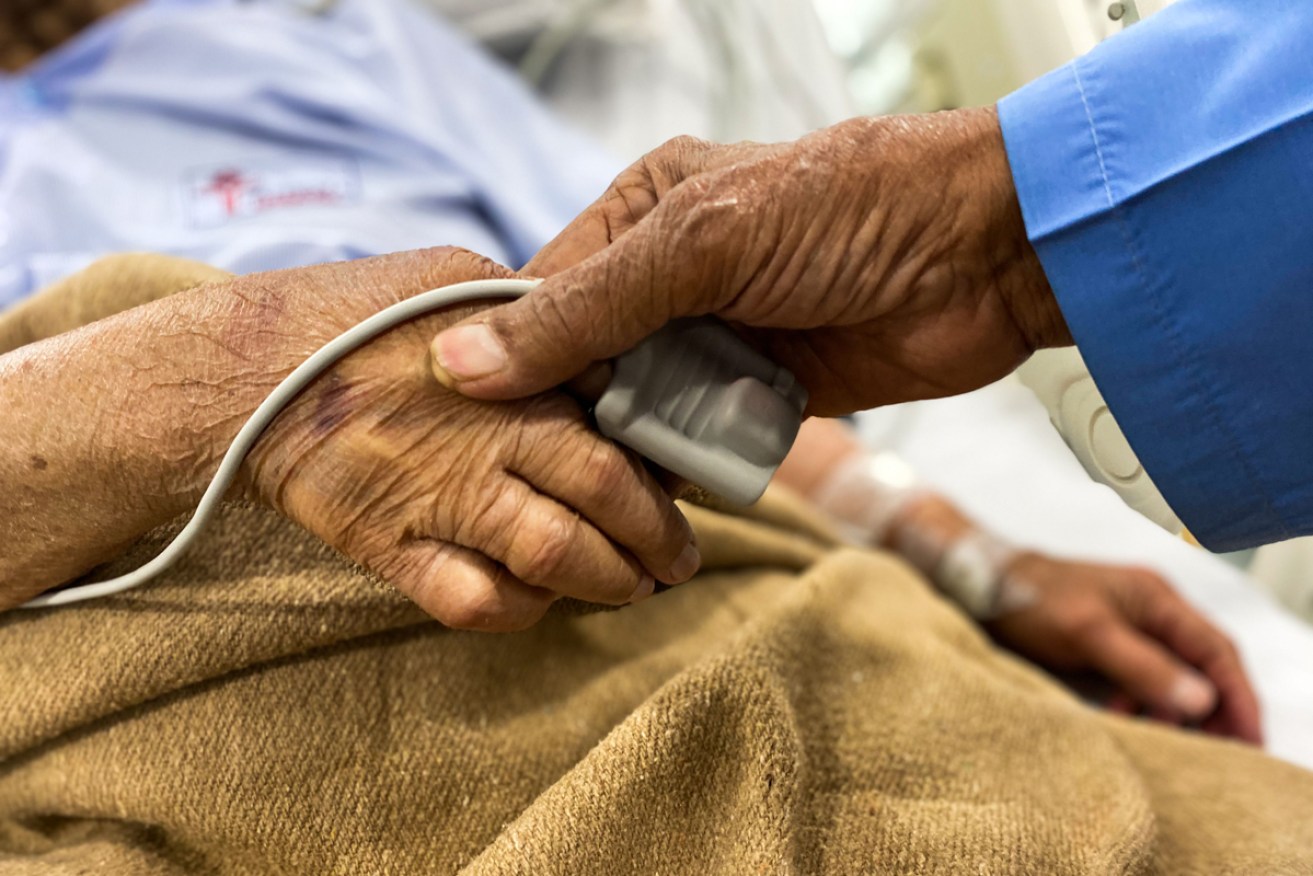
Labor announced the scrapping of the private health insurance rebate for over 65s in May. Photo: Pexels
There’s no doubt that our private health insurance system needs reform.
Insurers’ benefit payout ratios have drifted lower for years, eroding the value of private insurance to policy holders. Every year we pay more and get less.
Meanwhile, more than 500,000 high-earners have opted out of private cover altogether, while healthy young members subsidise a shrinking pool. We need to modernise the Medicare levy surcharge.
But the government isn’t tackling those challenges – instead, it’s asking retirees to pay more for their private insurance, ostensibly to cover the increasing cost of their aged-care packages.
This week the House of Representatives is due to debate legislation to strip away a higher rebate tier that has applied since the Howard era.
The rebate recognises the fact that older policyholders cost insurers more to cover. It acts as a subsidy to protect community rating — the principle that insurers can’t charge the old or sick more than the young and healthy — functioning as intended. Remove that correction and premiums for older members will effectively rise by hundreds of dollars a year.
The Albanese government wants Australians to believe that stripping the age-based private health insurance rebate from over-65s is a minor intergenerational equity fix. Health Minister Mark Butler has claimed that only 44,000 people, or 0.4 per cent of those affected, will drop their cover as a result.
In contrast, Private Healthcare Australia suggests that as many as 40 per cent of pensioners might have to relinquish cover they’ve maintained for decades.
Even if we accept the government’s conservative number at face value, losing 44,000 members is not a rounding error for the risk pool. Community rating depends on breadth of participation across the age spectrum. Every member who leaves narrows that base and pushes costs onto those who remain.
The cost estimates are just as shaky. Butler puts the average hit to over-65s at around $260 a year. Private Health Australia’s figure is $800 for under-70s, and $1600 for those over 70. The difference in these estimates is significant for those on fixed incomes.
More than 400,000 full and part-pensioners hold private cover. Women, who retire with materially lower superannuation balances and are more likely to depend on the age pension in later life, will be disproportionately affected. The government won’t release modelling on which retirees it expects will be forced to drop their private health cover. That modelling would likely not sit well with its base.
Then there is the fairness problem the government would rather not discuss. Many of these older Australians have paid for private cover for decades, in good faith, because being able to rely on private cover in retirement mattered to them. The rebate was never a windfall for the wealthy — more than 80 per cent of affected policyholders sit in the base income tier. Pulling the rug out from under them now seems cruel.
The government has framed the legislation as a trade-off in service of aged-care funding. That framing deserves much more scepticism than it has received.
The Support at Home rollout, the centrepiece of the government’s aged care reform agenda, is already under strain: Price caps promised for July 2026 have been delayed indefinitely. The government’s own data shows a median 347-day wait for a home care package. The gap between assessment and service has blown out to 245 days.
Asking older Australians to accept a cut to their health cover to fund their aged care supports, in a reform program struggling to deliver against its own timetable, is an unsatisfactory trade-off.
Nor has the government made the case on the public hospital side. It’s claimed the measure will deliver $3 billion in headline savings. That’s a gross figure reflecting the reduction in rebate expenditure.
It ignores the additional cost to state-run public hospitals when at least 44,000 older Australians drop or downgrade their cover and present as public patients instead. This despite the states carrying roughly 55 per cent of the cost of that additional hospital activity under the National Health Reform Agreement. That agreement was settled before this change was announced – the states weren’t at the table on this one. Health ministers in NSW, Queensland and Tasmania have all raised the alarm publicly.
A previous government-commissioned analysis, by NEAA Associates, found the opposite of what Minister Butler is claiming: It suggested that paying higher rebates to over-75s saved the Commonwealth close to $4900 per person once avoided public hospital costs were counted. The government has neither confirmed nor rebutted that analysis.
If the government’s modelling is as robust as it claims, it should publish it in full, produce a net savings figure accounting for the impact on public hospitals, and build in a monitoring mechanism that triggers a legislated response if the real-world impact exceeds its predictions. Until then, this punitive savings measure dressed up as reform will most affect the older Australians who can least afford it.
Dr Monique Ryan is the independent MP for the federal seat of Kooyong



China and housing: Two things we may have missed