‘Pollster’s picnic’: As One Nation rebounds, a warning to read with care
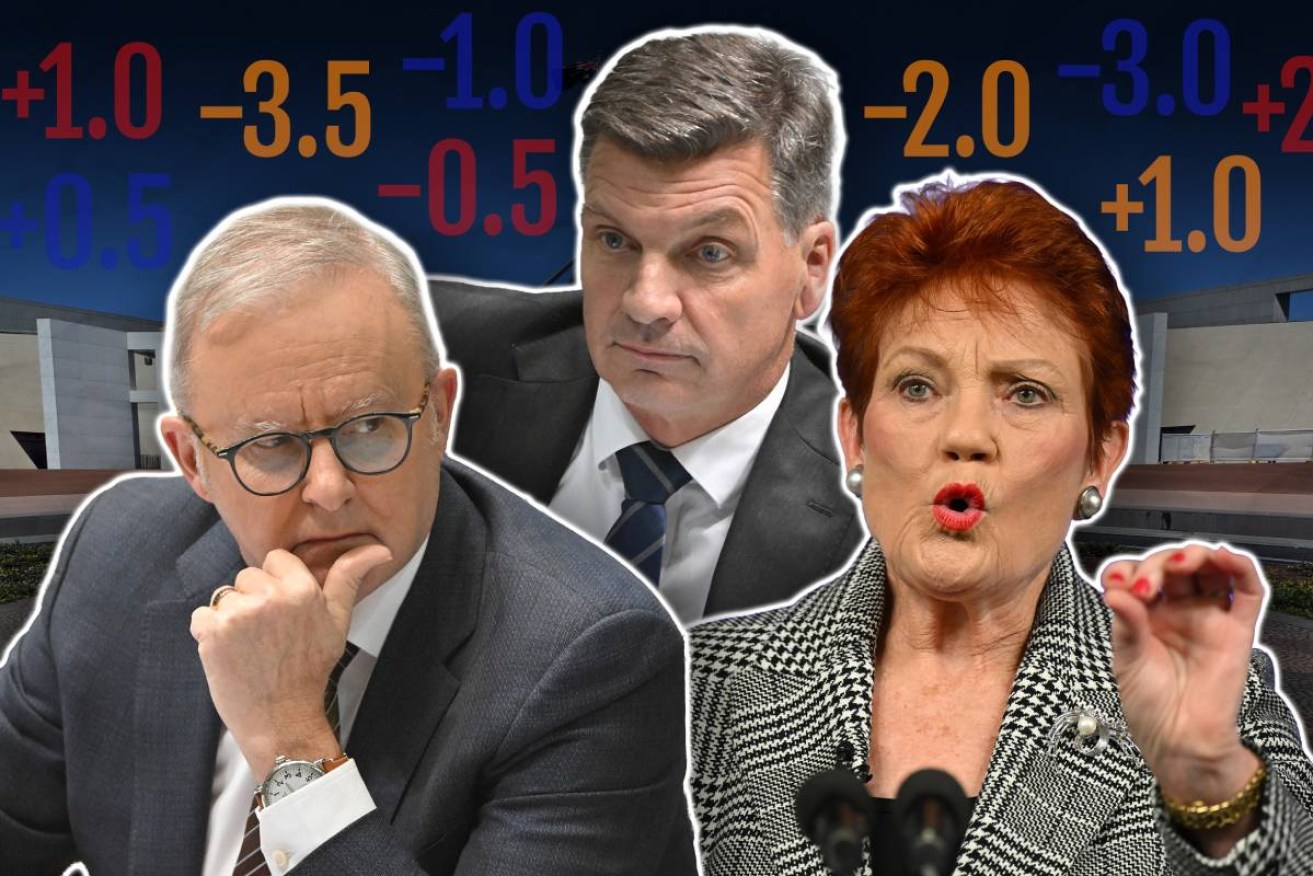
Coverage of our abundant polls tends to measure noise, rather than dive deeper into issues. Photo: AAP
One Nation has rebounded in the latest polls somewhat after a dip in support following Pauline Hanson’s divisive National Press Club appearance.
A national Newspoll, conducted July 13-16 from a sample of 1238 voters had One Nation on a 30 per cent primary vote (up one point). It was equal with Labor, which dropped three points since the previous poll three weeks ago.
The Coalition was up two points to a 19 per cent primary vote, with the Greens down one point on 12 per cent.
But how seriously should we take the findings of Australia’s increasing proliferation of political polls?
In early 2011, after a head-spinning year in Australian politics, two renowned political journalists decided enough was enough.
They’d seen sitting prime minister Kevin Rudd dumped after a polling downturn.
His successor, Julia Gillard, was quickly defined by her favourability ratings.
Gillard’s minority government was then graded in real time – seemingly re-elected or stranded by voters – by each and every little bump from Newspoll or other pollsters.
As a new year’s resolution, Annabel Crabb and George Megalogenis decided to give up the polls.
“I’m going polled turkey,” Crabb, now the ABC’s chief online political writer, said in an excoriating column.
Megalogenis, then a correspondent at The Australian, argued political players and commentators were using poll numbers as a crutch for proper analysis.
“I thought then, and I am convinced now, that too much is being invested in these things – by the politician, the adviser, the journalist and even the audience,” he wrote at the time.
Megalogenis recently contended there “was an unhelpful systems-fixation on coverage” of polls that “weren’t anywhere near as reliable as they were purporting to be”.
In the 15 years since, the volume of polling and the amplification of their results has only swollen.
Crabb and Megalogenis took their stand when there were just four pollsters offering regular federal polling.
In 2026, there have been nine – a “pollster’s picnic”, as coined by ex-Liberal strategist Tony Barry.
All but one has a partnership with a broadcaster, newspaper or online outlet, and all are published at least monthly, ensuring a rolling tide of results in headlines and bulletins.
“Way more than I covered in the ’80s, and ’90s, it’s demonstrably more,” Megalogenis said.
“In the ’80s and ’90s, in the first 18 months of a term, a fall on the government’s popularity was assumed as part of the business of government … hard work, the reforms, the tough budgets,” he explained.
“People wouldn’t write a polling story in the first 18 months of those governments.”
In 2026, the pollsters are inescapable.
The roll call – Essential (monthly in Guardian Australia), Resolve (monthly in Nine newspapers), RedBridge/Accent (monthly in the Australian Financial Review), DemosAU (monthly in Capital Brief) and Roy Morgan (weekly).
Then there’s four in News Corp outlets – Fox & Hedgehog, Freshwater (both monthly), YouGov (fortnightly) and the industry benchmark Newspoll (in The Australian every three weeks).
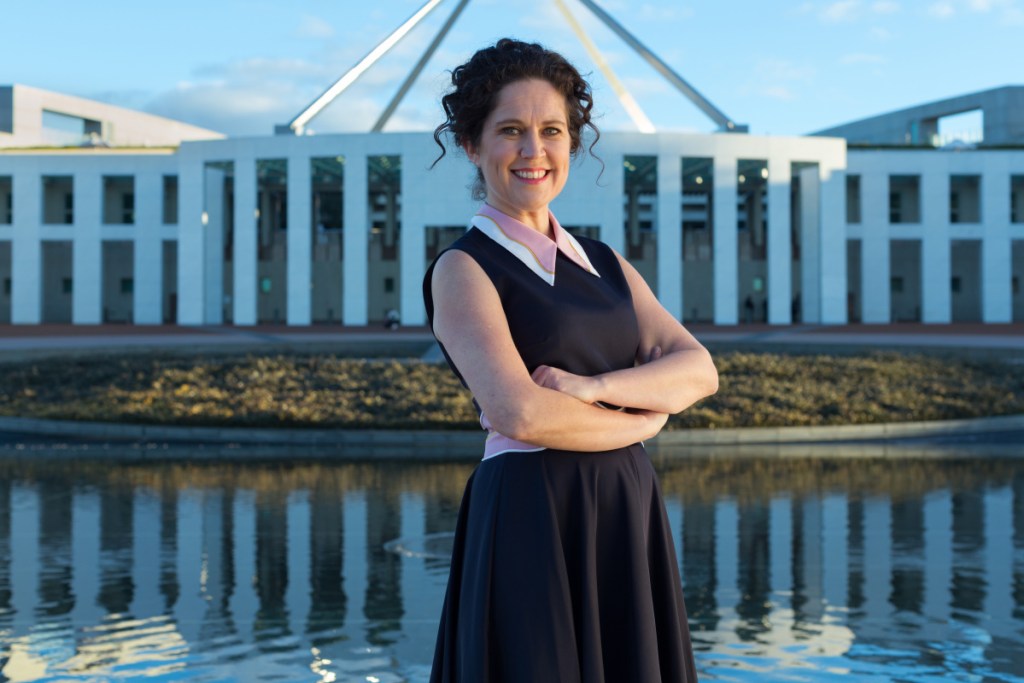
Annabel Crabb urges a rethink on how polls are reported. Photo: ABC
Is so much polling bad for our democracy?
Not necessarily, Crabb and Megalogenis contend, so long as polls are reported responsibly.
“This is the thing that worries me,” Crabb said.
“You read things like, ‘Angus Taylor has surged two points as preferred prime minister in the wake of his comments about the ISIS brides’ or whatever, but that is not the way Australian people pay attention to politics,” she said.
“When you nickel and dime it, when you slice and dice it so thin that you’re attributing a 2 per cent shift to some event, I think you’re going too far.”
Veteran pollster Kos Samaras, director of RedBridge, said the reporting of one-off polls with minor shifts “drives me batty”.
“There’s a lot of polling but there’s very little coherent analysis,” he said.
This is why Samaras is one of the few pollsters with a public profile, as he seeks to explain to the public what the numbers tell him.
An example cited by all three of responsible – and compelling – poll-based coverage is the rise and rise of One Nation.
Megalogenis, now an author with a new book Three Shocks out in August, said the narrative value of polling was often clear only after the fact.
“They are good to help piece a puzzle together when you know the [election] result, and you can work backwards,” he said.
“As a journalist you should really just go to a poll aggregator … or look at the trend line.”
Speaking confidentially, a leading pollster said another factor in the recent surge was the falling cost.
New tools have made getting a statistically sound nationwide sample a cheaper prospect, though granular electorate-level detail is costly and requires expertise.
And for many pollsters, publishing publicly available data on Australian politics isn’t the main game, but a branding exercise. Those companies’ bread and butter is private polling, and mostly for business clients.
Pollsters can deliver political polls to media companies cheaply, or for free, in exchange for the publicity.
And as Crabb said, when you’ve got the polling, “you’ve got to get a splash out of it”.
Beyond the media’s role in poll proliferation, politicians are also guilty of playing possum with the numbers, and necking leaders on the back of them.
This century, poor polling has been the driver behind six major-party leadership changes. It was the chief reason that Labor’s caucus turned on Simon Crean (2003), Kim Beazley (2006) and Gillard (2013).
In 2010, Rudd was still in front in the polls when he was forced out, but a popularity dive combined with his questionable leadership style brought on his demise.
The Liberals have stripped three leaders, including two sitting prime ministers, based on their numbers – Tony Abbott (2015), Malcolm Turnbull (2018) and Sussan Ley in February.
Crabb is speaking ahead of the new season of Kitchen Cabinet, which starts Tuesday with a sit-down with Prime Minister Anthony Albanese in the Lodge.
She said Albanese and John Howard showed their ability not to be too fussed by polling.
“They’ve each had periods between elections where they’ve been, if you read the polls, gone for all money,” Crabb said.
“[Howard] had such dire polling that people were saying, ‘well that guy is toast’.
“When I look at the way Anthony Albanese operates at the moment, I think that guy remembers that [and] that’s part of the reason why he’s so dominant within his party, he doesn’t get freaked out by that stuff.”
Samaras said poll-driven leadership changes were “terrible conduct” and Labor in Victoria was at risk of making a similar mistake ahead of the November state election.
“It’s a live discussion right now, they’re asking, ‘If we roll her (Premier Jacinta Allan), will our polls get better?’ Well, no,” he sid.
“I’ve done some analysis and it’s not about your leader, it’s about your brand – you idiots – and this is the problem.
-AAP
Want to see more stories from The New Daily in your Google search results?
- Click here to set The New Daily as a preferred source.
- Tick the box next to "The New Daily". That's it.

One Nation pledges to slash immigration
Joyce digs in after attack on PM's 'crippled' mother
Libs' top culture warrior tied in free-speech knots


