Teals’ new ‘broad church’ eyes state and federal tilts

Source: Mike Bowers
Australia’s freshest political party, led by two federal independents, could run candidates at state level but the decision on an election tilt will be left up to local communities.
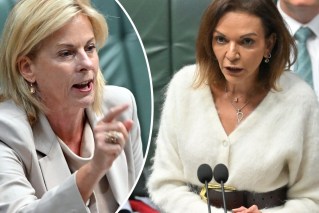
Sydney independents Zali Steggall and Allegra Spender announced on Wednesday they had teamed up to launch the Community Strong Australia party.
It followed weeks of speculation the pair were prepared to ditch their status as independents.
The organisation aims to sit in the centre of Australia’s political spectrum, but individual members will be allowed to make up their own mind on votes in parliament.
“This is an invitation out to more Australians to come and build the kind of Australia we want,” Steggall said in Canberra on Thursday.
She conceded the move would change little for her Warringah constituents but said having a party structure would help double the impact of the Sydney electorate.
“The community independent movement has shown what’s possible when people unite around shared values and practical solutions. Community Strong Australia is about extending that opportunity to more Australians,” Steggall said.
She said voters were “frustrated and tired of the status quo”.
“The major parties have contributed to the situation we are in where too many Australians feel like they are not getting ahead,” she said.
“The system is not listening to their concerns.”
The party has lodged paperwork to register with the Australian Electoral Commission.
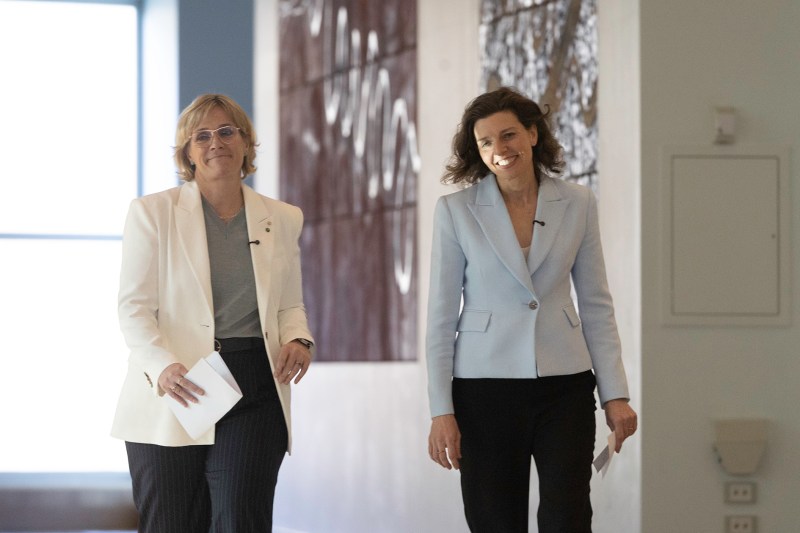
Other teal MPs have so far ruled out joining Steggall (left) and Spender’s new party. Photo: Mike Bowers
While its focus is on the 2028 federal election, Steggall and Spender are open to running candidates in the 2027 NSW state election if the right people emerge.
It’s unlikely the party will run in Victoria’s November election, given the AEC registration process is expected to take about three months.
Community Strong Australia does not the required five MPs to have party status in the parliament. Nor will it have a formal leader in Canberra – although Spender said that could change if more parliamentary members joined.
“The constitution of the party basically says, until there’s 10 … members of parliament, we’re not going to put in this sort of leadership structure,” she said.
“That may evolve over time, but really we’re starting together. We really want to build it from the ground up.”
The pair disputed suggestions their move was driven only by new political donation laws that limit how much candidates can spend in each electorate.
Steggall previously expressed concern the changes would make it more difficult for independents to get ahead and entrenched the incumbency of major parties.
Political veteran Michelle Grattan said the teal unity was undeniably a response to the new laws – and more.
“The move is seen as a way to try to exercise more influence, for instance by sponsoring Senate candidates, and by a collective role if there were a hung parliament after the next election,” she wrote in The Conversation.
“The teals took Liberal seats and the party would hope to attract more disillusioned Liberal supporters given that party’s collapse in the polls.”
In The Australian, columnist Dennis Shanahan declared himself confused about MPs who had so much in common – their agenda, funding and constituencies – finally uniting formally.
“I’m not only confused, I’m also cynical. I think that the charade of not being a party has now been exposed and despite more disingenuous denials about ‘party’ co-operation and expansion with the other ‘independent’ teals, there will be continuing co-operation and more recruitment,” he wrote.
“The real question for them and other teal independents is what their constituents now think of being represented by a party and not an independent.”
Steggall and Spender have indicated their new party is also open to disaffected Liberal MPs.
“We are trying to build a broad church of people, but I think that they have to be really aligned to the values, and they also have to be really connected to community, because that’s where we’ve come from,” Spender said.
Fellow Climate 200-backed independent Nicolette Boele, another Sydney MP, congratulated the pair. She said she expected to work with Community Strong Australia on policies covering the economy, climate action and integrity.
“For now, I am remaining independent,” she said.
“That is the mandate [the voters of] Bradfield gave me and any decision to change that belongs to my community, not to a press conference.
“I am still working through what this party would allow me to do for the people I represent that I cannot already do as a community independent – and until I am certain, I will not pretend otherwise.”
Two other independents – Monique Ryan from Melbourne and Kate Chaney from Perth – earlier ruled out joining a party.
Opposition defence spokesman James Paterson said Community Strong Australia faced a difficult challenge.
“I wish them all the best, but if they can’t even convince the teal MPs in parliament to join their party, I think they’re going to really struggle to convince Australians to vote for their party,” he told Sky News.
“The truth is that teals operate almost exactly the same as a political party, that they share a very common philosophy.”
-with AAP
Church probe compared to Spanish inquisition
Chalmers' grim warning in fight against far right
Greens senator on leave after women claims
Minister backs tweaks to social media protections
Labor tries again with health insurance bill
Double standards from groceries to a 'shrug emoji'
Treasurer denies being rolled on ATO card issue